
Shelby Bradford in The Scientist:
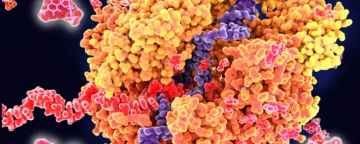 While scientists have studied the molecular steps involved in gene expression for decades, many questions still remain about this fundamental process. To transcribe genes, RNA polymerase II (RNA Pol II) binds to DNA and catalyzes the addition of nucleotides to a growing mRNA chain. The precise molecular details of how RNA Pol II adds nucleotides to mRNA, though, remain unclear.
To find out, a collaborative team of researchers led by Dong Wang, a researcher studying DNA damage responses and DNA modifications’ effect on transcription at the University of California, San Diego, used cryogenic electron microscopy (cryo-EM) to study the arrangements of RNA Pol II and its substrates before and after its catalytic activity in high-resolution. They published their findings in Molecular Cell, showing that individual water molecules interact with RNA Pol II and other substrates during transcription in Saccharomyces cerevisiae.1 The results revealed the mechanistic processes behind the first steps of gene expression and support a reimagining of the role of water in biochemical processes.
More here.
Enjoying the content on 3QD? Help keep us going by donating now.