
Attiya Waris at Aeon:
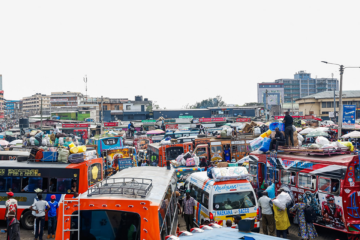 You cannot protect the right to healthcare without funding hospitals. You cannot guarantee the right to education without paying teachers. You cannot deliver justice without funding courts. And you cannot ensure the right to movement and economic participation without building the infrastructure and regulating the service providers to make it possible. The people of Nairobi know this with their bodies every single morning.
This is not a controversial claim in principle. Most human rights frameworks acknowledge it, at least implicitly. The International Covenant on Economic, Social and Cultural Rights obliges states to realise these rights ‘to the maximum of [their] available resources’. The African Charter on Human and Peoples’ Rights goes further, protecting rights to health, education, work, and a satisfactory environment in language that has direct fiscal implications. Rights, in other words, have price tags.
The problem is that the people who design global financial rules and the people who design global human rights frameworks have, for most of the past half-century, operated in entirely separate rooms. Finance ministers talk to the International Monetary Fund (IMF). Human rights lawyers talk to the United Nations (UN) Human Rights Council. The budgets that determine whether rights can be realised are set in conversations where human rights are rarely on the agenda.
More here.
Enjoying the content on 3QD? Help keep us going by donating now.