
Cyriac Roeding in Time Magazine:
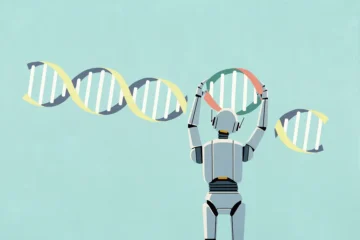 The core problem in oncology has always been one of discrimination. Cancer cells and normal cells are, at the molecular level, nearly identical. What distinguishes a cancer cell is dysregulation, a set of genetic switches flipped in the wrong direction, causing uncontrolled growth. For decades, finding and exploiting those switches required hunting through patient samples by hand, looking for patterns subtle enough to be almost invisible.
AI has changed what’s possible. Systems trained on genomic databases spanning tens of thousands of sequenced cancer samples can now identify the master regulatory patterns that are active specifically in cancer cells and not in surrounding healthy tissue. Unlike the biomarkers of older precision oncology, these are fine-grained genomic signatures that encode the difference between malignant and normal at the level of how genes are switched on and off.
More here.
Enjoying the content on 3QD? Help keep us going by donating now.