
Lora Kelley at The Nation:
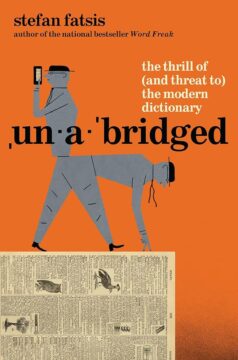 In 2014, at a small Stanford University lecture hall, the Merriam-Webster editor Peter Sokolowski introduced the crowd of assembled nerds to the idea that a dictionary is not a static document but a living object, constantly updated and remade in response to how people write and speak. In a talk titled “The Dictionary as Data,” Sokolowski emphasized that the editors at Merriam-Webster look to how the general public uses language to guide their work. He shared enticing tidbits, including that xi and za, classic Scrabble words, were popular late-night searches in the online dictionary, and that people regularly look up love ahead of Valentine’s Day. Awed, I wrote in a campus magazine a few days later that “we forget that the dictionary, a seeming bastion of objective reality, is compiled by people who use language, too.”
I had not, until that evening, thought much about how the dictionary came to be the way it is. I had always seen it as one of those things that was just kind of there, like a textbook or a museum wall text or the other ambient bits of language that seemed to arrive in front of me for my education and consumption.
more here.
Enjoying the content on 3QD? Help keep us going by donating now.