
Amanda Heidt in Nature:
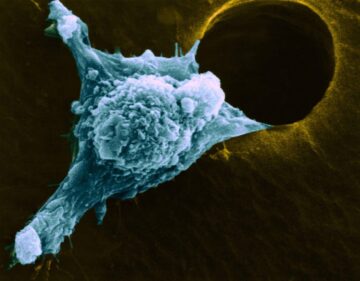 When Lisa Dutton was declared free of breast cancer in 2017, she took a moment to celebrate with family and friends, even though she knew her cancer journey might not be over. As many as one-third of people whose breast tumours are cleared see the disease come back, sometimes decades later. Many other cancers are known to recur in the years following an initial treatment, some at much higher rates.
“It’s always in the back of your mind, and that can be stressful,” says Dutton, a retired health-care management consultant living in Philadelphia, Pennsylvania. As part of her treatment, Dutton had enrolled in a clinical trial called SURMOUNT. This would monitor her for sleeping cancer cells, which many researchers now think might explain at least some cancer recurrence1. These dormant tumour cells evade initial treatment and move to other parts of the body. Instead of multiplying to form tumours right away — as is typical for metastatic cancer, in which cells spread from the main tumour — the dormant cells remain asleep. They are hidden from the immune system and not actively dividing. But later, they can reawaken and give rise to tumours.
Even though Dutton understood that her treatment might not have removed all signs of cancer, she says she was floored in 2020 when dormant cells were found in her bone marrow for the first time.
More here.
Enjoying the content on 3QD? Help keep us going by donating now.