
Kevin J. Harrelson at Notre Dame Philosophical Reviews:
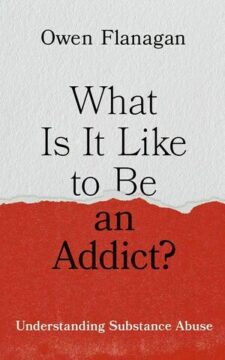 It is a rare book that combines rigorous argument, scientific fluency, and broad accessibility, but Owen Flanagan has managed that trifecta in his new monograph on the philosophy and science of addictions. What is it Like to Be an Addict? should serve as a standard reference-point for philosophers interested in the health sciences moving forward, as it clarifies and refines many of the basic questions in these fields. It is also a book that may be read with profit by anyone with even a passing interest in the science or ethics of addiction.
Flanagan aims “to explain what substance addictions are” as well as “to offer a humane and sensible ethics and politics of addiction” (ix). The plural in the first phrase is important, and readers will be discouraged from seeking reductive answers to many of the standard questions. Is addiction a disease? Is it a brain disease? Are people ever cured of addictions? Is addiction an individual or a social phenomenon? Much of the extant literature focuses narrowly on such binary questions, and Flanagan’s interventions are sweeping but inclusive: there is indeed a pathology and a neurology of addictions, but every disciplinary approach will be partial.
more here.
Enjoying the content on 3QD? Help keep us going by donating now.