
From Nature:
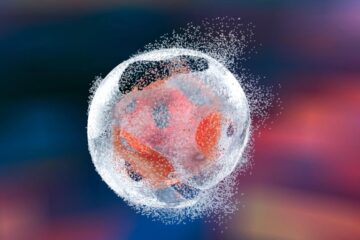 The mission with cancer therapy is clear: eradicate as many tumour cells as possible. Traditional chemotherapy remains a mainstay, where patients are dosed with potent compounds that disrupt essential cellular functions, preventing tumour cells from proliferating and ultimately forcing them to self-destruct. However, new findings1 from a team led by Hongbo Gao and Keith Syson Chan at the Houston Methodist Academic Institute suggest that this approach might also release signals that promote drug resistance, which makes it harder to eliminate the tumour in the long run.
Chan first became aware of this possibility a decade ago2. “We and others showed that the type of cell death the cancer cell undergoes also determines the therapeutic efficacy,” he says. His group demonstrated that, in some scenarios, chemo-induced cell death can lead to the dissemination of growth factors and other molecules, enabling surviving resistant cells to subsequently thrive and proliferate even during ongoing treatment. In their latest work, Chan and Gao focused on a mechanism known as pyroptosis, wherein tumour cells perish in a manner that leads to release of pro-inflammatory signals. This is generally thought to be a good outcome in the context of immunotherapy, as such an environment can amplify a patient’s anti-tumour immune response and put cancer cells on the defensive.
More here.
Enjoying the content on 3QD? Help keep us going by donating now.