
Mitch Leslie in Science:
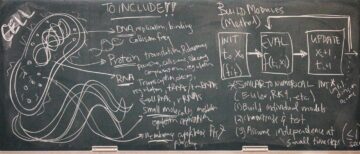 A human cell swarms with trillions of molecules, including some 42 million proteins and a plethora of carbohydrates, lipids, and nucleic acids. Crowded with organelles and other structures, the cell boasts an intricate organization that makes baroque architecture seem plain. Its cytoplasm is a frenzied chemical lab, with molecules continuously reacting, rearranging, and reshaping. In the nucleus, thousands of genes are constantly switching on and off to turn the seeming chaos into concerted actions that help the cell survive and reproduce.
This complexity is more than the human mind can yet fully understand or predict. But many researchers think artificial intelligence (AI), with its prodigious ability to assimilate and process information, might be up to the task. More than 2 decades ago researchers started to build systems of equations meant to simulate some of the cell’s workings. Now, they have progressed to AI-driven replicas that, like the large language models taking business and popular culture by storm, ingest vast amounts of data to learn on their own. ChatGPT’s attention-grabbing debut nearly 3 years ago inspired the virtual cell builders. “People want this kind of moment for biology,” says Kasia Kedzierska, an AI research scientist at the Allen Institute.
More here.
Enjoying the content on 3QD? Help keep us going by donating now.