
Andrea Lius in The Scientist:
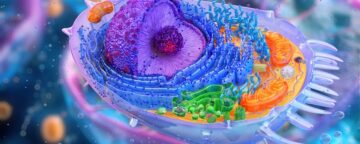 To develop better protein-based drugs, scientists can force these molecules to evolve in the lab within a much-shortened time scale. Due to technical limitations, this synthetic biology approach, collectively known as directed evolution, mostly relies on single-celled organisms, such as bacteria or yeast, even when the end-products are intended for humans.1 However, because the intracellular environments of mammalian cells are dramatically different from those of bacteria and yeast, this compromise often leads to the production of nonfunctional proteins, which defeats the very purpose of directed evolution.
More here.
Enjoying the content on 3QD? Help keep us going by donating now.