
Peter Harrison at Aeon Magazine:
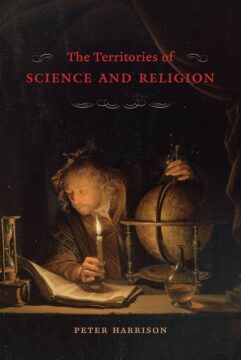 Leaving aside these associations with Western triumphalism, Huxley’s version of history, in which supernaturalism is engaged in an enduring struggle with naturalism, suffers from two fatal flaws. First, past historical actors, and indeed many non-Western cultures, observe no clear distinction between the natural and the supernatural. Second, and somewhat paradoxically, religious assumptions about the way in which nature is ordered turn out to have been crucial to the emergence of a naturalistic outlook.
To most modern Westerners, the natural/supernatural distinction seems obvious and, well, natural. Yet, a few historians and social scientists have provided intimations of its historical and cultural novelty. In his classic book The Elementary Forms of the Religious Life (1912), the sociologist Émile Durkheim attempted to arrive at a definition of religion that fitted all of the relevant phenomena. He dispensed with the common assumption that ‘belief in supernatural beings’ was an essential component of religion, pointing out that ‘the idea of the supernatural arrived only yesterday.’ It has become increasingly apparent that Durkheim was understating the case: in most traditional cultures, the idea of the supernatural never arrived at all.
more here.
Enjoying the content on 3QD? Help keep us going by donating now.