
by Claire Chambers
 In April, a detail caught my attention in a Guardian profile about Christopher Harborne, the crypto billionaire and donor to Britain’s far right Reform party. More interesting than the banal man himself is the fact that he has taken a Thai name (Chakrit Sakunkrit) and owns a wellness centre on Koh Samui.
Harborne’s brand of elite, right-wing health escapism got me asking, not for the first time, what is the connection between wellness and fascism? Clearly, not all wellness enthusiasts are fascists. Nor do all fascists aspire to the body beautiful – you only have to glance at Steve Bannon to see that. But there’s nonetheless such a strong link that recently there’s been a proliferation of academic papers about the so-called wellness-to-far-right pipeline, as well as some fascinating nonfiction books that I’ll discuss here. To the best of my knowledge, literary scholarship has yet to bring the wellness-to-far-right pipeline into sustained conversation with the novel. I take this as my cue to explore in two columns how body fascism is represented in a range of texts.
I wrote about Mohsin Hamid’s The Last White Man for DAWN when the novel first came out in 2022. Hamid imagines an unnamed town in which white people suddenly begin waking up brown. He uses this racially-inflected conceit adapted from Franz Kafka’s ‘The Metamorphosis’ to render racial classification absurd, dissolving the walls between us and them even as white supremacists use violent street protest to shore up these borders. What has gone less remarked is how subtly yet unmistakably Hamid routes all of this through the body. Over several re-readings, it increasingly strikes me that his discussions of gender, race, and class play out via a physicality that is often managed under the sign of wellness.
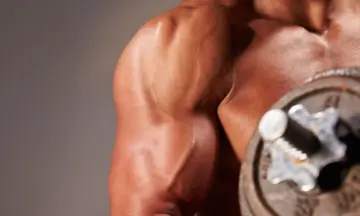 In the novel, masculinity is figured forth in the grunting exertions of one or two youths, including our protagonist Anders, who rub shoulders with mostly older men in a gritty, dilapidated gym:
Though it smelled of sweat, the gym was empty, it being early … The two of them worked out separately, Anders’s boss clanging through monster sets on the squat, thick, his elbows like knees, his knees like heads, his face red with rage, as it was whenever he lifted heavy, reminding Anders of the time a few months ago when his boss almost attacked someone who talked to him at a meet, talked to him at the wrong moment, when he was in his zone, the berserker zone he inhabited just before an attempt, for even in middle age his boss was still a serious competitor, in the masters category, and how his boss had to be restrained, with great difficulty, by four large men, … The whole incident had left [Anders] uneasy, there being something primal about it.
The gym’s lingering odour of perspiration gives the scene the primality of primates. Indeed, this is a space where masculine strength is almost bestial. The boss’s grotesquely enlarged body and his ‘berserker’ rage are probably fuelled by ‘protein powder’ and quite possibly steroids too. His blazing anger when lifting heavy, exacerbated by the ‘irritability of sets’, packs a punch with readers. It shows how competitive masculinity can deflagrate from self-optimizing strength into aggression and violence. Yet Anders, who was born white but has become racially ‘dark’, and in any case does not embody such a normatively masculine identity, is more vulnerable than his superior. Rather than entering the intensity of the ‘zone’, Anders is left uneasy and othered. He exists at once inside and outside of the hallowed circle-jerk of body-building.
The gym’s long-term clientele respect and like Anders, calling him doc, ‘because in his years here he had become a bit of an expert in putting bodies back together’. But after his skin turns dark, ministering to the white majority’s injuries no longer seems ‘entirely comfortable’ to Anders, instead making him feel ‘sort of on edge’. The manager’s physical dominance carries class as well as racial power, making this workplace hierarchy palpable. Elsewhere in the novel, Hamid provides a hint that automation has rendered many car workers ‘redundant, or replaced by robots’. This suggestion lends bodily labour a wider economic significance. In a deindustrialized context, endeavours centred on the body – such as Anders’s personal training, improvised physiotherapy, and caregiving to his ailing father – are among the forms of labour that are robustly resistant to AI, robotics, and other new technologies.
Returning to the boss, his unsettling behaviour at the ‘meet’ is an exaggerated performance of masculinist authority, in which strength, status, and fury create an intimidating atmosphere. Hamid thus represents his health club as a space that is distinctly stratified on the basis of gender, race, and class. Further layers are added because the club’s white male clientele and trainers work out alongside a brown-skinned cleaner whom Anders does not even know by name. Anders’s belated realization that this physically unprepossessing man is ‘the only guy at the gym who never exercised there’ exposes an ethnic and means-tested faultline between those who hone their bodies and the service staff who facilitate them. When Anders finally offers to train him, the cleaner responds: ‘What I would like is a raise’. The retort punctures Anders’s assumption that bodily discipline is what the stranger needs, reminding readers of the economic base underpinning gym-going and other acts of self-care. As Hari Kunzru pithily asserts in Blue Ruin, another 2020s novel that touches on wellness, ‘A challenging workout is not the same, physically speaking, as trudging twelve miles a day over a hard floor carrying a barcode zapper’. The gym epitomizes Kunzru’s distinction between the exertions one pays to undertake and those one is paid to endure. The racialized cleaner lives in a different world to the hypermasculine white gym aficionados.
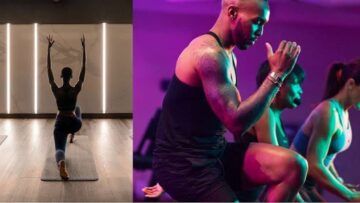 The novel depicts women, meanwhile, as sculpting desirable bodies through yoga and healthy eating. In contrast to the gym, the yoga studio where Anders’s girlfriend Oona works as an instructor is feminized and aspirational. Its mostly female clients are ‘wealthier … and more educated’ than most people on the outside. These ageing women strive to remain ‘relatively slender’ and to ward off other ravages of time. They stretch and bend in an aseptic environment from which, unlike the sweaty gym, ‘human smells were banished’. In Leaky Bodies and Boundaries: Feminism, Postmodernism and (Bio)ethics (1997), the feminist Margrit Shildrick has argued that menstruation, childbirth, and other corporeal emissions from women are stigmatized as ‘leakiness’. Western societies relegate women’s leaky bodies to behind a gendered boundary and subordinate them as Others, but according to Shildrick some women find political possibilities in bodily porosity. The yoga space’s eradication of stench and leakage, then, suggests a practice stripped of flow – vinyasa-related, menstrual, or otherwise. In the novel, then, yoga is a fitness regime associated with youth, leanness, and consumer choice. Corpulence, disability, and forms of labour that do not fit its rarefied ideal are excluded.
In her youthful white slimness, Oona ‘looked the part’ of a yoga teacher. Whereas Anders’s diet seems heavy on protein, emphasizing ‘omelets’, her own chosen repast of ‘overnight oats with berries and nut butter’ is such an earnest display of nutrition that her mother quips, ‘It’s so healthy it could kill a person’. Later, Oona makes the two of them beets with onions and potatoes for an unusual breakfast. Finally, her vegetarianism seems indubitable when she takes Anders to a favourite restaurant of hers that ‘served no meat and served no dishes that pretended to be meat, and the ingredients were always local and changed with the season’. Yet this conscious eating also exposes Oona to the commercial logic of the wellness economy.
A body maintained this scrupulously is not as autonomous as it might seem. Under the implicit terms and conditions of the wellness industry, it is an asset ripe for stripping. In his 2025 University of York PhD thesis, Anthony Tomkins calls the extreme bodily strip mining of professional cyclists, footballers, and ultra runners ‘renewal-in-depletion’. The concept incisively links athletes’ waves of ‘intensely consumptive’ activity followed by partial recovery to neoliberal patterns of resource extraction.
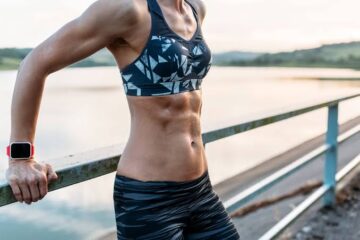 Social media platforms, though, are where much of the commercialization happens these days. Oona thus toys with the idea of becoming a fitness influencer, but cannot secure enough clicks or eyeballs for true ‘monetiz[ation]’ of her channel. Despite being worthy of the conventional male gaze, she anxiously scrutinizes her own appearance, wondering if her photography is adequate or she is sufficiently attractive. Maybe, she frets, her online self could ‘seem fake’ and inauthentic. Whatever the case, the prospect of garnering followers in their ‘hundreds of thousands, or millions’ remains tantalizingly out of reach. Social media’s ‘constant curating’ also conflicts with yoga’s ethos of inward attention, turning supposedly mindful practice into relentless self-surveillance. She lets her socials go dormant, still leaving this ‘door’ to celebrity slightly ajar by not deleting the accounts.
Even if it is more genteel than the gym, there is a closeted racism to the yoga space’s quiet luxury too. Despite the failure of her digital persona, in the offline space of her studio Oona has ‘the sort of body her clients ascribed legitimacy to’. Yet this body is denuded of its legitimacy when Oona performs a kind of ‘brownface’, using cosmetics to darken her skin colour in preparation for the racial transformation affecting almost everyone in her town. Oona’s racist mother sees her ‘beautiful’ daughter altering her appearance in this way as an ‘affront’, telling her: ‘You should be ashamed of yourself’. Her mother’s insistence on shame makes explicit what the studio just implies. Whiteness isn’t an incidental dimension of the well body, as constructed in the global north, but instead is its central component. Indeed, as we shall see, racism has long been a feature not a bug of wellness. Until this point, whiteness has been crucial to what made Oona’s body recognizable as healthy and immune to the epidemic of racial transformation sweeping the local area. However, the novel is about to take this normative racial identity from her, and from everyone else too (barring Anders’s dying father, the last white man of the title). Between the gym’s macho huffing and the studio’s scentless calm, Hamid charts a wellness ideal that promises health but bestows validity on its adherents unevenly – especially when it comes to race.
The culture beyond Hamid’s novel has been constructing such illusions for over a century. Diagnosing it as a social disorder, in The Wellness Syndrome, Carl Cederström and André Spicer argue that wellness has congealed into a neoliberal imperative, which reconfigures health as a duty and illness as personal failure. Biomorality – a term which they take from Alenka Zupančič and define as ‘the moral demand to be happy and healthy’ – recasts those who neglect their bodies as lazy, weak, or depressive deviants. Wellness is about keeping humans visibly productive and compliant with the global order of production in late capitalism. Fitness influencers like Oona feel an almost ethical compulsion towards tireless activity, with Cederström and Spicer expressing the pressures of being ‘always on’ via a breathless, asyndetic accumulation: ‘We must be on the move, constantly. We are tweeting, posting, hosting, sharing, linking, liking’ (21). But no amount of online freneticism could have secured racially-transformed Oona the legitimacy her skin once conferred. This is one of the harder truths Hamid’s premise brings to the surface.
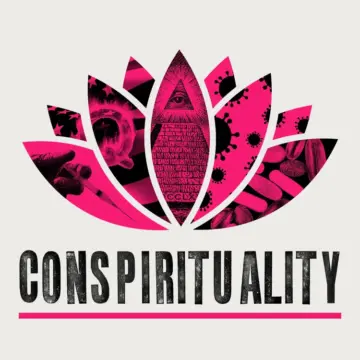 In their book Conspirituality (2023) and long-running investigative podcast of the same name, Derek Beres, Matthew Remski, and Julian Walker show that what social media platforms and their content creators accrete and reanimate is a much older anxiety about racial decline. The anxiety spirals obsessively around declining fertility, demographic supplantation, and the supposed erosion of white Western civilization. The authors demonstrate how, especially during the Covid pandemic, mostly male and sometimes gym-bro conspiracy narratives (such as the so-called Great Replacement theory) came together in an unholy alliance with the mostly female pastel paranoia of contemporary wellness and New Age discourse.
Oona’s yoga world is all about bodies, with a veneer of spirituality as thin as her own physique. She fitfully practises mindfulness or meditation. At one moment, she makes a throwaway reference to ‘her ease’, perhaps alluding to the concept of sukha. However, there is hardly more substance than that to the numinous in this novel, and Hamid refuses to even gesture towards India, that cradle of yogic philosophy and asanas. So too in his book Fascist Yoga does Stewart Home demystify yoga’s Indian origin myth. He retells the birth of modern postural practice as the work of some colourful characters, starting with an American showman and self-styled yogi, Pierre Bernard, who sprinkled a little Hindu glamour onto circus and gymnasium exercises. Some of the lineaments of contemporary yoga are, Home claims, ‘to be found in white supremacy and fascist ideology’. In blistering and often hilarious prose, he dismantles the consoling fiction of yoga as an ancient, apolitical route to individual self-improvement. From the influence of body builder Charles Atlas to the esoteric ideas of B. K. S. Iyengar, to the sexual-abuse allegations surrounding Bikram Choudhury, in his polemical account Home traces some reactionary politics undergirding yoga’s contemporary spiritual gloss.
The promise of wellness, then, was never really about making all of us well. It actually concerns whose bodies are seen as deserving health, visibility, and belonging. This is a question I’ll continue pursuing in my next 3QD post through a different constellation of novels and works of nonfiction.
Enjoying the content on 3QD? Help keep us going by donating now.