
Patricia Nilsson at LitHub:
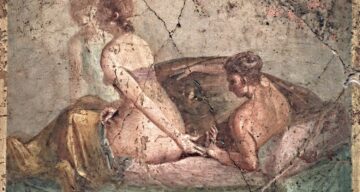 Perhaps precisely because it was forbidden, the erotic art of Pompeii and Herculaneum became highly influential to the Western understanding of pornography, even inspiring its first English-language dictionary definition. The word itself has ancient Greek roots—pornē, meaning prostitute, and graphien, meaning writing—and originally referred to texts or depictions related to sex work. But in 1864 Webster’s, an American dictionary, defined it as visual stimuli intended to elicit sexual desire—or, more specifically, “licentious painting […] examples of which exist in Pompeii.” Fueled by frenzied media interest in the Neapolitan excavations, the artifacts of Pompeii had effectively entered nineteenth-century pop culture. But choosing such an ancient reference to define pornography also allowed a kind of respectful distance and, perhaps, a feigned ignorance of the more contemporary erotic material in circulation at the time, from flagellation novels and clandestine memoirs to the explicit photographs and prints that were being passed discreetly across drawing rooms.
more here.
Enjoying the content on 3QD? Help keep us going by donating now.