
David Lehman at The Hudson Review:
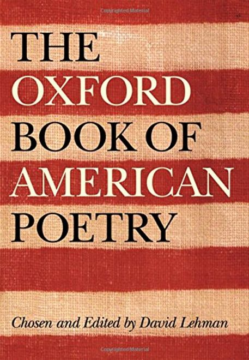 For poets who associate poetry with freedom, a release from obligations, a holiday, writing is “play for mortal stakes,” a wager made by persons who know they will never learn the outcome of their bet. They write for the posthumous fame or glory that is nowhere conferred but may be recorded someday in an official-sounding anthology. Reputation is fickle. Emily Dickinson, who dismissed “publication” as the “Auction / Of the Mind of Man,” died unknown; Emma Lazarus did not live long enough to know that her sonnet “The New Colossus” would come to articulate the meaning of the Statue of Liberty. Nor do the prizes a poet receives while alive guarantee a lasting readership. Edmund Wilson, aged seventy-one, got worried when he received an honor, because “an accepted reputation can be derived from no real merit whatever.”
A commonly used metaphor for literary reputation is that of the gyrations of the stock market. Shares of Shelley reached new highs through most of the nineteenth century but crashed in the 1920s when first T. S. Eliot and then F. R. Leavis and others put out “sell” recommendations on the English Romantic poets in general and Shelley in particular. At the same time, and for overlapping reasons, every English department across America took a strong position in such “metaphysical” poets of the seventeenth century as John Donne, Andrew Marvell, and George Herbert. It was the equivalent of a peaceable revolution, a nonviolent overthrow of the existing order.
More here.