
Carl Zimmer in The New York Times:
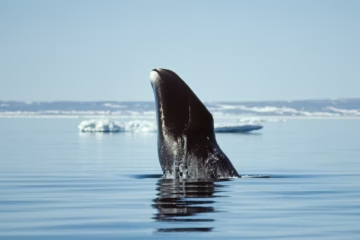 For more than 1,000 years, the Inupiat people of Alaska have hunted bowhead whales in the Arctic Ocean. Over the centuries, they grew to appreciate the long lives of the animals, the longest-living mammals on Earth. Generations of hunters could recognize the same individual at sea. Inupiat captains have told researchers that a bowhead whale lives two human lifetimes.
Scientists now suspect that bowheads can live even longer than that. Some whales caught in the late 1900s had old harpoon points lodged in their blubber that dated to the mid-1800s. By measuring the molecular damage that accumulates in the eyes, ears and eggs of bowhead whales, researchers have estimated that bowheads live as long as 268 years.
A study published in the journal Nature on Wednesday offers a clue to how the animals manage to live so long: They are extraordinarily good at fixing damaged DNA. The new study was led by Vera Gorbunova and Andrei Seluanov, a married couple who both work at the University of Rochester and study long-lived mammals such as bats, beavers and naked mole rats, along with bowhead whales. They and their colleagues are uncovering many molecular adaptations that extend animal lives. These species, the research shows, are gaining years thanks to increases in the levels of certain proteins and subtle changes in how these proteins work with others.
More here.
Enjoying the content on 3QD? Help keep us going by donating now.