
by Scott Samuelson
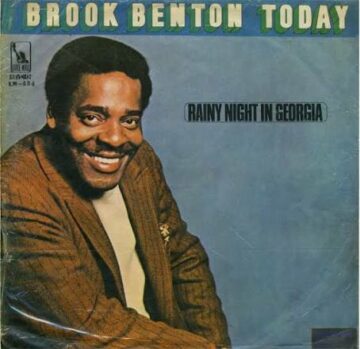
The other day I got unaccountably angry listening to an old playlist on my laptop. I was chopping vegetables, simmering a sauce, and nostalgically grooving to some rare soul songs that I’d assembled back in the day when you bought $.99 tunes for your iPod.
Suddenly I was confused. Had I put this song on the playlist? It was a good tune and all, but I had no memory of especially digging it.
When the next song came on, it dawned on me. The algorithm had taken over and was riffing on my playlist. I almost hurled my laptop across the room.
It wasn’t that the new songs were bad. The new songs were good. The algorithm was doing a workmanlike job, as algorithms do.
And it hardly surprised me that the algorithm kicked in. Like you and everyone else in our hellscape, demonic algorithms relentlessly poke and prod me. What would be genuinely surprising is if an insanely wealthy company decided for the sake of its customers not to employ enshittifying manipulation for the sake of getting even more insanely wealthy.
So why did I get so angry?
Part of it was the contrast. I’d picked out every one of the songs on my playlist because I loved them. Originally, I’d made the playlist, burned it onto a disc, and given it to a friend—with songs that I’d happily purchased either on CD (which I’d then downloaded onto my laptop) or on iTunes (back in the glory days of Steve Jobs).
What really made me mad was that the soulless algorithm was inhabiting otherwise wonderful music. It was a bit like that moment in the horror movies when the main character realizes that his crush has turned into a slobbering zombie.
The experience got me thinking about a question I’ve often wondered about. Is a song a better song when it’s offered with love? Had I picked out those last soul songs instead of an algorithm, would that fact alone have made them more soulful tunes? To me it seems obvious that the answer is yes.
Let’s imagine that while channel-surfing you catch two different radio stations that both happen to play “Suicide Blonde” by INXS. The first is a standard classic rock station with an algorithmically determined setlist. The second is a local station with a DJ who’s playing a range of songs that she just can’t wait to share with the world.
As it turns out, I’m thinking of this actual twentysomething DJ I recently heard on my local public radio station who was indeed over the moon for “Suicide Blonde.” Giddily teeing it up, she said, “You gotta hear this great band I just discovered in my dad’s old records called I-N-X-S!”—mispronouncing the band’s name like it was four call letters instead of “in excess.”
When you catch “Suicide Blonde” on the classic rock station (or, more likely, on a device’s classic rock “station”), you’re apt to think (at least if you’re my age), “Cool song, but I’ve heard it a million times before.” When you hear it played by a twentysomething who has unearthed it like a relic from an extinct aboriginal tribe with a puzzling name, doesn’t it sound better than ever, even if you’ve heard “Suicide Blonde” a million times before? It sure did for me.
My point isn’t simply that the context affects our enjoyment of the song. My point is that you can’t separate the song from its context. The song lives in its various contexts a bit like a chameleon among motley vegetation, fluctuating temperatures, and fellow lizards. Sure, you can isolate a chameleon in an all-white temperature-controlled cage, but it’s not like you’re now seeing it like it really is.
On a related note, I’ve never liked it when those anti-wine snobs talk up studies about how connoisseurs are unable to tell red wine from white if they’re blindfolded and the white isn’t chilled. What a rotten way to serve wine! I’ll hazard a further hypothesis that if you’re ever waterboarded in a toilet bowl full of Côte-Rôtie, you won’t enjoy the wine nearly as much as you did that one afternoon in Ampuis when you sipped a bottle of it with your paramour on the sun-drenched banks of the Rhône.
The disastrous illusion is to believe that we can pluck things out of their contexts and enjoy, deliver, or rate them as mere products. Music isn’t just discreet MP3 files that we pipe into our ears; it’s an interactive dance among musicians, instruments, audience, place, time, and often eternity too. Wine isn’t just juice for the delivery of a Robert Parker score; it too is an interactive dance, a constantly metamorphosizing ballet of nature, culture, terroir, winemaker, merchant, drinker, food, air, and memory. The more we pretend to separate the dance from the dancers, the worse we all dance.
What’s causing the rise in societal afflictions like anxiety, depression, and random violence is a complex issue, but it’s hard for me to imagine that the erosion of loving care from our institutions and communities isn’t a contributing factor. To take just one example, we increasingly see schools as interchangeable learning-objective factories for the sake of economic productivity rather than as distinctive spots for the care and development of utterly unique one-and-done mind-body combos. No wonder the kids are depressed.
When it comes to music, the good news is that there’s a healthy trend toward live music, where waves of unaccountable beauty often wash over performers and audiences alike—the exact opposite of the unaccountable anger that washed over me when the algorithm commandeered my playlist.
It would also be great if more people’s relationship to music wasn’t just one of listening to it but also one of making it, preferably with others, because even the grungiest garage band in town clangs out the most ravishing music in the Milky Way once in a while.
Here’s a quick and easy tip for generating a loving context for the endless music on your device. Next time you’re on a road trip with people, replace the algorithm with your own ingenuity. Play a game of naming a theme and letting everyone pick a single song for it. The themes can be anything at all: “feelin’ groovy,” “upbeat yet dark,” whatever. I’m especially fond of themes like “first slow dance ever” or “opening song in your biopic” that elicit juicy stories and thoughtful reflections. After one round of songs, let the next person pick a theme.
I’ve played this game a lot, and here’s the crazy thing: even the songs I hate are beautiful.
***
Scott Samuelson’s new book is To Taste: On Cooking and the Good Life.
Enjoying the content on 3QD? Help keep us going by donating now.