
by Paul Braterman
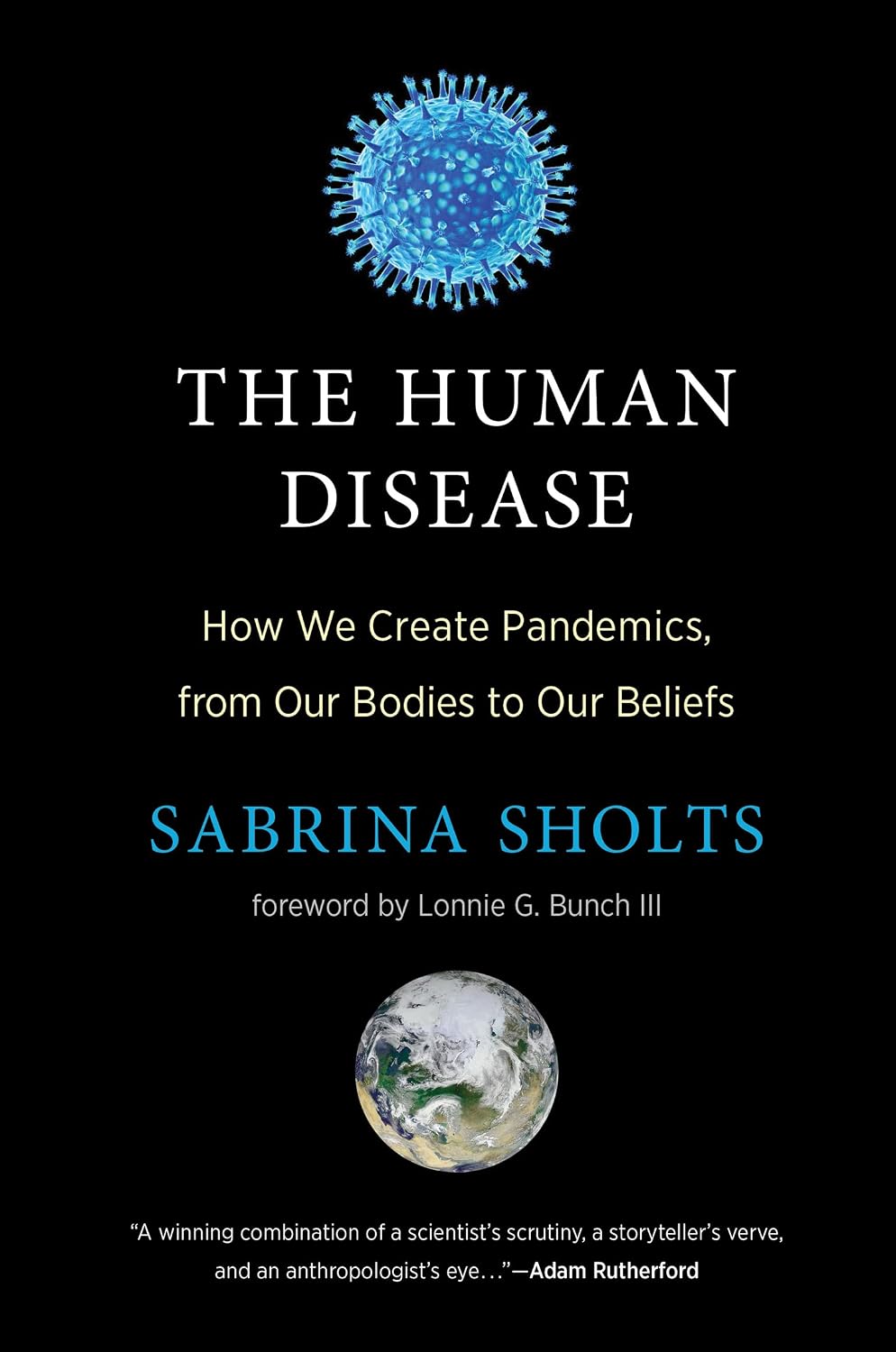 Why am I reviewing in Autumn 2026 a book that came out in Spring 2024? Because of what else is happening this Autumn; all the political events that I describe here took place during August and September this year.1Some numbers have been updated to October 9. The book’s excellent account of what causes pandemics in humans, and the role from spillover of pathogens from other species, is a welcome corrective to the destructive nonsense that passes for discussion in Washington.
The author is a curator of biological anthropology at the Smithsonian’s National Museum of Natural History, and was responsible for the major exhibit Outbreak: Epidemics in a Connected World, which opened in 2018, giving both the public and professionals information that was to prove all too necessary in 2020. Despite this and many other achievements, the Smithsonian is now under pressure to conform to the Trump regime’s perspectives, culminating in an executive order dated August 5 requiring signs s as the inaccurate products of ideological capture; such signs are already being prepared, although the actual text is not yet known. The book itself carries a foreword by Lonnie G. Bunch III, Director of the Smithsonian, who this September announced his resignation.
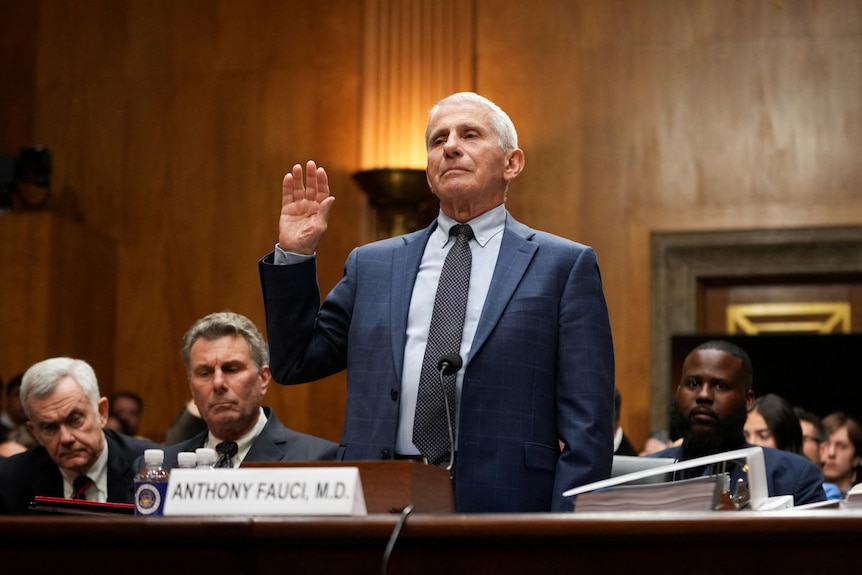
Anthony Fauci who helped lead the responses to 3 separate major disease outbreaks (AIDS, Ebola, Covid) finds himself accused of contempt by the Senate Homeland Security and Governmental Affairs Committee, after exercising his constitutional right to refuse to answer questions in a hearing whose only purpose was entrapment, and. the Department of Justice is continuing to investigate his colleagues. Fauci served with great distinction for 18 years as Director of the National Institute of Allergy and Infectious Diseases, and for the last two of those years as Chief Medical Adviser to the President. He has been honored for his work by the Catholic Theological Union and by the American Humanist Association and has also won awards in Germany, Thailand, Italy, Israel, the UK, and Japan, to say nothing of the Presidential Medal of Freedom awarded by President George W Bush.
He has long been the target of attacks from the US ideological Right, and on September 3 the influential Cornwall Alliance, which we have met before, invoked John Stuart Mill to warn us against what they term Faucism, the freedom-denying doctrine that we should pay attention to people who know what they are talking about. And as foreshadowed in my recent piece here on the political use of “religious liberty,” the Florida Attorney General is threatening the Florida Conference of Catholic Bishops with financial consequences if they will not permit religious exemptions to vaccine requirements.
Behind all this is the thoroughly refuted lab leak theory, which continues to surface in headlines, despite conclusive evidence (see e.g. here, here, and here) that the virus, like SARS to which it is closely related, arose in the wild and was transmitted from bats to humans by way of contact with wild animals. In the case of Covid, the evidence shows the virus present in the Wuhan wet market and already split into two distinct lineages, by December 2019. The Wuhan Institute of Virology, location of the alleged lab leak, is more than half an hour’s drive from the wet market in whose area the earliest known cases occurred,, and on the other side of the Yangtze. While I was writing this, we learnt that the unusual furin cleavage site of the Covid virus has been detected in very similar virus in the wild, thus removing the last remaining serious argument in favor of the lab leak theory. (Note for pedants; the official names are Covid-19 for the disease and SARS-CoV-2 for the virus that causes it, but I refer to both of them as Covid for convenience.)
It has been clear for some time that ideologically motivated vaccine hesitancy led to over 300,000 excess deaths in the US during what I was about to describe as “the recent pandemic,” until I remembered that the pandemic is still with us. (Comparison with Canada suggests that the total number of preventable deaths in the US was 650,000.) And in August, Snopes found it necessary to investigate 10 separate claims regarding the effects of the Covid vaccine itself.
On August 5, Ken Paxton, Attorney General of Texas and as I write US Senate candidate, announced an investigation into the American Academy of Pediatrics “for Deceptively Promoting Childhood Vaccines for Financial Gain.”
On September 2, The New York Times reported that the major medical organizations are issuing their own flu and Covid vaccination guidelines, because “Unfortunately, today the federal government is not fulfilling that responsibility in the way that it historically has… Normally, the Centers for Disease Control and Prevention would release recommendations on the new Covid shots. But its vaccine advisory panel is in legal limbo.”
On October 9, the CDC reported 4,080 confirmed cases of measles in the US this year, up from 2289 in the whole of 2025. (Measles had been officially described as “eliminated” in the US in 2000.)
On September 18, the White House put in motion a process by which NIH (National Institutes of Health) grants would be reviewed for how well they matched presidential policy, only to back off under pressure from Susan Collins, whose Senate seat in Maine seems vulnerable in this November’s election. The organization Grant Witness, which has been monitoring federal grant policy since 2025, reported on October 9 that the NIH had disrupted 5,776 grants, of which 1,176 had not been reinstated.
Nicole Saphier, Trump’s latest nominee for the position of Surgeon General, whose appointment is under consideration by the Senate, has her own herbal supplement company. Saphier is a radiologist, and opposed to the Affordable Care Act (Obamacare), saying that instead of paying to treat preventable diseases, we need to make America healthy again. Her own shareholdings include Philip Morris tobacco.
RFK Jr shared a platform at the September 17 conference of the antivaxx group Children’s Health Defense with the disgraced former Doctor, Andrew Wakefield, who more than any other individual is responsible for vaccine rejection, and reaffirmed his support for the group, while announcing that he would be looking at the health effects of electromagnetic radiation and airplane vapor trails. His obsession with the fringe notion that vaccines cause disease continues to drive research at the National Institutes of Health. In pursuit of this claim, Kennedy has hired Dr Lt. Col. Theresa M. Long, who in legal testimony this August regarding her appointment compared a doctor recommending vaccination of military personnel to Nazi doctors who carried out medical experiments on concentration camp inmates. Trump himself had suggested a link between vaccines and autism as early as 2007.
Long, who serves as the brigade surgeon for the Army’s 1st Aviation Brigade, had written that the Pfizer vaccine contains ethylene glycol, and commented
“I cannot discern what form of alchemy Pfizer and the FDA have discovered that would make antifreeze into a healthful cure to the human body.”
Not alchemy, but straightforward polymerization chemistry, known since 1859. Ethylene glycol, antifreeze, is a viscous poisonous liquid. Polyethylene glycol (a.k.a. PEG or macrogol), the material dispersed in vaccines as a stabilizer, is a white powder, also sometimes used as a mild laxative. One would expect a chosen adviser to the NIH to know the difference, but evidently not. Such is the quality of the scientific advice informing official US health policy.
I turn now with relief to the book that I’m supposed to be reviewing.
As befits a museum curator, Dr Sholts is a master storyteller, drawing on her training in biological anthropology, and her professional experience. In some 250 pages of text, and 50 of notes, she takes us over a wide region of topics showing how epidemics relate to human behaviors, among them touching things and each other, congregating in crowds, stigmatizing outgroups, mistrusting authority (and history shows that this mistrust is often well-deserved), and conspiracy theories (which have been invoked to attack vaccination since the 19th century). She also notes, as an anthropologist, that messages are more likely to be received when they fit in with the prevailing ideology. For example, in the US it is more effective to focus on the individual benefits of keeping oneself safe. And in the US, conservative ideology and conservative media spread misinformation, with two thirds of the unvaccinated being Republicans.
The book begins and ends with discussion of the exhibition, Outbreak: Epidemics in a Connected World, which the author curated. Initially conceived in response to the 2014 Ebola outbreak, the exhibition opened in 2018 only to shut down in March 2020, because of Covid. It reopened in June 2022 for a few months before finally closing in October, having received over 3 million visitors. In many important ways, it still remains active, as it did during the shutdown, with the associated resource Outbreak DIY freely available online and incorporated into teaching programs throughout the world, while the work involved in preparing and spreading its message has given rise to enduring associations. At the 2022 reopening, an information rail was added about how we could have done far better, with coordination, communication, testing, tracing, and treatment, and how, like SARS, it could have been contained much earlier. “It didn’t have to be so bad” [emphasis in original].
Pandemics, Sholts argues, are part of being human, and how they develop, and how much harm they do, depends on the choices we make. Simply presenting information is not enough to affect these choices. To be effective, it needs to be incorporated in storytelling, of which is book itself is a superb example. Here are some of the stories, each of which, in context, makes a telling point:
SARS (Severe Acute Respiratory Syndrome) is caused by a coronavirus, closely related to Covid, and like Covid is a zoonotic disease, meaning that it spreads from an animal reservoir to humans. An international network of infectious disease experts known as ProMED, which shares alerts about unusual events, identified SARS at a time when the Chinese government were trying to suppress news of the outbreak (I would add that later, the Chinese government also attempted to suppress the first reports of Covid). The closely related program PREDICT, funded by US Agency for International Development from 2000 to 2019 to identify possible new threats, identified nearly a thousand novel viruses, including coronaviruses in bats in China and Ebola in a bat in Liberia. The program was shut down in March 2000, during the first Trump presidency, but granted a six-month emergency extension in April. The program also interacted with social scientists, recognizing that willingness to follow public health guidance depends on cultural factors.

The bacterium Yersina pestis, carried by fleas from rats to humans, has been responsible for repeated outbreaks of bubonic plague. Among them was the plague of Justinian, (541-544 CE), which was probably carried to Constantinople by stowaway rats from Egypt. A second pandemic gave rise to the Black Death, which wiped out half the population of Europe, with further occasional outbreaks including the 1655 Plague in London. The pathogen appears to have originated in flea-ridden ground squirrels in Central Asia, whose descendants still carry it (as current events remind us). As early as 1903, Y. pestis became established in the California ground squirrel, and has since spread to other species, with occasional human cases.
Ebola is also a zoonotic disease. The 2014 outbreak in West Africa was unprecedented, causing over a thousand deaths. It was triggered by contact either with bats or with nonhuman primates, both hunted and eaten in the region, and its rapid spread was aided by deforestation (giving more direct contact between humans and other carriers), growing population density and ease of transportation. Nearly all the cities the highest percentage growth rates are in Africa. Ebola is spread by compassion, since transmission requires direct contact, as happens during caring for the sick, or when people gather together at funerals.
Eating together is one of the human activities that provides opportunities for transmission. In one notorious case a single family travelling 600 miles from Wuhan to Guangzhou brought the disease with them, spreading it widely in a restaurant that had an air-conditioning system that recycled the air.
Epidemics, like other kinds of stress, increase xenophobia. Christians were blamed for pestilence in ancient Rome, and Jews, with deadly consequences, in mediaeval Europe. More recently, we have had Trump referring to Covid as “Chinese virus,” and a related surge in anti-Chinese prejudice and hate crimes in the US.
Trump claimed, as the White House continues to claim, that Covid originated in the laboratory, a position described in the book as improbable, and in the light of more recent data (see introduction) now completely untenable. One casualty of the US official position is the valuable collaboration between the Wuhan Institute of Virology and the non-profit US-based EcoHealth Alliance, shut down despite pleas from 77 Nobel prize winners, who stated that “The abrupt revoking of the award deprives the nation and the world of highly regarded science that could help control one of the greatest health crises in modern history and those that may arise in the future.” The National Institutes of Health also imposed unusual and onerous record-keeping requirements on foreign collaborators, which, given the nature of US paranoid politics, is bound to be a powerful deterrent.
Disease commonly carries a social stigma, so much so that in 1940s President Roosevelt thought it expedient to hide the extent of his own polio-caused disability. Stigma attached to disease interferes with treatment, for example by making patients reluctant to be diagnosed.
The disease most strongly associated with social stigma is, of course, HIV-AIDS. HIV (Human Immunodeficiency Virus) is the causal agent, while AIDS, Acquired Immune Deficiency Syndrome, is the pathological outcome. In this case the distinction in labels is important, since there can be many years between infection with HIV and the development of symptoms. This of course makes it more difficult to recognize risky behavior except in retrospect, and to diagnose in time for treatment, when it eventually became available, to be useful.
Strictly speaking, AIDS is not a disease but a syndrome, the result of the HIV virus having destroyed the ability to mount an immune response. Tracing its spread is made extremely difficult by the fact that the latency period after infection with HIV can, as we now know, be up to 10 years.
AIDS was initially described as a condition affecting homosexuals, adding to the stigma already attached to them. Until 1961, homosexuality was a crime in the US in every state, and it was not until 2003 that the last anti-sodomy laws were declared illegal by the US Supreme Court. It was also described as a “gay cancer,” at a time when cancer itself was already stigmatized as a personal failing, while the Reagan Administration did its best to ignore AIDS altogether (I would mention that the then Surgeon General was a heroic exception, as discussed below).
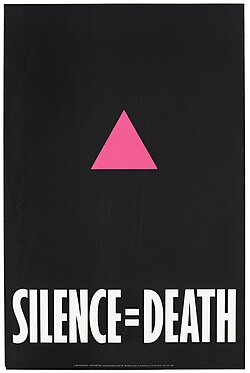 By 1985, it was clear that the HIV virus was the cause of AIDS, and that it was transmitted by unprotected sex, blood transfusions, needle sharing, and in the womb. 1985 onwards saw the appearance of “Silence = Death” posters in New York, featuring a pink triangle on a black background, and the formation of ACT UP (AIDS Coalition to Unleash Power). This group mounted powerful demonstrations attacking the lack of government action, and the slowness with which potential treatments were evaluated, while people were dying. Anthony Fauci gives enormous credit to this group for overcoming bureaucratic neglect and inertia.
Effective antiviral combination therapy became available in 1996, and had halved the death rate from AIDS in the US by the end of the following year. In 2003, under Fauci’s direction, the US launched its President’s Emergency Plan for AIDS Relief (PEPFAR), supplemented in 2014 by the United Nations Program on HIV/AIDS ((UNAIDS), aimed at identifying infected individuals, and treatment, aiming at a 90% success rate. Other parts of the plan included condom and prophylactic drug use, male circumcision, and what Sholts describes as “harm reduction services for people who inject drugs,” as well as reduction in stigma.
For a decade, the US government defined AIDS in terms of symptoms that occur in men, such as the disfiguring skin cancer Kaposi’s Sarcoma, and did not recognize the symptoms specific to women, such as cervical disease, until 1992. (My wife, who is a former nurse, has pointed out to me how often the medical establishment has defaulted to considering only the way diseases manifest in men, to the exclusion of women.)
The book notes South Africa’s low success rate in reducing AIDS, and here I think it should have mentioned how President Thabo Mbeki of South Africa in 1999 denied that HIV was the cause of AIDS, withholding antiviral drugs while advocating a program remarkably similar to RFK’s MAHA. This disastrous policy led to more than 300,000 additional deaths in the years that followed.
Fauci was director of the National Institute of Allergy and Infectious Diseases from 1984 until he stepped down at the end of 2022. He was attacked by name by ACT UP as late as 1990, but later regarded as a hero, and I would have liked to learn more about this transition. I would also have liked the book to mention C. Everett Koop, who as US Surgeon General during the Reagan Administration produced a report in 1986 describing the condition and how it is transmitted, and was responsible for sending to every US household in 1988 an explicit and unprudish account of this, while arguing against stigmatizing sufferers, and advocating condom use. (Margaret Thatcher’s government in the UK had taken similar action UK two years earlier, under the slogan “Don’t die of ignorance.”)
Social institutions depend on trust, and are severely damaged when trust is lacking. Vaccines are useless unless people accept them, and whether they do so will depend on ideology, trust, and attitude to authority. They are more likely to accept the discomfort of vaccines if they are willing to do so as a social duty, and this in turn depends on social attitudes. US individualism does not encourage public action, and I would add that the entire concept of seeking the public good sits uncomfortably with free-market dogma and the cult of individual liberty.
It is scandalous when policymakers betrayed trust by imposing restrictions that they don’t follow themselves. A notorious example is Prime Minister Boris Johnson partying during Covid lockdown, while Queen Elizabeth sat alone at her husband’s funeral.
Mistrust of the medical establishment itself has a long history. The European cholera epidemic of the 1830s was widely regarded as an attack on the poor by the elites, including the medical profession. In the 1832 Liverpool riots, doctors were referred to as “Burkers,” in reference to Burke and Hare who had been supplying bodies to Edinburgh anatomists, obtained by the simple technique of murdering the bodies’ owners.
Unfortunately, the medical establishment has at times betrayed the trust reposed in it. Pasteur carried out unpublicized experiments on humans without informed consent, one of which led to death. As late as 1990s, it became known that some UK hospitals were removing organs from dead patients after post-mortem, without informing relatives, and an act of Parliament was passed in 2004 controlling the use of human tissues.
The most shocking example of medical bad faith is the Tuskegee Syphilis Study, which ran from 1932 to 1972. In this, Black men were deliberately left untreated, in order to test the suggestion that there were differences between Blacks and whites in the progress of the disease. The hypothesis itself is based on ignorant racism (why should there be?) and immediately raises the question of why there was no corresponding group of whites, but even this is less significant than the deliberate withholding of. the treatments that were in fact available, including penicillin from the 1940s on, and the withholding of information from the patients, who were merely told that they had “bad blood.” They did however get free meals, free medical examinations, and in due course free burials.
Nowadays, mistrust is focused mainly on vaccination. The precursor to vaccination was variolation (deliberate weak infection), which in the 1700s the British were developing as protection against smallpox (I would note that actually variolation has a much longer history). And in 1777, George Washington commanded variolation for members of the Continental Army. In the late 18th century, Edward Jenner, noticing that dairy workers who had suffered from cowpox acquired immunity to smallpox, introduced vaccination (Latin; vaca, cow), based on material derived from cowpox blisters. In 1840, the British government replaced variolation with vaccination, which was made free for the poor, and made vaccination compulsory in 1853. The first US vaccination law was passed in 1809 in the state of Massachusetts, and vaccination mandates have survived legal challenges. (I would note here that vaccination worldwide was so successful as to cause the extinction of the pathogen, and routine vaccination was discontinued in the UK in 1971. Readers will be familiar with the success of vaccination in almost eliminating a wide range of other serious diseases, such as polio and measles.)
There are many kinds of vaccine. Jenner and Pasteur used weakened live virus. In the 19th century, scientists used bacteria inactivated by heat treatment. Throughout the 20th-century, there was the development of sub-unit vaccines, which used only part of the infectious organism. The most recent and most elegant variant in vaccine production is the development of Messenger RNA (mRNA) vaccines, which include those most effective against Covid. These do not use any material from the pathogen at all. mRNA is responsible for the synthesis of proteins according to the instructions it contains, and the mRNA in vaccines prompts an individual’s own metabolism to generate a harmless mimic of a fragment of the pathogen, which the immune system is then primed against. Too recent for inclusion in the book are encouraging results for the use of mRNA in cancer therapy, mobilizing the patient’s immune system to attack sequences present in the cancer, but not in healthy cells.
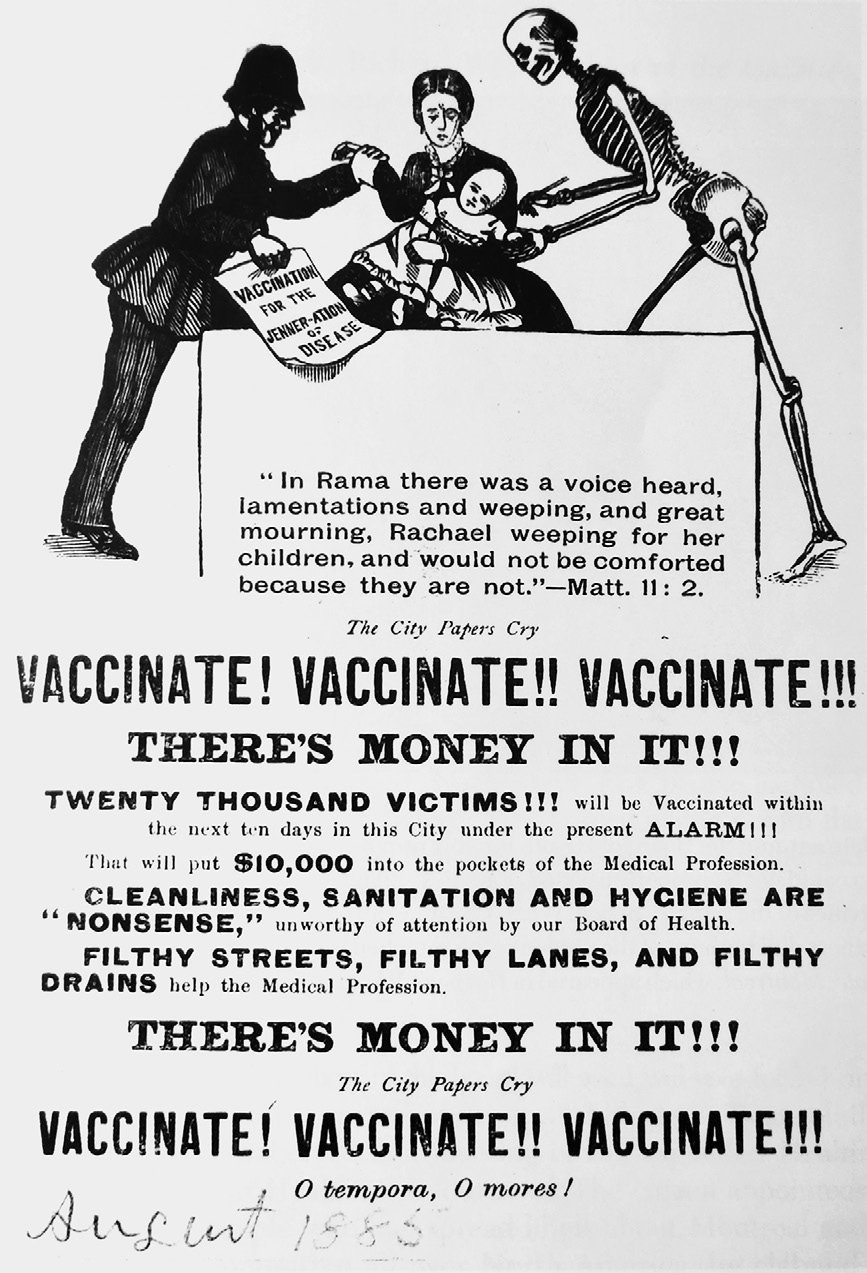
Antivaccination conspiracy theories are nothing new. One example is the 1885 Canadian campaign against smallpox vaccination by Alexander Milton Ross, who anticipated all the main features of more recent versions. Vaccination was a scam designed to make money for the medical profession, who instead should be advocating hygiene and cleanliness. Vaccination itself was said to spread infection. In further similarities to 21st-century opposition to vaccination, newspapers urged to use of quack remedies, while Ross appealed to the Bible, urged people not to follow their leaders, described compulsory vaccination as a human rights issue, invoked national identity (in his case Quebec separatism), and turned out to have been vaccinated himself, three times. The New York Times in 1875 deplored the ignorance spread by his campaign, and predicted that “When knowledge is more evenly distributed, there will be less of this fantastic and ignorant prejudice.” If only!
Countries around the world reacted in very different ways to Covid. Sholts contrasts what she calls “loose countries,” the with flexible social customs, such as the US and Brazil, with “tighter” countries such as Taiwan and Singapore, which had much lower death rates. The US and Brazil had mortality as around 700 per million inhabitants, whereas the comparable numbers for Singapore and Taiwan were 5 and 0.3. Half of all deaths in US occurred after vaccines became available, and even when one million people in the US had died of Covid, one third of the population was still unvaccinated.
In the US, there is a deep history of opposition to mask mandates, including resistance to a San Francisco mandate during the 1918 the epidemic. Masking was under discussion in US by the end of January 2020, but there was no policy coordination, and it was not until July 2020 that Trump wore a mask in public for the first time. In August 2020, the authoritative Journal of the American Medical Association urged universal masking, while Trump continued to advocate free personal choice. There were equally mixed messages, to put it politely, regarding vaccination and “alternative” treatments. It is of course true that mandates restrictions on personal freedom, but as this book points out the same is true of speed limits and smoking bans. Indeed, I would add, of every law in existence, since if we could rely on individual choice the law would not even be necessary.
Historically, propaganda was top down. We now have a new form, propaganda spread from the bottom up using social media. During the Covid pandemic, the World Health Organization recognized what it called an infodemic of misinformation, imperiling global health. Examining Twitter (as it was then known) in 2018 showed that falsehoods were 70% more likely to be retweeted as truths, and since then we can be sure that professional disinformers have been busily refining their techniques.
(For a very recent discussion of misinformation as a security threat, and how it is favored by the very architecture of social media, see Fractured Reality, M. Scharfbillig, S. Lewandowski et al., which appeared while I was writing this article. For practical advice for those who set out to combat misinformation, I would once again recommend Stephan Lewandowski’s Debunking Handbook, which I reviewed here earlier this year. Lewandowski is a psychologist, rather than an anthropologist, and I see much of his work as complementary to that discussed here.)
The three page Study Guide at the very end of the book summarizes its main themes of the book chapter by chapter, with discussion questions. Let me quote the final two.
Does knowing how humans create pandemics make you feel more or less optimistic about our future?
How will you use the information that you learned in this book? Has it changed any of your behaviors or opinions?
I’ll leave it there.
***
Enjoying the content on 3QD? Help keep us going by donating now.
Footnotes
- 1Some numbers have been updated to October 9. ↩︎