
Emilie Prattico at Aeon Magazine:
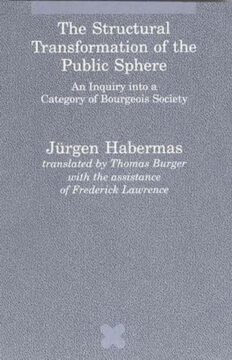 The Structural Transformation of the Public Sphere (1962), his seminal work originally published in German, made an argument about something concrete: 18th-century coffeehouses, salons and journals, where private citizens began treating the affairs of state as something they had standing to publicly discuss and judge, rather than simply obey. That habit, Habermas argued, was where modern democratic legitimacy first took root. The book also identified tendencies that would weaken it, too. He thought that the public sphere had already started to decay, folded back into spectacle by advertising and mass media, the public reduced from participants to an audience. It took almost 30 years for an English translation to appear. By the time it did, in 1989, Habermas had gotten a great deal of mileage out of the book in its original language; indeed, it had already made him a name outside Germany. When Craig Calhoun finally gathered the English-language response into a single volume, Habermas and the Public Sphere (1992), bringing together historians and theorists who challenged the argument, closing with a long response from Habermas himself, he could have easily spent the occasion defending a book that had already proved itself. Instead, he very openly contended with these critiques.
more here.
Enjoying the content on 3QD? Help keep us going by donating now.