
by Daniel Gauss
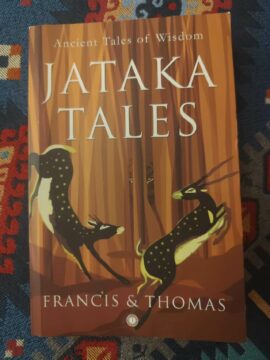
A young guy walks down a road and sees a dead mouse. In the Cūḷaseṭṭhi Jātaka, a tale of one of the Buddha’s previous lives, the dead mouse becomes the first piece of capital in a remarkable story of economic ascent. Yet, what begins with generosity and heart-felt reciprocity gradually becomes a story about turning humane social capital into raw economic power, and, ultimately, about how the Buddhist ethic of mutual benefit might easily go south.
The Bodhisattva (as the Buddha in his previous lives is called in these tales), notices the mouse and remarks that an industrious young man could make something of it. A young man of good family who has fallen into poverty takes the overheard hint, picks up the mouse and sells it for a farthing to a tavern owner with a hungry cat. So, he sees a need and the person who purchases the mouse is grateful for the windfall cat food.
The story continues in a human direction with what he does with the farthing, as he buys sweet molasses and obtains water, which he takes to thirsty flower pickers returning from a forest. They are so grateful that they give him free flowers, which he sells in town. He returns the next day with more water and molasses and again, the flower gatherers reward him. His tiny initial capital grows.
The point, at this point, is that the young man is not merely buying and selling. He discovers a type of meaningful reciprocity based on mutual kindness, and discovers that a person can create economic value by helping another person first and then reaping the benefits of his altruism. This is where the Cūḷaseṭṭhi Jātaka begins to look like a Buddhist precursor to a theory of social capital.
So, the young man learns that value is not inherent in objects as a dead mouse is worthless to most people, but worth something to a tavern keeper whose cat needs food. The young man recognizes “situational usefulness.” He sees an opportunity where other people see nothing, but the young man is actively and genuinely helping others who need his help and receiving capital in return.
His observation of human need converts the mouse into a farthing and the farthing into molasses and water. It’s as if the Bodhisattva’s admonition to him is really: think of how you can use a dead mouse to benefit humanity. And he does…until a point, the point where his Buddhist capitalism becomes a bit darker, but still lauded in the story. But at this more benign point, he converts gratitude into flowers and flowers into money. The young man, however, does not try to extract the maximum amount of money from the flower gatherers. He gives them something they need and his reward comes afterward.
His first economic transactions are more based on reciprocity rather than extraction. He creates value for someone else, and value comes back to him as a kindness and reward. He learns that generosity can produce returns and the flower gatherers decide what his kindness is worth. The young man discovers that goodwill itself can function as capital because folks want to reward such behavior and help those types of folks out. Contemporary writing on Buddhist economics has likewise drawn connections between economically productive activity and networks resembling social capital.
But the ancient story does something that modern theories of social capital sometimes avoid, namely, it looks at what happens when social capital changes into economic leverage. It asks, perhaps, whether it is inevitable that social capital, if successful, will actually lead to less benign forms of capitalism.
From generosity to leverage
A storm has blown down branches and leaves in the king’s garden and the gardener cannot easily remove them. The young man offers to get the job done if he can keep the wood and the gardener agrees.
The text merely says that the young man goes to a children’s playground and, by giving them molasses, gets them to collect the sticks and leaves. Does he give them the molasses first and then ask for a favor? Do the children need the molasses or is it a sweet substance they crave? The young man may no longer, at this point, be trying to meet “needs” as much as to find and deliver to “wants.”
The flower gatherers are given water and molasses because they have a practical need after working, but the children appear to be given molasses simply because they want it and this will create a reciprocal relationship financially beneficial to the young man. We move from responding to another person’s need to identifying and exploiting another person’s desire for pleasure.
The children do the work and he obtains a large pile of wood essentially for nothing because he has discovered a way to coordinate people who possess labor for people who will pay for this. The royal potter needs fuel so the young man sells him the wood and his capital grows again.
He has seen an unused resource, organized labor, solved the gardener’s problem, supplied the potter’s need, profited from the transaction and the kids got a temporary molasses fix. But then comes the grass. And here, I think, the moral character of the story changes even more drastically.
The grass cutters
The young man takes drinking water to five hundred grass cutters working outside the city. He is back to meeting a need and kindly giving before kindly receiving. The workers are grateful and ask how they can repay him. “I’ll tell you when I want your aid,” he says.
When he finally does call in the favor, he uses his relationship with them to withhold something from the market as he wants to become a temporary monopolist. He doesn’t create his monopoly like Rockefeller, he creates it like a Bodhisattva. The water was generous and needed, but it was also an investment as the young man now possesses a claim on five hundred people. He has accumulated social capital and soon he cashes it in. A merchant has told him that a horse dealer is arriving the next day with five hundred horses. The horse dealer will need an enormous quantity of grass.
So he goes to the grass cutters and he asks each of them to give him a bundle of grass. More importantly, he asks them not to sell their own grass until he has sold his and out of gratitude they agree. Five hundred grass cutters therefore temporarily surrender their ability to sell their own product as the young man has used goodwill to coordinate a restriction on their economic activity.
The horse dealer arrives and cannot obtain enough grass elsewhere. The young man sells him the grass for one thousand pieces of coin. The young man has moved from creating value to controlling access to value. He did not produce the grass, the grass cutters did, but he persuaded them to refrain from selling it so that he could obtain a scarcity premium. His social capital became market power.
When reciprocity might become exploitation
A relationship can allow people to cooperate for mutual benefit, or it can allow one person to mobilize other people’s cooperation for his own benefit. The young man’s relationship with the grass cutters swings sharply toward his own direction.
They benefit from his generosity and he benefits from their labor and cooperation. Nobody appears to be forced to do anything and the arrangement is voluntary, yet there is asymmetry. The grass cutters have given him something considerably more valuable than the water he gave them. And he has used their collective cooperation to create a temporary monopoly over a necessary commodity. This is the moment, perhaps, when the “Buddhist capitalist” is born. He is still meeting a need, but making sure only he can meet it.
But this is only a story, you say. Well…OPEC is structurally similar, although the distribution of the benefit is different. Oil-producing countries can collectively restrict how much they put onto the market and can create scarcity to obtain a higher price. Market power can come from coordinating the supply of a commodity. But our young man does something even more “capitalistic” as he doesn’t even own the productive resources. The grass cutters own the grass and do the work but he uses his relationships with them to persuade them to withhold their output, then uses the resulting scarcity premium for himself.
So, let’s say a trader spends years cultivating relationships with five hundred small farmers. He gives them water, loans, fertilizer, emergency assistance etc. Later, when he learns that a huge buyer is arriving and will need a particular crop, he asks the farmers to bring their crops to him and, more importantly, not to sell until he has sold his. If they agree, the trader has effectively assembled a cartel. He, too, has converted relationships into control over supply. That’s almost exactly what our Buddhist capitalist is doing. Social capital becomes economic power.
What is interesting to me is that this story has been framed in the past as an example of admirable intelligence and drive: a young man starts with almost nothing, recognizes opportunities, helps people a little (but with an eye on some return) and becomes wealthy.
He discovers that relationships can be converted into market power, which is a more sophisticated and possibly morally challenging insight. At the beginning, the young man makes money by doing something useful. But increasingly, he makes money by controlling the circumstances under which other people can obtain things. The grass episode is the first clear example. The final episode makes the transformation even more dramatic.
A sea trader tells him that a large cargo ship is arriving. The young man hires an impressive carriage, goes to the port and acquires the ship’s cargo on credit, using his signet ring as security. He then constructs a little theater of wealth as he has a pavilion erected and arranges for merchants to be passed through three successive attendants before being admitted to him (to look like a huge bigshot). He wants merchants to believe that they are dealing with a powerful and important businessman, not a guy who bought something on credit and is now going to charge each one of them for profit.
About one hundred merchants arrive wanting to buy the cargo, but they are told that the cargo has already been claimed. They have to approach the young man, each paying him to obtain a share and eventually they buy him out altogether. The young guy returns home with two hundred thousand pieces of coin…from a dead mouse.
The young man has gone from selling a dead mouse to selling the appearance of financial power. His original capital was an object. His final capital is information, credit, reputation, timing and theater. He learns how to make other people believe that he possesses wealth and that belief (a con job?) itself becomes economically valuable.
Wealth as something legitimate
Modern Buddhist economics generally indicates that wealth can be legitimate. The important questions concern how wealth is acquired, how it is used, whether it produces suffering and whether material prosperity becomes an end in itself. Contemporary scholarship commonly emphasizes ethical livelihood and the use of wealth for human welfare rather than simple accumulation.
The Cūḷaseṭṭhi Jātaka fits into part of that tradition. The young man is diligent, observant, inventive, creates employment, uses waste, satisfies needs, builds relationships. When he becomes rich, he gives half of his final fortune to the Bodhisattva.
Yet, the story does not conclude with the young man being chided or punished for becoming wealthy by using deception, selling sugar to children, capturing a market through relationships to make himself wealthier, using money and credit to make money instead of meeting a need. The Bodhisattva, interestingly, doesn’t even ask the guy how he made the money at the end of the story. Instead, the Bodhisattva, incarnated as the Little Gildmaster, is so impressed by him that he gives him his daughter in marriage to continue the family business.
So in this Jātaka tale the benevolent actions of meeting basic needs and receiving rewards morphs into a conventional type of capitalism, which seems blithely accepted by the Bodhisattva. It doesn’t give us a simple Buddhist version of the Protestant work ethic, either: work hard, accumulate wealth and success proves virtue. Something different is happening.
Wealth as a test of intelligence
This tale seems to accept a remarkably instrumental view of human relationships and a permissive view of wealth accumulation. The young man does not merely work hard and prosper, he learns how to turn almost anything…water, grass, a dead mouse, credit, reputation and other people’s perceptions…into capital. It presents commercial cleverness as a personal virtue and assumes that wealth acquired through such cleverness can coexist comfortably with Buddhist values.
The young man’s intelligence is obvious but what does intelligence become when it encounters worldly success? At the beginning, intelligence allows the young man to notice something every other entrepreneur overlooks: a human need. At the end, intelligence allows him to manipulate what everyone else sees. The dead mouse requires him to perceive hidden value which can help someone while the ship episode requires him to manufacture an appearance of value to deceive others into buying only from him.
Wealth used for humane ends
Capital, once accumulated, can be used to produce more capital – it can become a self-reinforcing system. The young man’s first farthing cannot do very much, but the flower sellers give him something of greater value than a dead mouse and the flowers become money. The money allows him to buy supplies, the supplies generate relationships, the relationships produce grass, the grass produces a thousand pieces of coin, the thousand pieces give him credibility, credibility allows him to obtain a ship’s cargo on credit, the cargo produces two hundred thousand pieces. Our budding Buddhist capitalist lands his fanny squarely in a tub of butter and marries up.
The Buddhist difficulty, from my perspective, is that capital can multiply independently of the human needs that initially justified its creation. Is this ethical as long as the result is used for humane ends? At the end of the story, however, it does not say that the young guy spent 100,000 pieces of coin to alleviate hunger. The impression I got was that it was none of my darn business how the kid used his dough.
Somewhere along the way, the relationship between need and wealth becomes increasingly tenuous and the intelligence of perceiving human needs morphs into an intelligence of leverage, deception and accumulation. The young man’s wealth has become increasingly detached from material usefulness. He is now manipulating scarcity, information, credit and perception. He has entered the world of finance. Even if he uses his wealth to help the poor or hungry, the means of acquisition possibly remains morally questionable.
The morality of the ending
If Buddhist business ethics begins with human need, what happens when the accumulation process becomes increasingly independent of need? If this Jātaka tale wanted to teach that clever commercial activity for one’s own gain is morally corrupt, it could have. The Bodhisattva could have spat on the 100,000 pieces of coin and shown the guy the door.
Instead, the Bodhisattva rewards him. The Bodhisattva recognizes his extraordinary ability to generate wealth and brings him into his family. The young man becomes treasurer, becomes respectable, becomes successful. The economic system absorbs him.
The Buddhist capitalist?
In the end, a Buddhist entrepreneur may look like a worldly entrepreneur. This is a story about the transformation of forms of capital, but perhaps Buddhism adds a question that capitalism, as an economic system, does not necessarily answer. The question becomes what the pursuit of wealth does to a person: greed, attachment, manipulation, indifference or perhaps generosity and responsibility.
Here is the structure I see in the Cūḷaseṭṭhi Jātaka: early phase…meeting needs, reciprocity, goodwill. Middle phase…coordination, resource capture, monopoly. Late phase…status signaling, deception, credit and the manipulation of scarcity and perception.
Perhaps this is why the story is so interesting as its ethics does not disappear when the young man becomes wealthy, but they become a little harder to identify. The same intelligence that initially allows him to perceive human needs eventually allows him to perceive weaknesses in markets and in other people’s perceptions. The same relationships that begin in generosity become instruments of economic leverage and the same capacity to recognize value eventually becomes a capacity to create it.
Perhaps the Bodhisattva praises him precisely because he possesses the worldly intelligence necessary to function in a morally challenging world without resorting to violence. Buddhism does not require the young man to remain innocent of commerce but asks how much worldly intelligence a person can acquire without losing his humanity.
In Buddhist terms, we might distinguish lokiya paññā (worldly intelligence) from avihiṃsā (non-harm). The first can become extraordinarily powerful while the second remains a constraint. The young man is neither a saint nor a villain, but something more recognizable: an intelligent person discovering, step by step, what the world and his own conscience will allow him to do, and how much he can get away with.
This is definitely not a story about purity, nor is it a story about a man with a beggar’s bowl who receives just enough rice each day to survive and teach. This is a story about operational ethics: which ethical principles survive contact with the world and which do not.
Perhaps the Cūḷaseṭṭhi Jātaka quietly admits that the world runs on mechanisms that are not purely ethical and maybe this is one reason the Bodhisattva praises the young man: he is flexible enough to function in a morally compromised world without abandoning non-harm. He has to get his hands dirty and he does, but something deeper remains pure.
One could almost describe the young man’s two necessary qualities as like a serpent and a dove: lokiya paññā, worldly intelligence, and avihiṃsā, non-harm. He must be clever enough to understand how the world works, but constrained enough not to turn that intelligence into abuse of power, violence or coercion.
The story seems to permit intelligence, timing, calculated risk, relationships and even deception of appearance. What it does not clearly permit is violence, waste or overt coercion. But that leaves us with a couple tough questions: What about exploitation that is neither violent nor coercive? What about making sure that someone else loses while you gain?
Perhaps this is where the story’s ethical ambiguity becomes most useful. Buddhist ethics may guide the young man’s initial acts of generosity more clearly than they guide the increasingly sophisticated forms of wealth accumulation that follow. And perhaps the harder Buddhist question comes only after he has learned how value works. What happens when the person who has learned how to create value begins to move that value primarily toward himself? Perhaps Buddhist ethics will guide the young man’s future decision-making toward charity and sharing more clearly than it guided his wealth acquisition.
Enjoying the content on 3QD? Help keep us going by donating now.