
by Derek Neal
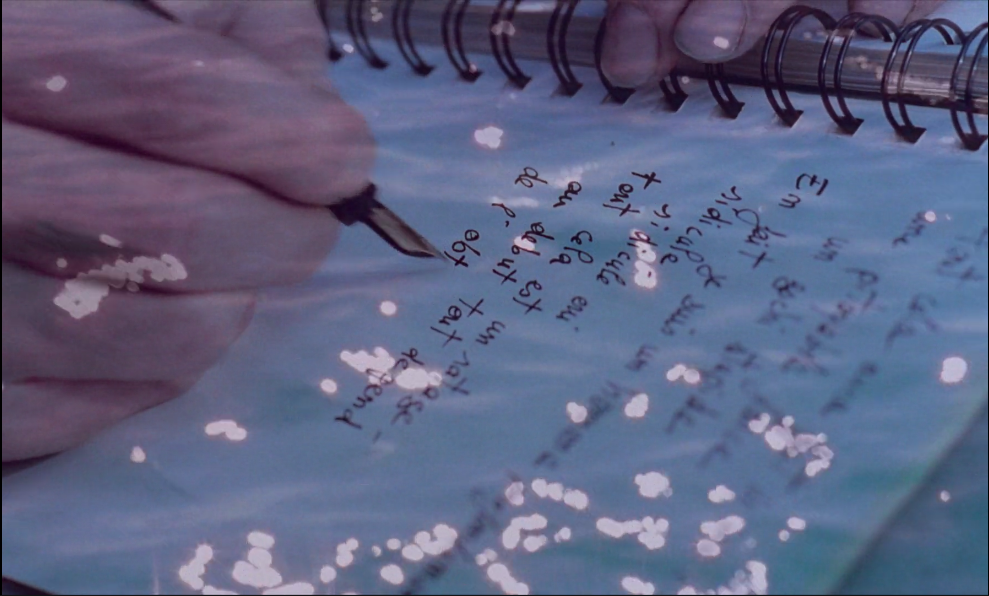 What if you took Paul Schrader’s “man in a room” concept and transposed it to the vast expanse of the African desert? You would get something like Claire Denis’ Beau Travail (1999), which shows that the room a man locks himself in doesn’t need to be literal—a prison can be made anywhere. In Denis’ film, the man in a room is Galoup, a French Foreign Legion sergeant who commands a group of some 15 men in Djibouti. He is, he tells us in voiceover, “a perfect Legionnaire,” and like Schrader’s protagonists, he writes in a journal and narrates his memories, a storytelling technique stretching back to Robert Bresson’s Pickpocket. The story thus proceeds along two timelines: one, with Galoup in Marseille, writing in his notebook after he has been dismissed from the Foreign Legion; and the other, the memories of the desert and the Legion that the notebook engenders.
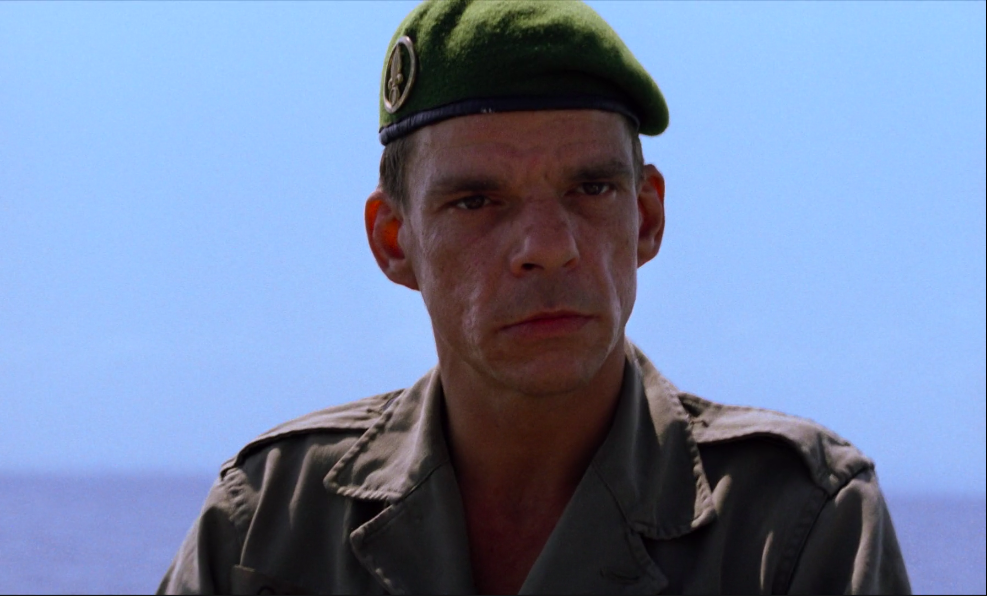
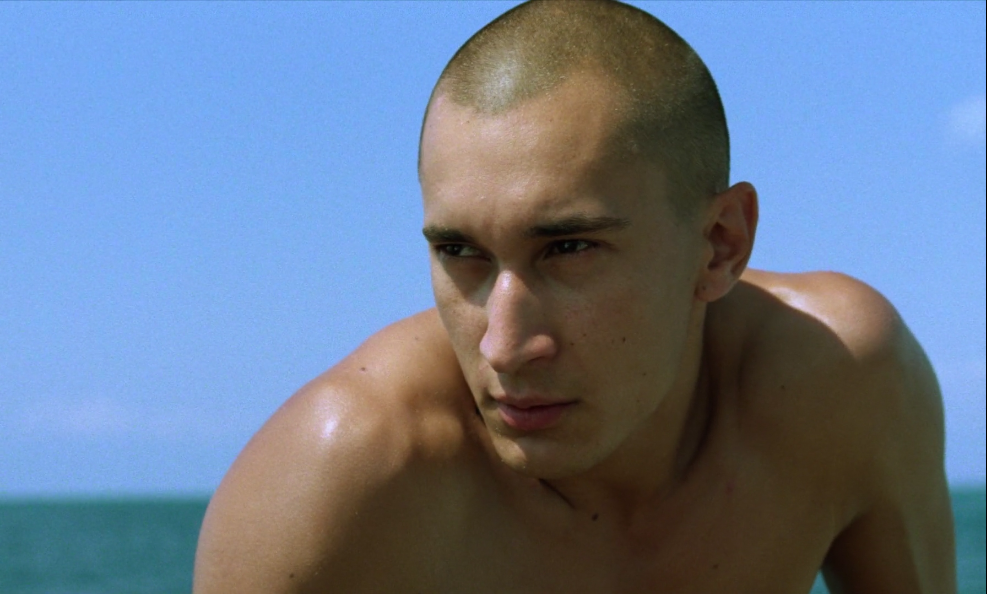
The drama of the narrative begins when a new recruit, Gilles Sentain, arrives in the desert and disrupts the orderly and structured existence that Galoup has fashioned for himself. Sentain and Galoup are foils: Galoup is older (played by Denis Lavant, 39 years old in 1999 but looking closer to 50) and his face is weathered, pockmarked, and to put it bluntly, ugly. Sentain, played by Grégoire Colin, is young and beautiful (24 years old in 1999). His skin is smooth, his features angular and chiseled, yet retaining an air of innocence. His nose is long and elegant compared to Galoup’s, which is squat and stumpy, and Sentain has a vaguely androgenous look, while Galoup is clearly an ageing man, and monstrously so. Sentain, at least in Galoup’s estimation, exhibits a “calm” and “openness” that attracts others, whereas Galoup must work for everything, his effort and straining visible, and he exists apart from the group, unable to take part in the Legion’s camaraderie and brotherhood. In one incredible scene, the rivalry between Galoup and Sentain is dramatized as they circle each another against the backdrop of the sea, holding eye contact the entire time, while the soundtrack to the Billy Budd opera plays in the background (the film itself is loosely adapted from the Melville novella).
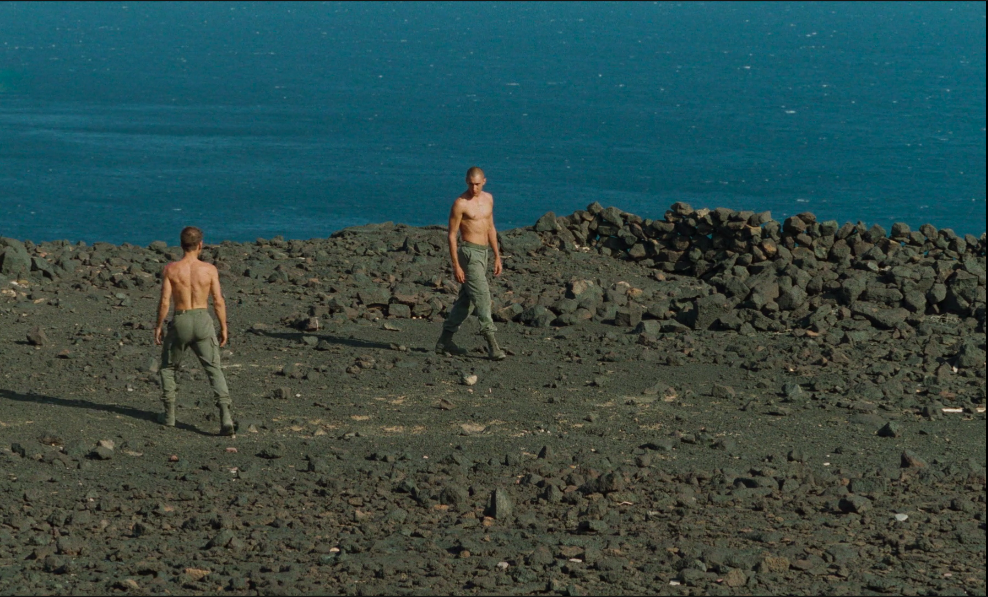 There is little dialogue in the film; it is cinema in its purest sense—storytelling through images—and almost nothing is explained. Because the story in the desert is framed as a series of flashbacks, the logic of memory reigns—images succeed one another, and in their combination suggest moods and feelings, a consciousness and a way of being outside of language, a sort of dream logic where the scenes themselves cannot even be said to be real within the world of the movie, but may only exist in Galoup’s mind. The aforementioned circling scene, for example, seems fantastical and serves little purpose in terms of plot, yet it’s a striking symbolic representation of Galoup’s rivalry with Sentain.
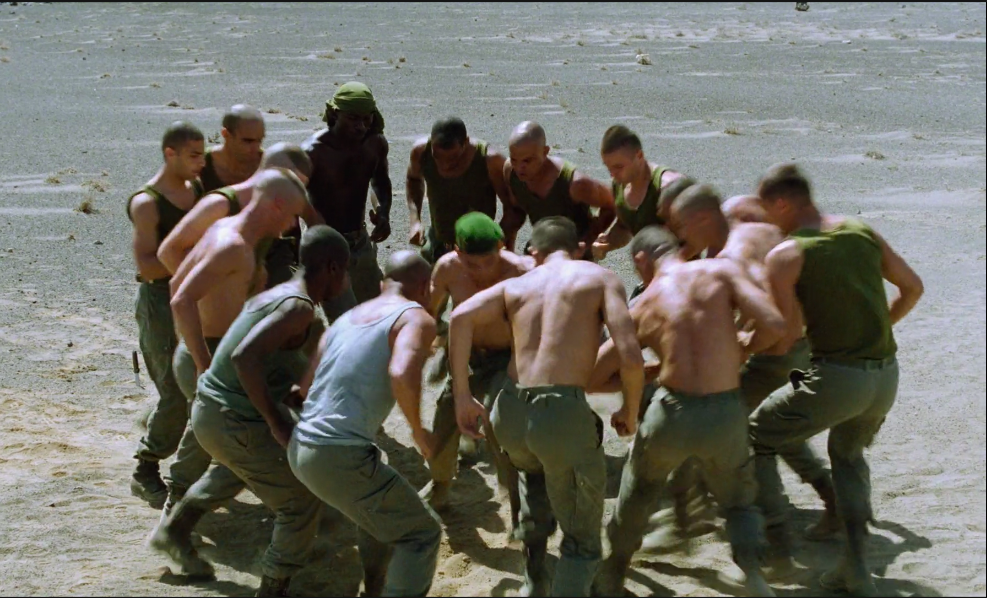
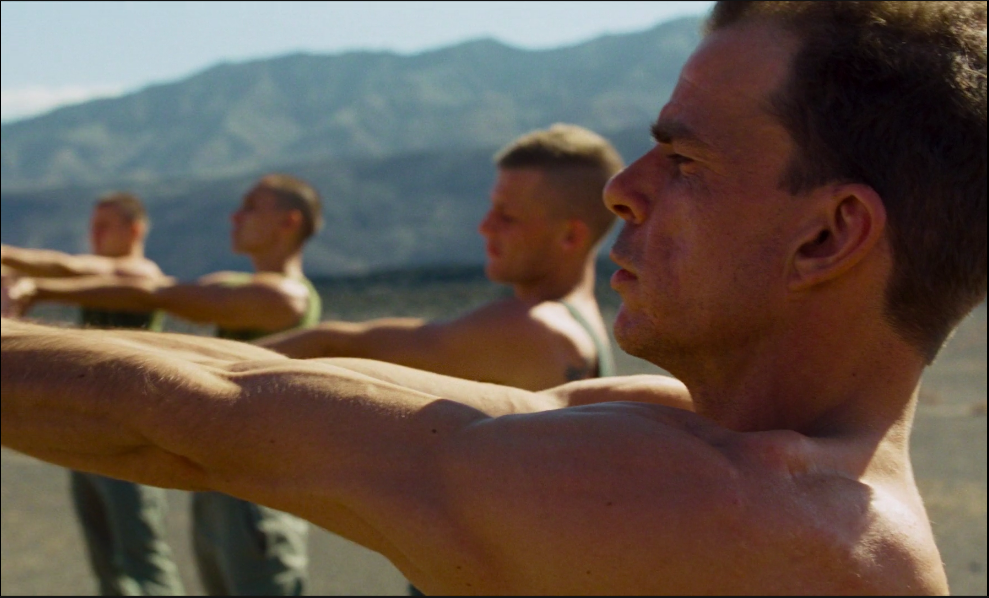
Other scenes operate in this way, too, almost as if Claire Denis thought: we have 15 supremely fit men in one of the most beautiful settings on Earth, let’s put them through some physical exercises, turn the camera on, and see what happens. These exercises consist of activities such as two Legionnaires dueling underwater with knives, a training routine through the remnants of an abandoned building, and the physical movements the men repeatedly perform as a group, often resembling tai chi or yoga, which are some of the most visually arresting in the film. These scenes have little narrative purpose, we begin to understand, because the Legion itself has no purpose; it is a vestige of a colonial apparatus that continues to run due to inertia, calling to mind Coetzee’s Waiting for the Barbarians or, in the sense of fading empire, Ishiguro’s The Remains of the Day. The men of Beau Travail only know honor, valor, and a glorious France—the film opens with a marching song referencing these values, before giving way to a kitschy pop song in a dingy nightclub—but they exist in a world where these duties are anachronistic. After the scenes of the Legionnaires’ training exercises, Denis frequently cuts to the Africans who view them from a distance, reversing the colonial image of the white, civilized man staring at the savage—here the Legionnaires are the object of study, the group whose activities can only be explained through an anthropological context, from an outside observer, because they are so unfamiliar and exotic.
And yet, as we watch the men perform their exercises, stretching their bodies this way and that, seemingly at one with the desert landscape around them, their torsos tanned to the colour of sand and dirt, we are taken in by them, captured in aesthetic contemplation, and we feel—or at least I feel—that I too would like to participate in these exercises, to take part in what seems to be a transcendental ritual. I’m reminded of high school soccer practices, lazing around on the grass doing halfhearted stretches with my teammates, existing both separate and together, like stars in a constellation. There is little better than this feeling of being part of something bigger than yourself, a sentiment that the actor Grégoire Colin echoes, in an interview about the making of the film, when he says that the “immersive exercises were extraordinarily transformative,” and that they even led “to the point of losing our identity.” Here Colin is not talking about acting, but about the preparation for the film and the extended training camp that he and the other actors (many of whom were dancers) were put through. One would think this was for physical purposes—the actors’ bodies must look like those of soldiers—but it seems that Denis did this for psychological purposes as well, and she even prevented the actor playing Galoup (Denis Lavant) from joining the training camp until its end, as if she knew that the physical activities themselves would bond Lavant/Galoup to the other Legionnaires, jeopardizing the authenticity of the film.
The line between fiction and reality blurs here, and Colin also mentions that some of the exercises “were filmed, and made it into the film,” which seems obvious, but listening to him I realized: many of these scenes were not acted but were lived, the power of the activities—such as one where the men partner up and violently clasp each other, then release, then clasp again—so immense that they are impossible to do without producing a profound effect on the participants. Denis shows these images to the viewer, letting us participate in them—her understanding of the aesthetic power of the image is remarkable—and then she distances us, cutting to the African observers, as if to say, you must see yourself from the outside, you must remember the colonial context of the Legion, the harm they have wrought, and the ridiculousness of these men who play at war when the enemy has long since disappeared. Denis shows us the beauty inherent in Colin’s “losing our identity” but the danger too, and it’s notable how closely Colin’s words track Susan Sontag’s characterization of fascist aesthetics in cinema, with its focus on “the dissolution of alienation in ecstatic feelings of community.” Beau Travail is, in fact, one of the most remarkable examples of fascist aesthetics that I can recall, but in repeatedly undercutting the viewer’s enjoyment of its tropes, in showing the absurdity of the Legionnaires’ existence through incongruous juxtapositions, it is not a fascist film, but a commentary on the strangeness of a colonial army after the end of history (this film could have only been made in the 90’s, after September 11, 2001 would have been too late).
Beau Travail is in this sense a postcolonial film, but far from a simple one. As the men move in unison in the desert, training for an enemy that will never come, they are not presented as pitiable or evil, but as beautiful, strong, and godlike. Their exercises have a spiritual quality, and it is easy to understand that the Legion, which is a special unit of the French army allowing foreigners to enlist, is a refuge for men who need a second chance at life. The group itself is diverse; in one early scene, two men chat in Italian while fishing; later, while two Legionnaires pull laundry off the line, one teaches the other, who is Russian, the names of pieces of clothing in French; as the men sit around a table, smoking cigarettes and drinking beer, their different ethnicities are apparent. They are something akin to an elite, European soccer team, which has gathered players from all around the world. These sorts of dualities characterize the film: the Legion’s purpose is to spread French power and to subjugate weaker nations, yet it is also utopian, open to anyone and accepting of people as they are (a few of the Legionnaires observe Ramadan); the men are virile and strong, yet also perform domestic duties, and have a beguiling obsession with ironing their clothes and the pursuit of “elegance;” they train and discipline their bodies under the desert heat, yet they also dance playfully in the town’s nightclub, flirting with the local women who frequent it, and with no suggestion of violence or domination. They are ridiculous, yet tragic.
 This duality is best expressed in the battle between Galoup and Sentain, which is the crux of the film and eventually leads to Galoup’s dismissal from the Foreign Legion. But why does Sentain cause Galoup so much angst, why does “something vague and menacing” take hold of him when Sentain arrives? Much of the criticism written about Beau Travail views Galoup as sexually repressed, and his destruction of Sentain as the sadistic expression of unrealized desire. This then connects to the memorable ending of the film, when Galoup dances alone in the nightclub to the 90’s Eurodance hit “Rhythm of the Night”—many critics have seen this scene as Galoup finally expressing his true self, breaking out of the toxic masculinity of the Legion and finding joy, turning Beau Travail into a narrative of self-discovery, a sort of hero’s journey where the individual breaks free from tradition with the aim of self-realization—“a utopia of movement without rules,” as one review put it. This, however, is not the film I saw.
The attempted murder of Sentain—Galoup abandons him in the middle of the desert with a faulty compass—is done out of envy; in a training exercise, Sentain and another Legionnaire crash a helicopter. Sentain survives, then recovers the other Legionnaire’s body in the sea before being picked up by a fishing boat. This earns him the recognition and praise of the commanding officer of the Legion, Bruno Forestier. Although Galoup is a sergeant and often directs the Legionnaires, he is not the leader—Forestier is. Because of this, Galoup is a man apart, not able to participate in the camaraderie of the group, but also not respected as the Commander. Like the other Legionnaires, he wants to win the praise of Forestier, but he can’t. Of Forestier, Galoup says:
Bruno. Bruno Forestier. I feel so alone when I think of my superior. I respected him a lot. I liked him. My commandant. A rumor dogged him after the Algerian War. He never confided in me…I admired him without knowing why. He knew I was a perfect legionnaire, and he didn’t give a damn. Bruno. Bruno Forestier.
Then, after recognizes Sentain’s achievement at the funeral of the other soldier, Forestier declares before the other Legionnaires:
Congratulations, you did your duty. You acted with bravery, selflessness, and resolve. I’m proud of you, as is the entire Legion.
 The next scene shows Galoup in his room, hurling his shirt on the floor in rage. Rather than incommunicable desire for Sentain, this is something more like the story of Cain and Abel, where two brothers vie for recognition from a Father. This sequence of events brings to mind another portrayal of pride and envy, that of Tarkovsky’s Andrei Rublev, when Andrei is selected to paint icons in Moscow while his fellow painter Kirill is left behind. Andrei Rublev is a film about the struggle to be an artist, and this too provides a new lens through which to see Beau Travail: the art of the Legionnaire. When Galoup says that he was “a perfect Legionnaire,” what he means is that he has elevated his performance to an art, and like any artist, he hopes to be recognized.
The film’s penultimate scene shows Galoup on his bed in Marseille, holding a gun that we expect he will use on himself. Then we cut to that nightclub in Djibouti, only this time Galoup is alone, staring at the mirror, and he begins to dance. This scene resists interpretation and has seemingly beguiled critics since the film’s release. Is this a memory? A fantasy? Or something else? What are we to make of Galoup’s dance, during which he first appears alternatively suave and cartoonish, languid and silly, and then, after a cut to the end credits, deranged, psychotic, and unsettling?
When I first watched this scene, I felt deceived. It really did seem, in the first half of the dance, that Galoup had somehow found a way out of his pain, and this felt wildly out of place with his character. But the second half of the dance reassured me. Far from “a utopia of movement without rules,” we see that without structure, Galoup finds chaos. Dance, for that matter, is hardly unstructured, but like any art or skill, depends completely on first mastering the rules, which then allows one go beyond them and move so well that the rules themselves are hidden.
Galoup eventually rolls to the edge of the dancefloor and then runs out the door, exiting the stage, the nightclub, and the film itself. Earlier in the film, we also see Galoup leave the nightclub a moment after entering it, a short scene which allows us to see the name of the nightclub: “Bar des Alpes.”
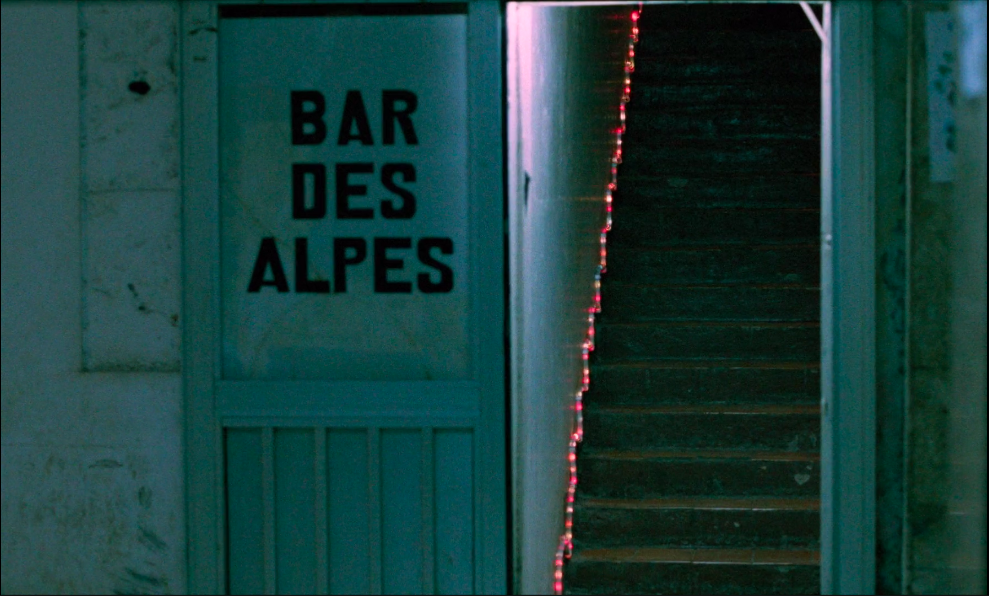 What does it mean to have a nightclub in Djibouti invoke the Alps, and to have one mount a steep staircase lined with red lights to get there? I have to invoke Sontag again, and particularly her analysis of Leni Riefenstahl’s films. Sontag notes that Riefenstahl’s early films, before she worked directly for the Nazis creating propagandistic documentaries, centered on “Alpinism” and on some variation of mountain climbing, which could serve as “a visually irresistible metaphor for unlimited aspiration toward the high mystic goal, both beautiful and terrifying, which was later to become concrete in Führer-worship.” The mountain is also “that majestic force which invites the ultimate affirmation of and escape from the self—into the brotherhood of courage and into death.” But what if the mountain is not a mountain but a seedy nightclub at the top of a staircase, what if “the blue light,” which flashes at the top of the mountain in one of Reifenstahl’s films, becomes a red light—the universal symbol for vice and prostitution?
Sontag’s list of the characteristics of fascism—“the ideal of life as art, the cult of beauty, the fetishism of courage, the dissolution of alienation in ecstatic feelings of community; the repudiation of the intellect; the family of man (under the parenthood of leaders)”—is also a perfect description of the French Foreign Legion as depicted in Beau Travail, and, I would add, a description of many strains of spirituality and Romanticism, which are not fascist. Sontag, in her seminal essay “Fascinating Fascism,” goes too far, repudiating her earlier writings on “spiritual style” and effectively throwing out the baby with the bathwater. Claire Denis is up to something more interesting, making a film about the ideas Sontag invokes—art, beauty, courage, community—but showing how they have lost currency in the modern world, resulting in something both tragic and camp. This is perhaps the true meaning of Galoup’s suffering, that he is a perfect Legionnaire in an indifferent world.
Enjoying the content on 3QD? Help keep us going by donating now.