
Lynne Peeples in Nature:
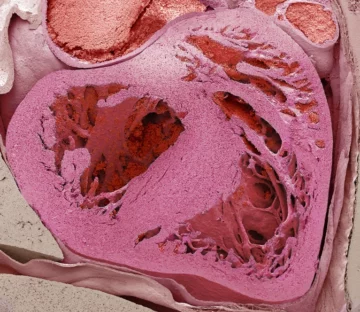 Every heartbeat is choreographed not just by the brain but also by a mysterious nervous system embedded in the heart itself. Now, scientists studying mice have started to unravel how this complex system works to keep the heart beating steadily even at times of extreme stress — findings that challenge the classic view that all cardiac neurons are alike. “The key is to keep the heart functional no matter what happens. Because if the pump function stops, you will die,” says Rui Chang, a neuroscientist at Yale University School of Medicine in New Haven, Connecticut, and co-author of the new paper.
The findings, published today in Cell1, could inform better treatments for heart disease. Like the gut’s widely recognized ‘second brain’, the heart contains a mini-brain of its own — known, more formally, as the intrinsic cardiac nervous system. This network of neurons is embedded in the fat pad surrounding the heart. The system’s neurons exchange messages with the brain and with each other, and are the final players in a long chain of neurons that controls cardiac function. But because intrinsic cardiac neurons are exceedingly rare, making up only about 0.01% of the cells in a piece of heart tissue, their precise roles have been hard to pin down, says Chang.
More here.
Enjoying the content on 3QD? Help keep us going by donating now.