
by Charles Siegel
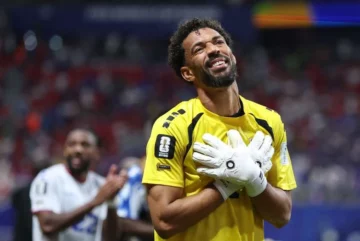
As I am writing this, the World Cup is into the quarterfinals. All in all, it’s been a great tournament so far. There have been many exciting, close matches. There was the brain-melting final 15 minutes of Argentina’s victory over Egypt. There have been several elimination matches decided in stoppage time, or extra time, or on penalties. There have been standout performances from the players you’d expect — Messi, Mbappé, Haaland and Kane — and also from lesser-known figures who have made themselves into new international stars, such as Denis Undav of Germany and Azzedine Ounahi of Morocco.
Most endearingly, there have been terrific performances from underdogs. The most surprising of all such stories, of course, is that of Cape Verde. As everyone now knows, this small island nation, population 530,000 or so, qualified for the World Cup for the first time — the third smallest country ever to do so. And they didn’t come just to make up the numbers. They progressed, incredibly, to the knockout stage, holding mighty Spain to a 0-0 draw, and drawing with two-time champions Uruguay and Saudi Arabia as well. In the round of 32, they lost to Argentina in extra time, on an own goal, but essentially they won. As one wag paraphrased the famous old headline in the Harvard Crimson, “Cape Verde beats Argentina 2-3.” Cape Verde’s goalkeeper, Vozinha, became an instant folk hero.
Spirits have been high all around. Away from the matches themselves, there have been endless stories about foreign fans and their wide-eyed, exuberant embrace of all things American. Lots of emphasis on food, especially. There have been stories about foreigners’ amazement at Mexican restaurants serving chips and salsa whether you ask for them or not, and not charging you for them, and bringing endless refills. (Although some of these stories are fake, as seems inevitable these days.) Here in Dallas, visitors have marveled at the barbecue, and the prehistoric size of beef ribs.
Beyond the food, foreigners are apparently surprised to find Americans so friendly and welcoming. There have been many reports about how visitors come here with preconceived images of our country, its truculence and xenophobia. But then they’re surprised to find that actual Americans aren’t like that at all. These stories are very pleasing to us, of course. They reassure us, make us feel we’re really not that bad. That we welcome strangers here! That our country is the big, capacious, friendly, magnanimous country we have all grown up thinking it is.
All true! But here is another truth: we are also cruelly, heartlessly unwelcoming. On July 1, the same day that England and Belgium edged DR Congo and Senegal, respectively, in tight elimination matches, and the U.S. progressed by beating Bosnia & Herzegovina, the New York Times reported that ICE had detained more than 10,000 people in “a major surge that has stemmed from a push…to increase arrest rates.” According to this report, “ICE officers have arrested people at check-ins with immigration authorities, during traffic stops and on the street. The push has apparently yielded results, with recent arrest numbers roughly doubling from the 1,000 picked up each day earlier this year.” ICE officials intend to keep a lower profile, avoiding the militaristic “surge” campaigns that occurred in Minneapolis, Chicago, Los Angeles and elsewhere, but are actually substantially ramping up arrests. Five days ago ICE agents shot a man to death in Houston. Already DHS’ story about the killing has changed. Lorenzo Salgado Araujo had lived in Houston for 35 years, was a husband and father of three sons, and a business owner in the process of obtaining a work permit.

The day before his killing, the same day Spain eliminated Portugal in stoppage time and the U.S. crashed out to Belgium, Pro Publica reported that deportations of migrant children have tripled as compared to Trump’s first term. The article stated that “immigration judges, who report to the Justice Department, have issued more than 10,000 removal and voluntary departure orders each month for immigrant minors who either migrated alone or with relatives, a rate that is nearly four times higher than in Trump’s last term.” Immigration judges now being, in many cases, judges who preside over kangaroo courts.
Just ten days earlier, as visitors were arriving in cities from coast to coast just before the start of the tournament, the Supreme Court upheld President Trump’s orders to end “Temporary Protected Status” for Haitian and Syrian immigrants. Congress created this program 35 years ago, to provide temporary relief for foreign nationals whose home countries were in a state of war, or had experienced recent natural disasters. Haiti had received such status in 2010 after an earthquake that killed over 200,000 people, and Syria received it in 2012 due to the ongoing state of conflict there. The basic idea was that people should not be deported back to countries that had such status.
Trump directed then-DHS Secretary Kristi Noem to end this program abruptly. The first question before the Supreme Court was whether this could be done without an actual, thorough vetting of conditions in a country, and the Court held that it indeed could be. The second question was whether the termination was motivated by racial animosity and thus was unconstitutional.
The Court, on a 6-3 vote, answered this question in the negative. Justice Alito reviewed the statements made by Trump and Noem, but did not actually quote any of them. He then breezily held that none of them “was overtly racial,” and that they “in substance all expressed policy views that could rest on race-neutral justifications.”
Justice Kagan’s dissent did quote some of these statements. Here is how she put it:
[T]he Haiti plaintiffs have carried their burden. The evidence they have offered includes statements by the President so repellent and racially inflected that the majority declines to put them in print. So here are some of the statements:
Haitians are “eating the dogs . . . . They’re eating the cats. They’re eating—they’re eating the pets of the people that live [in Springfield, Ohio].” … And: Haitians are also eating “other things too that they’re not supposed to be.” … And: Haitians in the United States “probably have AIDS.” … And: Haiti is a “shithole country,” which is “filthy, dirty, [and] disgusting.” ….And: Haitian immigration is “like a death wish for our country.” …. And: Haitians, along with some others, are “poisoning the blood” of our country….And: “Why is it we only take people from shithole countries” like “Haiti [and] Somalia”? “Why cannot we have some people from Norway [and] Sweden?” ….
The majority briefly replies that those remarks are not “overtly racial,” ante, at 21, but it is hard to know what that means. Haitians are Black. (Norwegians and Swedes not so much.) The references—of filth, disease, and primitiveness—are shot through with racial stereotypes and tropes. It is hard to imagine the statements being made today of any White community….The statements fairly shout, in their racial undertones and overtones alike, that race entered into the President’s resolve to remove Haitians from this country.
For all the stories of American openness, and cheerful hospitality, this is equally who we are. Six of the nine justices sneeringly pronounced that those statements showed no racial animus. Half the country voted for this president and his appalling, hateful policies. Half the country wanted this. If not every bit of this, then certainly most of it.
How can such a duality exist? How can we be so welcoming and so callous at the same time? How is it that at the same time we are cheerfully welcoming foreign visitors, we are also systematically deporting people who have lived here for decades? I can’t explain it.
This strange feeling finds a parallel in the conflicted emotions that have attended recent World Cups, and will probably attend them all in the future. On the one hand, there’s the simple, exhilarating joy of the whole thing — the great soccer being played, the tension of the matches, the fun of meeting people from other countries and bonding over a shared love of the sport. It’s just a few great, very enjoyable weeks every four years.
On the other hand, it’s impossible to ignore what the tournament, and FIFA itself, have become. It is by now widely accepted that Russia won the right to stage the tournament in 2018, and Qatar won that right in 2022, by means of outright bribery. Putin used the opportunity to help whitewash racism in Russian soccer, and to distract from the bigotry in Russian society more generally, and of course from the annexation of Crimea.
Staging a World Cup in Russia, however, at least made sense in soccer terms; the country has a long tradition in the sport. But that could not at all be said for Qatar. It made as much sense for Qatar to host the World Cup as it would for Qatar to host the World Series. Qatar simply gave FIFA bigwigs tons of cash. It’s a little more complicated than that, but not much.
Then once Qatar had bought the right to host the tournament, it needed to build several new stadiums. This in a country around 4400 square miles in size, or smaller than Los Angeles County. It was the first World Cup since the inaugural one, in 1930, in which teams did not need to fly to matches. And to build those stadiums, it had to import tens of thousands of migrant workers. Owing to abysmal working and living conditions, and the complete lack of legal remedies for workers, several thousand of them died during the construction work.
Does any of this accord with the carefree “spirit” of soccer? Of course not. Just as the great matches in the stadiums here, and the partying in the fan zones, and the camaraderie in the bars, don’t go along with the vicious deportation machine churning away implacably in the background.
One of the great soccer writers, Jonathan Wilson of the Guardian, put it very well:
The football has taken over. Ultimately, that’s what always happens. Football is an incredibly resilient sport, the World Cup an incredibly resilient tournament. It has withstood authoritarian leaders and corruption scandals, the horrific exploitation of migrant workers and military dictatorships, and it looks as though it will survive sky-high ticket prices and immigration policies that make a mockery of Gianni Infantino’s claim that this is the most inclusive World Cup of all time….The World Cup habitually runs on two parallel tracks. The football is almost invariably engaging; even if the quality dips, there are always storylines. But the politics, the injustices, the problems are still there, even if the view of them is occluded.
A week after Wilson wrote this, the politics and injustices came straight to the fore, right into the tournament itself. Folarin Balogun, the U.S. starting striker, received a red card in the elimination match against Bosnia & Herzegovina. The red card was wrong; arguably the foul wasn’t even worth a yellow card. But cards are issued erroneously every day of the week, and under FIFA’s rules, Balogun was ineligible to play in the U.S.’s next knockout match against Belgium.
Then Trump stepped in. He made calls to Gianni Infantino, the unctuous head of FIFA, who had absurdly bestowed upon Trump the newly-invented “FIFA Peace Prize.” Lo and behold, the red card punishment was then “suspended” for a year, which meant that Balogun could play against Belgium.
This political interference stank to high heaven, of course. Is there literally nothing Trump can’t inject himself into, can’t ruin? In the event, Belgium beat the U.S. fairly easily anyway, 4-1, and so the U.S. went out.
Spare a thought for Balogun, an involuntary “vessel for controversy,” as the New York Times (make that The Athletic) columnist Jerry Brewer put it. He didn’t rage against the erroneous red card. He certainly didn’t ask for Trump’s intervention. After the Belgium match, he sought out their coach to congratulate him.
It is worth noting that Balogun was born in Brooklyn, to Nigerian parents, and was raised in England. He was thus eligible to play for three countries, but he chose to play for the U.S. He was thus also a “birthright” citizen. Had Trump had his way on that issue, he would not be playing for the U.S.
Another Guardian writer, Nick Ames, was covering the matches in Houston. He took time to drive 100 miles up the coast to Port Arthur, a refinery town near the Louisiana border. There he found a “sad, unsettling place… a city on its knees… the poorest city in Texas” with a “dire public health outlook.” In Port Arthur, “cancer diagnoses consistently exceed the state average…it is widely held that the mortality rate for the predominantly black community is 40% higher than elsewhere in Texas. Childhood asthma rates are estimated to be almost double the national average. It is in the country’s 90th percentile for heart disease; skin problems, benign or worse, are rife.”
Ames was there because Aramco, a “major worldwide partner” of FIFA, is the World Cup’s “exclusive energy sponsor.” As Ames puts it, and I can attest, Aramco’s “presence is hard wired into the tournament though pitch side advertisements, stadium screens and, in the host city Houston, a bustling ‘Aramco Arena’ inside the official fan festival.”
In Port Arthur, however, Aramco owns a refinery that is the largest in the U.S. by some measures. It is responsible for devastating environmental pollution, appalling health problems, and widespread diminution of property values. In Ames’ thorough, devastating account, it poisons the town, and its own employees and neighbors, and treats them with contempt.
Ames noted that “Aramco and other FIFA sponsors are required to sign up to the football governing body’s sustainable sourcing code. It asks them to control and improve greenhouse gas emissions; safe discharge of wastewater is another stipulation. The code asks sponsors ‘to manage the environmental impacts of their activities, at least in accordance with the local and national environmental legislation, laws, and regulations of any country within which [they] operate, and to demonstrate year‑on-year improvement.’’’ He also reported that “FIFA did not respond when asked whether it believed Aramco – which did not address questions about the allegations raised in this article – adheres to the code’s key points. Nor did it state whether Aramco’s activities in Port Arthur align with the environmental pillar of the World Cup’s sustainability and human rights strategy.”
Another thing you see in the stadiums and on all the broadcasts, along with the ubiquitous Aramco signage, is a banner reading “Football Unites the World.” According to FIFA, “Football Unites the World is a global movement to inspire, unite and develop through football. It brings people together, all over the world, to celebrate the beautiful game. It represents the commitment of those who live football – be they players, coaches or fans – to shape our communities and society.”
It’s all nonsense, isn’t it? Ridiculous, insulting nonsense. Even so, as Wilson acknowledges, “the football has taken over. Ultimately, that’s what always happens. Football is an incredibly resilient sport, the World Cup an incredibly resilient tournament.”
And so it is. Tonight, after I turn this column in, I’m going to watch the last two quarterfinal matches with my son. England v. Norway — Haaland v. Kane. And then Argentina v. Switzerland and the inevitable mad, psychologically draining experience of watching Messi and company play. On current figures, roughly 600 people will be taken off the streets by ICE while we watch.