
by Daniel Gauss
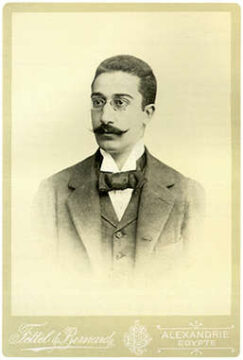
I started playing with the idea that Constantine P. Cavafy might be a type of Faust-like character who beats the devil by making temptation irrelevant. Through a poetry devoted to memory, sensuality and the afterlife of desire, Cavafy undermines the Christian-Faustian assumption that pleasure necessarily decays into guilt, disappointment or damnation.
In Cavafy’s work, ecstatic gay sexual experience is not morally or spiritually ruinous, but can, in fact, be among the highest forms of human physical and emotional intensity, experientially irretrievable as a discrete moment, haunting and provocative as a memory but still incorruptible.
Frankly, it might be more accurate for me to say I wish to use Cavafy as a type of anti-Faust. I see Cavafy as a queer poet who dismantles a foundational Western myth from the inside out. What Cavafy preserves in memory is not shame but a type of radiance (a term he uses in his poetry). The sensual experiences of youth do not become evidence of moral lapse or failure even though he might speak ironically about “dissolution.”
Indeed, when Cavafy explores dissolution, it functions as a positive factor in his development as a poet. By dissolution he means a life lived outside the moral pretenses and hypocritical codes of propriety of Alexandria under British rule in the early 20th century, a social world where queer desire often had to be managed through concealment, subterfuge and obliquity.
Dissolution meant a life of erotic freedom and experience, charged secrecy, bold risk and nonconforming encounters that would have been condemned and caused severe social repercussions. For Cavafy dissolution becomes the wellspring of his creative brilliance, showing that the unconventional, even taboo, experiences of his youth were what shaped his art.
In Insight he writes, “For in the dissolute life of my youth / the plans for my poetry were taking shape; / the boundaries of my art were being drawn” (Cavafy, Remember, Body…, p. 15). His poetry rejects the entire logic on which Mephistopheles depends: the idea that desire destroys the soul through excess, guilt or spiritual collapse. In Cavafy, sexual pleasure survives its own intensity and ephemerality without harm or blame and becomes the generative material of much of his art.
Memory gives us an intimation of immortality because it allows a moment to survive its own time. A sensation, a body, a night, a room, a kiss…all of it perishes. But in memory, it persists in a second life that is not bound to the body’s decay. It becomes repeatable, summonable, enduring. That endurance is not literal immortality, but perhaps it is the closest thing human consciousness can generate. It can produce a type of gratification or bliss that perhaps even exceeds the pleasure of a distant moment, to the point where it is like Faust crying “Stay thou art so lovely, stay!”
Time may render the raw ecstasy of youth unreachable or a faint reminder from which one may try to recover some exhilaration or eroticism, but it does not render sexual ecstasy false, deceitful or corrosive. In his poem Return, Cavafy writes: “Return often and take me, / beloved sensation, return and take me – / when the body’s memory awakens, / and old longings pulse again in my blood, / when lips and skin remember, / and hands could almost touch again” (Cavafy, Remember, Body…, p. 9).
Cavafy never frames pleasure as corruptible in his own voice. Some characters in his poems may believe pleasure is corruptible, but Cavafy presents these beliefs ironically, critically or as products of social hypocrisy or self-deceit. In “He Swears,” for example, Cavafy presents a person who vows to forswear his sensual life but succumbs to it readily whenever prompted by the effects of the night and his promptings of his own body. Cavafy wryly invites the reader to view this as a type of self-deception.
Sensual pleasure may itself become one of the deepest revelations of existence, especially after it is recalled years later and one realizes it was not a lack of moral restraint but a liberating intensity of experience to be longed for again. Cavafy’s poetry of memory not only undermines the Christian-Faustian assumption that sensual pleasure necessarily decays into damnation, it asserts, instead, that it is in the highest realm of emotion and pleasure, to be treasured as a joy of life, co-existing with one’s spiritual evolution, and not antithetical to it.
We see this in the poem Dangerous Things as Myrtias, a half-pagan, half-Christian convert, vows, “I will give my body entirely to pleasure, / to dreamed of joys, the most brazen / erotic desires … all without fear.” This is due to his amused realization that “…I will find again / my ascetic spirit, as pure as it was before” (Cavafy, Remember, Body…, p. 3).
It is a concrete joy to be relished along with one’s pursuit of the ethical or spiritual, it does not negate the spiritual, which will remain as “pure” as it was before. It may even be a component of the spiritual, as seems to be implied in various non-Western religious traditions.
Throughout ancient religious and allegorical traditions, the male sex or gender is often equated to spiritual desire or striving while the female sex or gender becomes spiritual fulfilment or completion. These are, of course, completely sexist forms of symbolism derived from the inequitable social conditions of the ancient world that produced literary characters of active men and passive women. We see this symbolic gender polarity in diverse literatures, e.g., Odysseus in his journey toward Penelope and Rama in his quest to rescue Sita.
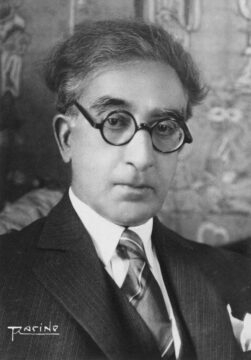
One could thus argue that Cavafy’s poetry also reveals something important about the flaws of traditional (anti-womanist) symbolic systems. The old religious and literary structures often assumed that erotic fulfillment symbolically representing spiritual fulfilment required a masculine/feminine polarity. But Cavafy’s work suggests that the structure of desire operates independently of heterosexual symbolism.
Christianity often treated strong sexual pleasure as spiritually dangerous because it was believed to overpower reason, weaken moral discipline and pull a person away from God (an idea strongly shaped by Augustine of Hippo). That assumption becomes central to Faust: Mephistopheles uses pleasure as bait because pleasure itself is presumed to be corrupting.
Augustine’s Confessions became one of the intellectual foundations for the medieval Church’s suspicion of pleasure: the idea that sensuality is a trap, that sexual desire wounds the soul and that salvation requires restraint or renunciation. Augustine’s retrospective horror at his own erotic life helps create the attitude that later makes the medieval “tempter” possible. The Satan of later Christianity increasingly becomes a figure who corrupts through the body, through pleasure, through erotic excess. In this sense Augustine becomes, psychologically and intellectually, one of the ancestors of Mephistopheles.
Cavafy’s life and poetry operate as a counterargument to this entire tradition. He lived the sensual youth Augustine feared and emerged not damned or spiritually ruined, but artistically awakened. Where Augustine interprets erotic memory as evidence of the Fall, Cavafy treats erotic memory as revelation, radiance and artistic substance.
Augustine flees the body; Cavafy returns to it through recollection. Augustine seeks redemption through renunciation; Cavafy preserves sensuality in art. In doing so, he exposes the lie behind the Christian demonization of pleasure. The corruption lies not in sexuality itself, but in the deceitful and corrupting moral framework imposed upon it.
This is not, of course, common in all religions. In tantric traditions, by contrast, erotic energy was often understood as a natural and potentially sacred force woven into existence itself. Sexual union could be treated as ritually, symbolically, cosmologically and/or spiritually significant, not as a morally dangerous act. The point was that bodily ecstasy could participate directly in consciousness, transcendence and the structure of reality itself. The intense focus and loss of ego that happens during physical ecstasy allowed a glimpse into the nature of ultimate reality and higher consciousness, instead of a descent into sin.
Constantine P. Cavafy’s poetic work undermines the very premise of the character of Mephisto in Goethe’s Faust 1 and 2, as well as the whole tradition of Christian temptation after the Gospels. Sensual ecstasy stands independently, not corrupting the spiritual. Faust is tormented by the absence of fulfillment while Cavafy is animated by its presence in the past and the struggle to recapture meaningful fragments of it through memory, to preserve the immortality of ecstasy within memory and its possibly blissful effects on the body.
In Goethe’s Faust, Mephistopheles is not just a supplier of pleasures; he is a character out to prove a thesis about humanity. He is malevolent, deceitful and strategic, a figure whose entire purpose is to show that human striving can be readily diverted away from the meaningful, toward the cheapened and finally destroyed through an excess of pleasure that turns pleasure into guilt and ruin.
Whereas Mephistopheles relies on the corruptibility of pleasure to scrounge up souls, Cavafy’s memory in older age reveals pleasure as incorruptible, irreducible and ultimately immune to the mechanisms of temptation and ruin on which the Augustinian/Faustian drama depends. Mephistopheles’ entire wager depends on the idea that human beings can be destroyed by pleasure, either by excess or by the collapse of pleasure into guilt or disappointment. Cavafy’s life and work rebut the very nature of this premise.
Mephistopheles seeks to destroy Faust by accepting a wager in which he must attempt to completely satisfy Faust, but then deliberately attempts to ensure Faust not only never attains satisfaction but is ruined by the excessive pleasures and desires he pursues seeking it. Mephisto’s bigger wager is with God, to prove that humanity lacks the wherewithal to truly and successfully strive for the meaningful. Every pleasure he provides to Faust is designed to collapse into disappointment, guilt, triviality or tragedy.
Memory is Cavafy’s replacement for Mephisto. It insists on the existential significance of Cavafy’s previous sexual intensity, while simultaneously compensating for its loss with pleasures of its own, chiefly a sense of radiance or bliss. Unlike Mephisto, memory has no intention, it is not malicious, it simply operates according to its nature: it preserves, it recalls, it revivifies, it exults.
Cavafy offers a way out of the allegorical and existential morass created when a Church institution demonizes pleasure and embeds that suspicion deeply within European culture. In his poetry, memory resurrects the ecstatic moments of youth, now recognized as apex experiences of intense sensual joy, only to reveal another truth and another pleasure. Cavafy does not suffer due to the longing, he is not condemned to hell for it, he creates poetry from it. He becomes a kind of Orpheus returned from the underworld, not leading a lost lover, but carrying the bliss of remembered ecstasy.
In One Night, Cavafy thinks of a shabby old room above a tavern, with a window facing an alley and the voices of workmen below him, and writes: “There in that humble, commonplace bed, / I possessed the body of love; I possessed / those sensual, red-rose lips of intoxication – … after so many years / all alone in this house, I am drunk with it again” (Cavafy, Remember, Body…, p. 8). In Days of 1908 “…your vision preserved him / just as he was taking it off, casting away / that unworthy clothing, and the mended underwear, / and he stood completely naked, flawless in his beauty; a miracle” (Cavafy, Remember, Body…, p. 45).
In this sense, Cavafy exposes the absurdity of Faust’s condition. He is immune to any Mephisto because he embraces sensuality without guilt, leaving no moral leverage for a tempter whose entire wager depends on the corruptibility of incorruptible pleasure.
Faust also collapses at the first scent of scandal; Cavafy’s lovers place pleasure above this. Cavafy writes of figures for whom pleasure outweighs the fear of scandal. In Days of 1896, he describes “…a simple and true / child of Eros who, without hesitation, / placed far above his honor and reputation, / the pure pleasure that his pure flesh could give / … But public opinion, / which was so terribly prudish, so often got it wrong” (Cavafy, Remember, Body… p. 40). This is the exact inversion of Faust, who recoils the moment Gretchen’s reputation is threatened and abandons her to the social and legal effecting of scandal. (The irregular spacing reflects the formatting of the translated poem.)
Where Goethe’s world treats pleasure as morally corrosive, Cavafy’s world treats it as worth defending even against the violence, pettiness and outright stupidity of public opinion. Faust’s world treats pleasure as something that destroys honor, morality and social standing. Cavafy’s lovers take risks for ecstasy.
Unlike Faust, Cavafy does not need a demon to reveal the possibility of ecstatic experience as he has already known it, repeatedly. Cavafy’s sensuality is neither naïve nor morally fraught. It is deliberate, cultivated and treated as a form of near-sacred and treasured experience. It haunts him and pleasures him at the same time. His poetry takes this haunting and elevates it into a mode of being, the afterlife of ecstasy sustained in consciousness.
In the Middle Ages, in its war against magic and paganism (the traditional religion of the countryside), the Church created a new type of Satan/devil who becomes the heart and core of the Faust story and the West’s fear of sexuality. The devil becomes the pagan nature god pushed to harmful and hedonistic excess. Whereas Pan had represented a benevolent nature providing sustenance, healing herbs and a pro-sex attitude that aided and enriched humanity, the Church took this type of deity and imputed the worst possible characteristics to it. The Church demonized Pan to get the devil.
Whereas Satan had been little more than a hapless trickster figure in the Bible (he tempts Jesus philosophically Satan as Trickster), in Medieval Europe he now leads people astray through the road of physical and sensual excess. Mephisto’s goal is to corrupt the great scholar Faust though libertinage.
Cavafy seems to be dealing with a rediscovery of Pan more than a fear of Satan. The experience of Cavafy in relation to Faust shows a rejection of Mephisto…as if this character was never needed in the first place. Cavafy presents a judgment against the whole concept of Mephisto – living proof it needed not exist and that physical excess does not lead to moral damnation. With Cavafy we find that you can be wonderfully sensual and completely ethical or even driven toward humane development at the same time.
His early life in cosmopolitan Alexandria exposed him to a myriad of sensual experiences, particularly during his youth. These encounters were not just acts of physical pleasure, they were profound, transformative moments that imbued his poetic imagination with a yearning for the ecstatic, perhaps in all forms.
This could have been the path Goethe’s Faust takes. His relationship with Gretchen did not have to be marred. Instead, it falls apart beneath deception and guilt, aspects of experience the pagan god does not recognize. In Faust, his pact is a desperate attempt to attain an unparalleled experience, a moment so fulfilling that he would surrender eternity for its permanence. But for Constantine P. Cavafy, such moments belong to ordinary human experience, and he does not surrender eternity for them.
Cavafy’s poetry often grapples with the ephemerality of such intense moments. His verses are suffused with a nostalgic longing, a desire to recapture the fervor and vitality of past encounters. His works are a testament to his relentless desire for a restoration of past pleasures, not a rejection of those pleasures. They will always linger with us, Cavafy says, the lost pleasures of his youth are not to be denounced nor can they be fully reclaimed but they can still bring joy in their affirmation and one’s emotional relishing and gratitude for them.
Cavafy’s quest is marked by a poignant sense of incompletion that still provides fulfilment. Aspects of his past – lovers, fleeting joys and ephemeral nights – remain elusive, ghostly presences that haunt his poetry, but the retrievable pleasure implies so much more.
Cavafy puts the lie to the entire Faust legend. Faust is tormented by the absence of fulfillment; Cavafy is tormented by its presence in the past. Faust seeks the moment that will complete him; Cavafy seeks the moment that already did. Faust’s tragedy is that he cannot find a moment; Cavafy cannot easily return to it. One is damned and the other is elevated.
Goethe saves Faust because he never stops striving and Cavafy saves himself through the transformation of longing into art. His poetry becomes the afterlife of desire, the place where memory’s potential cruelty is transmuted into limpidity and soft bliss. The very force that denies him fulfillment becomes the source of his aesthetic power. Memory wounds him, but it also gives him his voice – it is the material of his loss but the means of his expression.
Cavafy’s salvation, if one can use the word, lies not in reclaiming the moment but in preserving its afterglow. In Far Away Cavafy writes about memory which points toward intense passion but also indicates the impossibility of fully recovering the initial sensation again. The memory of an old lover is dim but he recalls “Skin as if made of jasmine… / an August evening – was it August ? – / I barely recall the eyes now: they were blue, I think” (Cavafy, Remember, Body…, p. 10). What remains is the shaping of memory into art, the transformation of loss into clarity, the acceptance that the moment cannot stay, but its effect can to a meaningful degree.
Cavafy transforms this existential quest into an art form, one that speaks to the universal human condition of unfulfilled desire which, though never fully satisfied, can still become a source of meaning, intensity and even fulfillment in itself. In Cavafy, desire does not lose its value because it remains incomplete or irretrievable, instead, its very incompleteness deepens its emotional and spiritual resonance. What cannot be possessed permanently can still illuminate a life, shaping consciousness through memory, longing and artistic creation.
All quotes taken from: Cavafy, C.P. Remember, Body… Translated by Avi Sharon. Penguin Classics, 2015
Enjoying the content on 3QD? Help keep us going by donating now.