
by Peter Topolewski
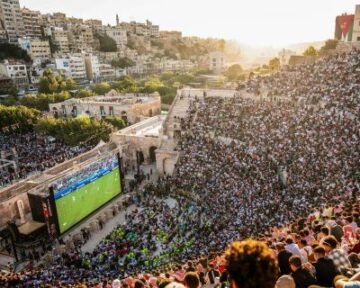
Doesn’t it feel like the extravagance of the Roman games rose as the empire stepped and then stumbled ever closer toward ruin? In fact, the grandeur of Roman entertainment peaked at the height of the empire’s power. Considering the spectacle of sport in 2026, the Roman example suggests we are living through the height of “Western” civilization. Perhaps for not much longer.
All around, you can see it without peering too hard: the Roman policy of “bread and circuses”, so named because emperor after emperor gave out portions of grain to the common people while also sponsoring entertainment to keep their minds from society’s troubles. The entertainment included gladiatorial games, chariot races, theater, public works projects, and festivals and religious celebrations with feasts, parades, and music. The troubles the people needed distracting from included poverty, inequality, corruption, military humiliations, and evaporating political rights.
These days the grain has evolved into a buffet of social programs, and shopping is now in that mix of entertainment. In fact, when it comes to bread and circuses, the most significant difference between days of old and today is that both the distractions and the problems come to us from governments and corporations—with the line between them getting fuzzier by the moment.
Plenty to rail about on this front, but for today it’s interesting that the Roman poet Juvenal first used the “bread and circuses” when complaining about how easily the common people forgot the bigger concerns in their lives and society. He was condemning, in his way, those who are so easily distracted.
Never mind movies and TV shows, video games and rock concerts, in light of the global craze for World Cup 2026, it’s hard to miss how, in the here and now, we burn almost inconceivable amounts of time watching sports. Immense piles of money dressing in our team’s colors and attending games.
Why?
When it comes to pro team sports, civic pride plays a part. It explains how a basketball or football player you despise on your rival team is loved the instant he is traded to yours.
National pride factors in on a stage like the World Cup. Though like the Olympics, it’s a time all but the most bigoted are most willing to overlook where the participants were born, so long as they wear your nation’s colors.
We spend time and money on these competitions even as we do our best to ruin sport greed. We bet on every aspect of the games and hold athletes accountable for our losses. We hand out subsidies to fat-cat team owners to build more glorious venues for their teams.
How do we explain this love affair?
The games themselves are of little import, the outcomes meaningful only if we measure the money they cycle through the economy or the depth of emotional experiences shared among fans. Those are not inconsequential. Camaraderie is priceless. Sport is big business. Neither exist without those fans. So again, why do we care what happens on the field or the track or the court?
The rules of sport are arbitrary and to anyone encountering a new one they’re often silly. You can only use your feet. Or you can’t use your feet. The lines must be 38′ apart. No touching the bottom of the pool. The ball must move forward. The final minute is measured in tenths of a second. And so on.
Why are we taken with watching World Cup matches or the Knicks win the NBA championship? Why do we tune in to see a cross-country ski race at the Winter Olympics or a cricket match between the Karachi Kings and Multan Sultans?
Some thoughts. Most are sports we can in some way take part in ourselves. No, not take part in, play. When we do, it’s fun.
Because we can play those same games, or have played them, we can relate to the excellence the best athletes display. We understand the joy of playing, and understand that while money and fame have a part in an athlete’s motivation, their journey began with fun. In sport, we see the achievements of people who because of fun have dedicated time, sweat, and pain to getting really good at that one thing. That one thing might not even be football or basketball, but tackling other football players or collecting basketball rebounds.
In sport, we see the effort of athletes pay off in victory or fall short in a loss. Sports have many losers, few winners. Sport has in it inherent drama.
Other pastimes, if you will, have these characteristics. Music, writing, painting. Only a sliver of those who aspire get published or recorded or shown in galleries. Music, especially, is a source of transcendence, and it’s curious we go to concert halls and amphitheatres to listen to bands and orchestras play our favorites. But we don’t stand with our backs to the stage, we also watch. Because they, like athletes, put in the same time, sweat, and pain to be able to perform at that highest level. Like athletes, musicians display their excellence before us to see.
There are differences though. In music, writing, and painting there are thrills, but the efforts of the musician, writer, and painter is the finished product. At a concert, we know the outcome of their work. It’s a song. The thrill we fans get from a book or film is reading or watching it. The finished product is the thing of beauty.
In sport, the outcome is unknown, the story is not written. The playing of the game, the running of the race, is the beauty.
We fans relate to the fun of the game and appreciate the skill and work of the athletes. We can ride the roller coaster of the drama. But we also respect that athletes perform in front of a crowd, half of them rooting for and half mercilessly rooting against. That is a world foreign to most of us. Imagine writing a novel or computer code, processing tax filings or picking stocks, in front of a room of a thousand onlookers. Not for the faint hearted.
We’re distracted, yes, and lord knows we have plenty to look away from. But for all the problems with sport, our love of games speaks to the mighty connections yet between us.
Enjoying the content on 3QD? Help keep us going by donating now.