
by Robert Jensen
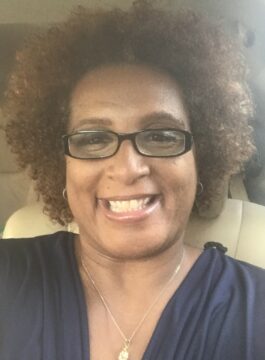
Cornelia Gipson is trying to understand the hold that whiteness has on white people.
“I grew up black in Mississippi, and from the time I was 4, I knew I was black and what that meant,” she said. “How do white people come to understand they’re white? When did you first realize what it meant to be white?”
Gipson, who now lives and works in Nashville, asked me that question on a Zoom call that she initiated after reading my 2005 book, The Heart of Whiteness: Confronting Race, Racism and White Privilege. My answer: I didn’t think seriously about being white until I was 30. Better late than never.
Gipson didn’t want to lecture me but was looking for honest conversation, which meant not just grilling me but reflecting on herself.
For example, she told me about pursuing a promotion and getting rebuffed by a white colleague. When Gipson pushed back, pointing out her qualifications, the colleague said, “You don’t know your place.”
“I think of it as the night Trump showed up at my house,” Gipson said, when she had to acknowledge how quickly subtle white supremacy can turn blatant.
Part two of that lesson came when she recounted the incident to a white friend who asked, “What do you think she meant by that comment?” Gipson said it was a warning that black people in the company shouldn’t aspire to leadership roles. Put more bluntly: Don’t get uppity. Her white friend’s response: “But Obama is president. Do you really think she meant that?”
Gipson said that at the time of that incident she was well versed in systemic racism and had no illusions about white power. But both interactions surprised her, a reminder that she had learned to ignore racial realities in everyday life for the sake of getting along.
“I’m unlearning internalized racism all the time,” she said. Even at 56, Gipson isn’t done unlearning.
Gipson had questions for me about my book, but I wanted to ask her questions. For example, what did she think of DEI (Diversity, Equity, and Inclusion) trainings in the corporations where she has worked? Gipson said she was always skeptical about their value, beyond allowing managers to check a box for HR. The trainings often were weighed down with jargon that didn’t speak to people’s struggles, she said. “In one sense, the attack on DEI is absurd since DEI policies and trainings didn’t accomplish all that much.”
The real goal in attacking DEI is to shut down honest education, she said. When Tennessee passed a law that basically prohibited any teaching that made white people feel bad, Gipson wrote in MS magazine, “What’s wrong with the truth? Absolutely nothing if one isn’t encased in fear with blinders to hold onto the past.”
We kept coming back to the fears—on all sides—in racial reckoning and decided it would be productive to put blunt questions to each other.
Jensen’s questions to Gipson
–What are you most afraid of when meeting white people?
Fear is never at the top of my mind, but I focus on understanding—as quickly as possible—the level of whiteness this person is dedicated to. I do a lot of observing and listening, and people usually reveal who they are, which tells me how safe I am. I want to know whether someone recognizes that whiteness was created to oppress. In my experience, most white people are generally good people who are clueless about the power imbalance around them because their world was shaped by whiteness. I am skeptical about white people until they have faced racial conflict and chosen to sacrifice themselves or use their whiteness to protect me. I have been down the path with several white so-called friends in the past, and unfortunately 99 percent failed in some way and are no longer in my community. I can’t take risks with my life and my family’s life, hoping someone will make the right decision.
–What do you think white people are most afraid of?
Not understanding racism and the social construct of race has been a safety blanket for American culture. Maybe 80 percent of white people have a toxic tie to whiteness that keeps them from really doing their own work to evolve. Your ancestors may not have been slave owners, but your skin color makes you the standard and my skin color was marked non-human. That’s why even modest attempts to improve living standards are resisted. Historically, when black people have pulled ourselves up by our bootstraps, we faced violence to keep us in our place. America was born in violence, and it appears violence is always on the menu to make sure whiteness continues to thrive.
–What has to change in society to eliminate those fears?
White people have to understand the cost of racism to get free of the addiction to whiteness. Only relationships and empathy can catapult one from knowing something is wrong to doing what’s necessary to right the wrong. That is what the idea of reparations means to me, repair. Something was broken and needs repair. But the most challenging part is acknowledging the wrong. That seems to be where most white people get stuck.
–What makes you most angry about white people’s behavior?
White people’s delusions, the shock and surprise that whiteness exists and the complicity in supporting it.
–What qualities in white people make you want to engage them?
I see human first, and so I am always engaging. The world is not set up for black people to disengage completely—we aren’t the segregationists. We just want to be treated fairly, to be safe. Unfortunately, the white majority too often sees that as a threat.
–What qualities in white people make you want to avoid them?
I rarely avoid anyone, but I’m not stupid. I grew up in a state where then, and still now, my life was not valuable. That is the America I contend with daily.
Gipson’s questions to Jensen
–What is up with the fear that critique will “humble our proud nation”?
A lot of people have a lot invested in the idea that the United States is exceptional, the model for modern democracy. To suggest that genocide and slavery are central to how we became so wealthy and powerful, not just an unpleasant footnote, challenges that pride and makes people uneasy. In that phrase, humble is a negative, a synonym for humiliate. But real pride requires real humility, not defensiveness and denial. Without humility, pride is just arrogance.
–Is empathy compatible with whiteness?
If whiteness means a commitment to the existing racial order, then whiteness makes empathy difficult, maybe impossible. Understanding how others suffer because of the structure of society makes it hard to enjoy your unearned advantages. I can look back at my own life and see how I suppressed empathy when I was younger, and how it came out as arrogance, all to protect myself from understanding the system and my place in it.
—Why are white people so afraid of successful black people, even when those black people are self-isolating?
When successful black people agree with the white people who believe racism is no longer relevant for social policy—Clarence Thomas might be the most obvious example—they aren’t a threat. But if black people who are successful in a white world—so that white people can’t write them off as whiners or losers—don’t back away from critiquing white supremacy, that’s scary for white people.
—If you agree that whiteness is a kind of addiction, how would you characterize your experience of trying to “get clean”? How difficult is it to understand that repair is a never-ending project?
I don’t tend to use an addiction metaphor for social problems, though I understand how it can illuminate white psychology. But however the problem is framed, change requires a new understanding of the world and one’s own life, which requires accepting the discomfort that comes with honest self-reflection. And as you suggest, once we see the ways white supremacy shaped us and our world, it’s impossible to pretend that a few policy changes can solve the problem. It’s a lifelong struggle, personally and collectively.
—When you realized whiteness gave you advantages, did you challenge this privilege?
At first, I wanted to believe that if I got involved in the right kind of political and community organizing with the right mix of non-white people, I could save myself, somehow transcend complicity. While I think those were good projects, eventually I realized that I couldn’t escape being white but that I could continue to try to leverage some of my advantages for social change, however small those changes might be.
—Do you have any relationships with black people that are at the level of relationships you have with white people?
That’s possibly the hardest question you could have asked me, one that produces a bit of that discomfort. Today, all but three of my closest friends, the people with whom I share the details of my life, are white. I have a wider circle of friends that’s more multi-racial, mostly people I met in academic life or through political organizing, but those connections are not as intimate. I’m close to an incarcerated black man through my work as a volunteer editor in a prison writing program. I feel emotionally connected to him, talking on the phone and messaging not only about his writing but about our lives and struggles. I try to be open to new connections, but like a lot of white people, I live in a fairly segregated world, especially when I retired and moved to a rural area. It’s a lifelong struggle to avoid retreating into what feels familiar and comfortable, especially as I get older.
—-
Cornelia Gipson is a mom, grandmom, wife, and business professional on a life mission to use her voice, her experiences, and her painful dedication to transparency to undo harm and promote healing. She is a self-proclaimed hyper-extrovert who has never met a stranger.