
by Lei Wang

Stephen Colbert in conversation with the astrophysicist Neil deGrasse Tyson:
COLBERT Which is better, to know or not to know?
TYSON To know. Of course.
COLBERT But why? Why is it always better to know?
TYSON Well, you asked for my opinion.
COLBERT Yes, that’s what Oedipus thought too.
“There are two kinds of people in the world,” Neil deGrasse Tyson once tweeted: “those who divide everybody into two kinds of people, and those who don’t.” I would like to be part of the latter, but I’m afraid my favorite pastime is putting people into elaborate boxes, including myself (4w3/INFP-T/Scorpio Rising/Earth Snake/Obliger/Heretical-Investigator Projector, etc.).
One of my favorite parlor games is called Essence, a guessing game in which one person in a friend group—the guesser—leaves the room and the rest of the people choose a person in the group the guesser has to guess. But the guesser can only ask for clues in metaphors, for example: “If this person were a body part, what body part would they be?” Or: what holiday/cuisine/piece of furniture/type of music would this person be? Members of the group throw out options until the entire group comes to a consensus (nape of the neck/bar stool/bento box) which involves some pretense and courage on the part of the person being guessed, to participate in the determining of their own essence and to potentially be indicted by what the rest of the group really thinks of them. I love this game, especially since discovering my friends don’t see me as a disposable spork, instead a long-necked spoon for stirring.
I am constantly looking for ways to systematize the world, so that I might—what, prepare? The real advantage of having a brain, the cognitive scientists tell us, is not so we can think. It’s so we can predict. There are people who want to know and people who don’t want to know, people who eat the ass end of the asparagus first and people who don’t save the best for last. I am someone who looks up the ending of any movie that seems even vaguely thriller because I can’t stand the mystery. I read the Wikipedia articles for books I’ve never read, books I plan to read, books I never even plan to read. I just want to Know What Happens. My way of procrastination is to discover yet another personality archetype, take another 100-question survey, read the associated book, find out if I am a Leaver or a Merger, Hufflepuff or Slytherin, what my sleep position says about me, what kind of dog I am (supposedly a Corgi, but I’m actually just an affectionate cat).
Writers love symbols, of course—Alexander Chee has a lovely essay on his relationship to tarot, which is his relationship to trust—but so does the rest of the world, it seems, with the boon of astrology apps. In times of uncertainty, we look to fortune-telling because everything else is unpredictable anyway, so why not? The earliest religions seem to be practical systems designed to manipulate reality and were more utilitarian than anything else: rituals to appease the weather gods, to gain favor in war, sacrifices for personal gain. Back when I was still religion-shopping, I talked to a priest of Ifa, one of the oldest monotheistic religions in the world (from Yorubaland possibly as far back as 8000 years ago). As he was preparing his rituals, which that day involved two goat sacrifices (at the time, he was still exploring vegetarian options—meaty pumpkins being a good option), he said, “We practice this religion because it works, not because it explains why the sun rises.” Ifa believes that except for the date of death, everything else in life can be forecast and, if necessary, with the appropriate sacrifices and intentions, changed.
I did not quite buy his methods, though honestly, besides the goats, they were not all that different from modern-day prayers and manifestations, actually just much more specific and thus easier in some sense to fulfill. Meanwhile, I am still shopping for my perfect morning routine, and I have a lot of guilt around not having one (though apparently, not having one and rolling out of bed and going straight to work is the productivity gurus’ New Morning Routine). We have so many options now, so much information about ways of being; no longer are we born into a system, for better or for worse. A traditional Chinese astrologer, Liu Ming, has griped about the state of modern astrology, which is all about the craze of individual charts. Traditional astrology (farmers’ almanacs and whatnot) seemed to be more about reading the celestial weather of the whole world than any particular person’s. “You tell people more of who they really are when you tell them more of their commonality than their individuality,” he said.
A psychic told me, “You have a soft destiny.” Unlike Mozart with his music, she said. There is no one thing calling you. You can choose anything. This was good, she assured me, but I want the limitation of a given purpose by the universe. If only the universe could definitively tell me “landscape design” or “depth psychology” or even “organizing things for sale in shop windows” was my purpose, then I could diligently study hedge-trimming, Jung, and diaoramic aesthetics in the belief it was my destiny. I could dedicate myself to something presdestined, something I could be assured success in; it is difficult for me to be devoted to the uncertain, my own choices.
*
I have definitely stayed with people too long because psychics or star charts told me they were excellent partners. I try to find out a new friend or date’s birthday, checking first their Human Design, then our relationship in the Secret Language of Birthdays, their Western astrology, and if I really feel invested, their Chinese and Vedic astrologies as well. And even though the psychics and various data sources have been wrong, they have also been “right.”
Once, an intuitive family constellations therapist, looking at the space next to me, said my partner was right beside me already, in my “field,” and the next week I started talking to someone I had already known for 9 months in a new way, and he became my longest partner of seven years. Are these mere coincidences? According to Nietzsche, there are two kinds of people in the world: those who want to know and those who want to believe. We all know what any good philosopher would choose.
I recently started dating someone that almost every system I dabble in says we are wrong for each other, except our feelings say otherwise. In fact, I checked our cosmic compatibility within the first few months of knowing him, and our supposed dynamic was not only merely mediocre but so clearly at odds that we probably delayed dating by a year. I know—I probably shouldn’t have looked so hard. And so I am rethinking things. But also, I keep looking. A new intuitive friend who knew nothing of my relationship in real life told me my compatibility with this guy was 6/10. My Vedic astrologer also says the prognosis is not good on any elemental level, but that maybe he was my little brother in a past life. There are some things you can’t unhear. An ethical omniscient still wouldn’t tell you the day you die. But why did I ask for a number and a reading in the first place? Since we like each other a lot, and seem to be falling in love, why not trust… our vibes?
Vibes are so vague though. My Vedic astrologer used to be a finance bro who apparently at one point was a senior manager in basically a boutique Goldman Sachs before quitting, selling his house and donating the money to a guru in India, which is where he learned astrology. He is comforting to me because he speaks so soothingly and rationally, with strings of numbers, about my fate in the stars. He is a true astrology geek, astrology being the study of time the way feng shui is the study of space. His chart had said he would move to an ashram for close to twenty years but that he would then come back to the mundane world. He is married now, in Canada. According to him, my chart, influenced by Saturn, says I would not find my true writing voice until age 36, which appears to be true. If only I had seen an astrologer earlier, I might not have been so frustrated!
He explains astrology in terms of oneness: if we are actually and already the entire universe (even if we don’t realize it and are unable to perceive it from our localized perspectives), then the stars and planets are not entities outside of us, pulling on our earthly lives with their mysterious gravities. Rather, the celestial bodies are inside of us, and like anything else inside of us (livers, feelings), they influence our lives. We still can choose to ignore our inner stirrings—free will and all that—but it helps to know why and that they exist.
*
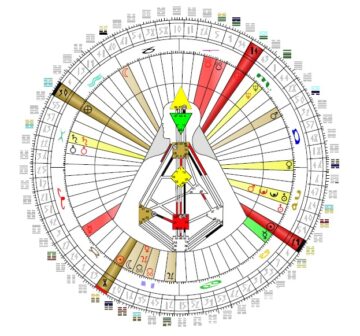
I still hesitate to say whether the math is right, or I am. Perhaps I am just finding elaborate ways to prevent inevitable heartbreak (going by history; this too is in my chart, which is apparently “not a nun’s chart” when I lamented about not paying attention to God so much as I paid attention to boys). Perhaps the point is not about rightness or wrongness or compatibility with this particular person at all, but to learn something, which sounds very obvious and applies to anything in our lives.
I keep yearning for cosmic confirmation, as if then I can finally just… relax and do what I should have been doing all along: simply paying attention. Life is the ultimate guru. We “shouldn’t” be having a good time, and yet we are. There have been so many dampeners on my romantic enthusiasm—the stars, personal history, the history of romance as a kind of courtly yearning, something that was to be sung about but never truly obtained.
We are told these days to trust ourselves—our so-called intuitions, our feelings—but also that these feelings can be unreliable; we can lie to ourselves. Our excitement could be a trauma response or an attempt to appease our inner orphans. And so we look for answers to tell us how we really feel. Do we like-like each other? I ask ChatGPT to analyze, providing some of our texts. I read the therapist Mira Kirshenbaum’s wise chatty books on love. She knows what the people want; we all want the ten definitive signs of real chemistry. Her iconic book for people ambivalent on breaking up with someone which I recommend to all friends with one foot out, Too Good to Leave, Too Bad to Stay, features a series of diagnostic questions, yeses and no’s, which are easier to answer one by one than trying to see a situation holistically.
I do sporadically attempt to train my intuition, an upward-pulling yes akin to Marie Kondo’s joy response, a grounding sort of no. A friend let me use his pendulum for a meal decision—salad or wrap—and I was glad to have followed its crystalline advice (but then, do I ever really want the salad?). Yet a coin flip is useful not so much for telling you what you should do but for determining what you felt in the first place, that perhaps you didn’t know. We look for signs to buoy or dampen us, to figure out where we are on the spectrum. Parents, someone once told me, exist for saying no, so that the child can learn what truly matters to them, their most important yeses.
What I really need is not an inner pendulum telling me rice or potato, but a way to be okay with whatever choice I make, knowing there’s not one right way and also no way to truly escape fate, which is whatever happens. My compatibility testing is a symptom of my enmeshment in instant gratification culture. I want to know ahead of time, now, now, now, before actually getting to know the person, the future I haven’t yet lived. Despite all these cosmic warnings, I want to see what happens.
*
If we truly are one, then surely psychics do exist in some way. They are just less dissociated than the rest of us, but it’s hard to tell what their degree of true connection is. There are the small unknowns and then there are the great ones.
A self-proclaimed atheist friend (“because agnostic just sounds weak”) said, on the level of faith, it is less significant for me to say God is real because I have certain experiences. It lessens those who believe without direct experience. He, the non-believer, nonetheless went with his girlfriend to Catholic Mass every Sunday for two years. To go to church without having experienced God or even believing is even more so an act of faith, an act of love—to not know what the other is experiencing and to not pretend to know.
Is he right for me? I ask, writing with my left (non-dominant) hand, yet another trick. For right now, yes, my own hand replies. And, wiser than my impulses, my left hand continues:
Why do you want to know about not right now?
What is love but transformation?
When the incompatibles meet, it makes no sense but isn’t then love the only thing possible?
Isn’t the nonsensical even more love, even if not a life together forever?
If nothing else, I understand better the syntax of wisdom now.
“Is this nonsense?” a friend texted, with a picture of a book she saw at a Little Free Library in town, called The Seat of the Soul. It may very well be nonsense, I have no idea, but if it does something for her, then it’s not.
One of the more logical people I know, someone you would think would be immune to astrology, someone on the spectrum, I dare say (though he despises boxes which, to me, is a box in itself), keeps swiping right on dating apps on people who have their star signs prominently in their profiles. He himself can’t explain it; his head wants one thing, and his hand apparently wants another. I believe he is looking for integration: the well-developed sharp part of him is seeking something gooey.
Mira Kirshenbaum (the aforementioned comfortingly diagnostic therapist), in Is He Mr. Right? (a book I contritely come back to in every burgeoning relationship), says chemistry is the most important dimension of a relationship, and defines it as such: “Chemistry is not about compatibility, or how well you fit together. It’s about how the fit you have feels to you. You have good chemistry if it feels good to be together. If it feels bad to be together, you have bad chemistry. If it feels like nothing much when you’re together, you have no chemistry. That’s it.”
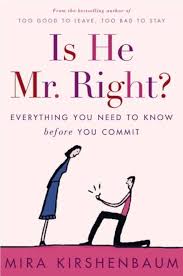
She goes on to explain where chemistry comes from:
“There’s something about our deepest psychological natures that’s oriented towards growing into greater strength and health and happiness. At our very core, we want to become our best selves. When you have chemistry, I believe it’s because you’ve found a guy whose growth path meshes profoundly with yours. It’s as if you’ve found the perfect partner for your journey in life. And maybe this is just me, but I also believe there’s a definite spiritual component to finding someone you have good chemistry with. It’s as if God wants it to feel right when we’ve found the person who’s right for us.”
Why do we need books about this? But then of course she goes on to explain how we so often misread the chemistry, which we do. And so we look for answers, we seek to delineate the nebulous.
*
I feel good with certain boxes I put myself in, as if part of some tribe of people deeper than race, culture, gender, those other categories. To self-type in an already-established system helps you feel you are not alone. To be diagnosed with ADD makes you feel your inability to focus is not just a character flaw but a hard destiny outside your control. A break-up is better when it can be attributed to differences in type, something fundamental. A reason that absolves responsibility, but who wants to be responsible all the time? And yet I wonder: how would I have acted differently without all things I’ve been told, all the ways I self-identify? I don’t know. I keep forgetting and I look for a new thing to tell me the same thing all over again: that I can be whatever I am.
Once, I answered eight questions with eight multiple-choice answers each and submitted it to a web-site with my e-mail. They promised to e-mail me back if someone else in the world submitted those exact eight answers, a 1 in 16 million chance. A soulmate, they called it, though maybe only a mirror. I am still waiting to hear back. But to think there is only a 1 in 16 million chance from eight questions alone!
And yet it feels like every instance of I am this, not that, defeats the point.
Yet another concretization of story, a tightening of a pattern, closing of an identity, a potential excuse: an instance of what I can no longer be because I am not so naturally and so no longer is everything possible. A narrowing, like repeating the same story again and again or growing older. I don’t know if it’s better to know you are one thing or another. There are things I don’t want to know because they would complicate my life, for example, if I like women, too, because I don’t want an area of my life that doesn’t require guesswork to suddenly require it (50% of people!). I don’t want to excavate when things are fine.
The stranger thing, according to a recent Marginalian article on Simone de Beauvoir’s views on love and friendship, is NOT to love everyone:
“When you love beings… not for their intelligence, etc., but for what they have in their very depths, for their soul… you love them equally: they are entireties, perfect inasmuch as they are (to be = perfection). Why then is there this desire to get closer? To know them, and thus to love them more perfectly for what they really are. What is surprising is not that we love them all, but rather that we prefer one of them.”
We were totally One, unboxed, then we became these incarnational packages, and now we have to, through the boxes, find our way back to the Oneness. Or maybe Oneness is just a convenient way to explain what we can’t help but feel sometimes, a Reason. We want to know we feel connected to someone because… we knew them, once upon a time, in another life. But isn’t it even more mysterious how we can like them in this one, without all that history, with less than one lifetime’s knowing? I hope Mr. Right Now doesn’t discover this column, my private meanderings. I hope I keep listening to my inner stirrings, even as I keep trying desperately to test them.
When I was five years old, I wanted to grow up to become a duck: a thing that could swim and walk and fly. The best thing is not to be totally head or totally heart, totally anything. What we want is a full conference, where body and intuition, soul and rationality, heart and superstition all get to chime in. The best definition of healing I know, via Bert Hellinger: parts that were separated come back together.
And the best definition of marriage, via a friend desperately trying to write a head bridesmaid speech: “a commitment to the unknown.” I would like to learn, someday, how to honor the mystery.
***
Enjoying the content on 3QD? Help keep us going by donating now.