
Daniel Goodman at Plough:
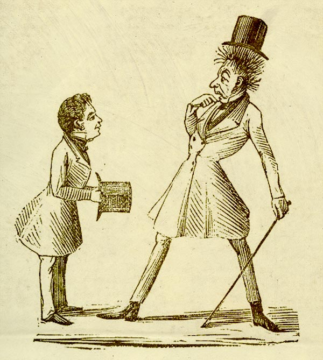 The year was 1845. At the time, the country of Denmark was experiencing a cultural renaissance of sorts. This “golden age” swelled with nationalistic fervor, artistic innovation, and intense political debate. Among its many rising cultural voices was Peder Ludvig Møller, a romantic poet and critic who often clashed with the rigid Hegelian orthodoxy seeping into the academy. He fancied himself a public figure in the mold of Lord Byron – sophisticated, worldly, and drawn to art and scandal.
Rising alongside him was Søren Kierkegaard.
The two men shared surface-level similarities. They were close in age and both studied at the University of Copenhagen. Each also saw himself as a rebel against the rote conventions of the day, yet their defiance took strikingly different forms. Møller’s public notoriety stood in sharp contrast to Kierkegaard’s introspective methods, defense of fidelity, and relentless pursuit of religious truth.
A confrontation between these two would ignite one of the most notorious clashes in Danish literary history.
More here.
Enjoying the content on 3QD? Help keep us going by donating now.