
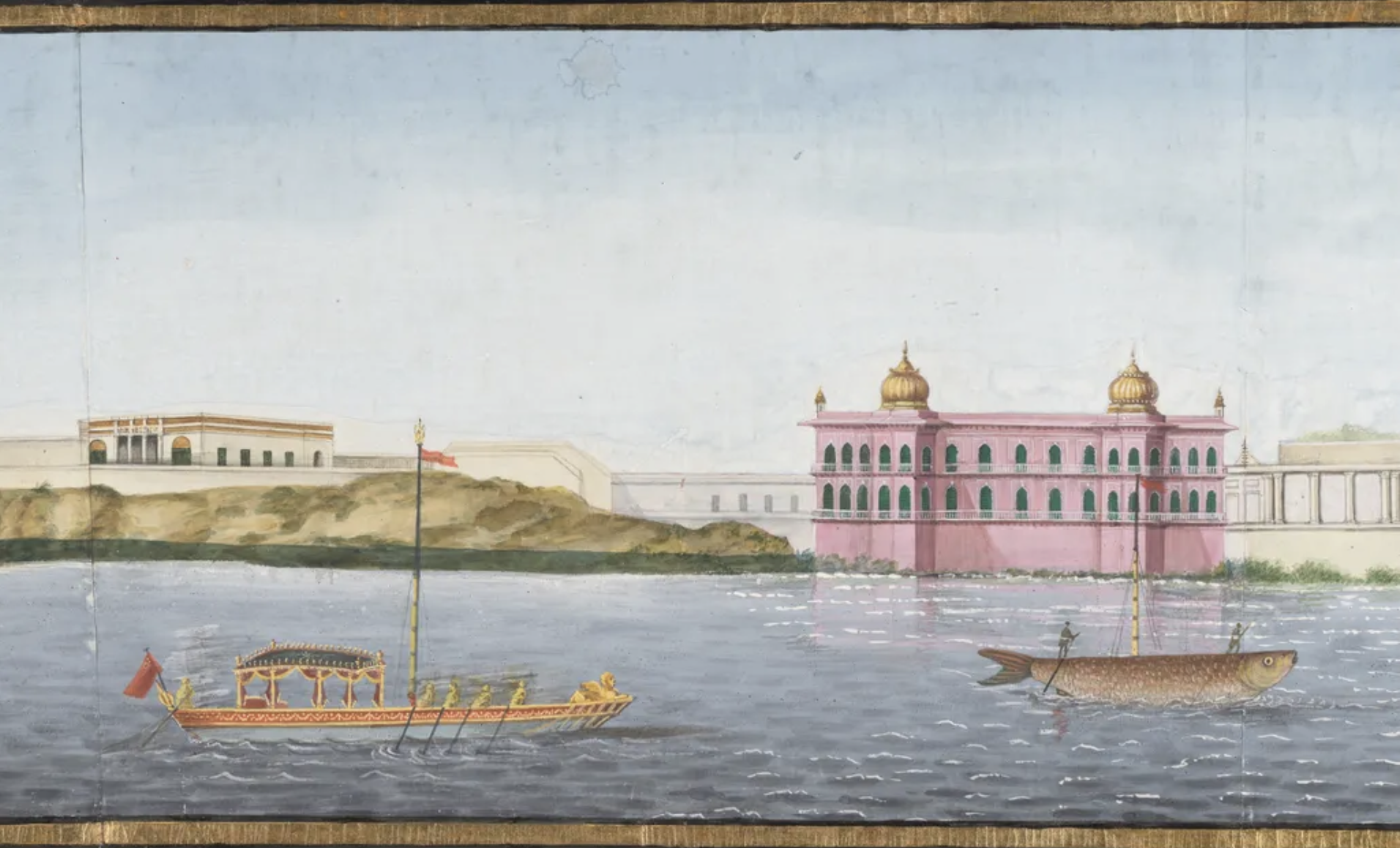
 Artist not known. Panorama of Lucknow From The Gomti, 1821-1826. (Detail from a scroll 31 cm x 1128 cm.)
… Abbey, J.R. Life in England in aquatint and lithography, 1770-1860, 500
Markel, S. India’s fabled city, p. 84-86, 254
Painters, ports, and profits: artists and the East India Company, 1750-1850, p. 22, 41, 131, 157-167
Accompanied by a “Description of the panoramic view of Lucknow,” 4 pages in pen and black ink, dated Decr., 1826. The manuscript provides English transcriptions of “the names corresponding with the Hindostany ones, written underneath.”
Selected exhibitions: “India’s fabled city : the art of courtly Lucknow” (Los Angeles County Museum of Art, Los Angeles, Dec. 12, 2010-Feb. 27, 2011; and Musée Guimet, Paris, Apr. 6-July 11, 2011)
Panorama of Lucknow, within a border of black and gold. The places depicted are noted in Hindustani, along the lower edge of the panorama.
“Presumably made for the same British visitor whose handwritten notes identifying the buildings accompanied the scroll … The artist employed European-style perspective in his depiction of this [the Shah Najaf Imambara] and several other buildings, many presented obliquely as they must have appeared from the Gomti River. The scroll is, in fact, a fairly accurate topographical representation of Lucknow as viewed from the Gomti and a valuable guide to the buildings that have since disappeared … The central portion of the scroll is particularly interesting in depicting the riverine buildings that would eventually become incorporated into the Bara Chattar Manzil Palace complex … The artist of the Yale scroll attempted to depict an accurate view of the city for his European patron. This concern, in addition to the style of the painting, is typical of the many ‘Company-school’ works–so called for their obvious adaptations to European visual tastes–that depict Indian architectural monuments.”–Markel.
Current show.
Enjoying the content on 3QD? Help keep us going by donating now.