
Olivia Farrar in Harvard Magazine:
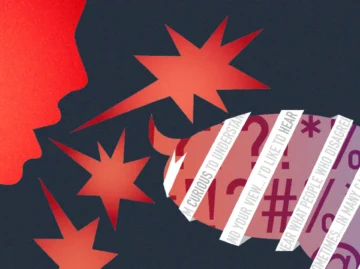 1. What’s the most common mistake we make when we disagree?
Trying to win. We go in wanting to persuade the other person they’re wrong and we’re right. That usually backfires. Often, what is underneath is a phenomenon psychologists call “naive realism:” we assume our view of the world is basically correct and objective, and we don’t notice how much our background, incentives, and mood shape what we see. So when someone disagrees, we don’t think, “I might be missing something.” We think something’s wrong with them.
2. What practical shifts would make others more receptive to opposing views?
First, say out loud that you want to learn. Don’t assume people can tell you’re curious. Use clear phrases like, “That’s how I see it, but I’d like to understand other perspectives.” The research shows that even a couple of sentences like this—without changing your actual argument—makes the other side see you as more reasonable, trustworthy, and worth talking to again. Second, use the H.E.A.R. framework when you make your case: hedge your claims (“most of the time,” “in many cases”); emphasize where you agree; acknowledge their view before you disagree; and reframe to the positive (fewer “don’t,” “can’t,” “never” and more “I’d appreciate,” “what would help”). You’re not changing your position, but you’re showing that you are leaving some mental space for their arguments. And receptiveness in language tends to be reciprocated.
In experiments, people who get brief training in [the H.E.A.R framework] are rated by disagreeing counterparts as more trustworthy, objective, and desirable as teammates, even on very divisive topics…Teaching people what to say works better than only urging them to be more empathetic or humble, because it gives them concrete moves they can use in the moment.
More here.
Enjoying the content on 3QD? Help keep us going by donating now.