
Shelly Fan in Singularity Hub:
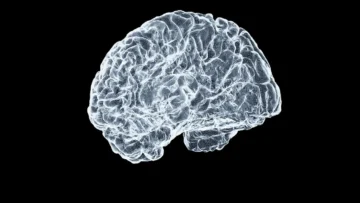 Floating in a warm, nutritious bath, the slices of mouse brain buzzed with electrical activity. Researchers gave them a few zaps, and parts of the hippocampus strengthened their wiring.
This type of experiment is an extremely common way to decipher how the brain works. The slices, not so much. Preserved in a deep freeze for roughly a week, they restarted some basic processes after being thawed. Neurons lit up, boosted their metabolism, and adjusted connections in the same way our brains do when forming new memories and recalling old ones. “While the brain is considered exceptionally sensitive, we show that the hippocampus can resume electrophysiological activity after being rendered completely immobile in a cryogenic glass,” wrote University of Erlangen‐Nuremberg scientists in a paper describing the work.
In traditional freezing techniques, ice crystals shred delicate neurons and the connections between them. There would be no chance of recovering memories stored within. The new study used a method called vitrification, which rapidly cools tissue before crystals can form. An improved thawing process protected cells from toxic chemicals in their cryogenic bath. Both pre-sliced and whole mouse brains recovered after warming, although some neural activity was slightly off-kilter. To be clear, brains can’t be completely revived like in the movies. But the approach pushes the known frontier of what brain tissue can tolerate, wrote the team.
More here.
Enjoying the content on 3QD? Help keep us going by donating now.