
Kate Adamala in Nature:
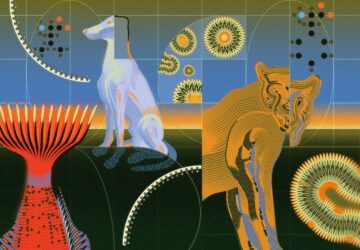 Biology is undergoing a transformation. After centuries of studying life as it evolves naturally, researchers are now using a combination of computation and genome engineering to intervene, generating new proteins and even whole bacteria from scratch. The use of artificial-intelligence tools to design biological components, an approach known as generative biology, is set to turbocharge this area of research. Just last year, scientists used AI-assisted design to produce artificial genes that can be expressed in mammalian cells and, for the first time, an AI program was used to create an entirely synthetic virus.
This approach is much more than just a series of technical feats. It could transform how life on Earth develops, as biochemist Adrian Woolfson describes in his latest book. On the Future of Species provides a sweeping account of the history and science behind this transformational technology, from the first gene-sequencing efforts to the rise of AI-powered techniques.
More here.
Enjoying the content on 3QD? Help keep us going by donating now.