
Alex Smith at the Asian Review of Books:
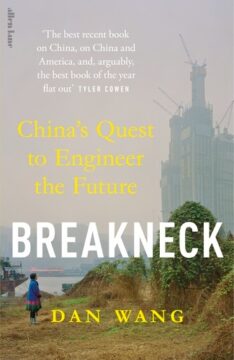 At the core of Wang’s argument is the assertion that for all their similarities, the two countries often function as “inversions” of one another. Labels of capitalist, neoliberal, communist and socialist have limited utility when it comes to the United States and China of the present. Instead, Wang argues, China is best understood as an “engineering state”, while the United States is a “lawyerly society”.
Wang defines China’s engineering state as one dominated by technocratic engineers—Wang’s paternal grandparents, he notes later in the book, met while they were studying to be chemical engineers—and characterised by major public works projects, often carried out despite huge environmental and human costs. But above all, Wang contends, China has long been engaged in a project of social engineering, shaping and moulding its population for more important political and economic ends.
The United States’ lawyerly society, by contrast, is dominated by lawyers who are better at blocking construction rather than enabling it. While the law is often used by the wealthy and elites to further their own interests, it has also enabled pluralism and respect for individual rights, features both notably absent in the engineering society.
More here.
Enjoying the content on 3QD? Help keep us going by donating now.