
by Laurie Sheck
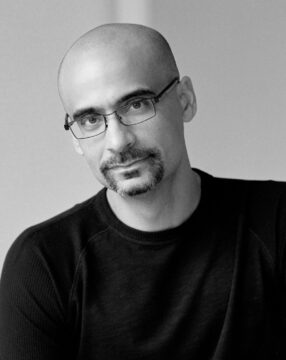
For the past couple of decades, I have been a member of the MFA Creative Writing faculty at the New School in New York City. Before that I taught at Princeton, Rutgers, Columbia and CUNY. I have had many remarkable students, among them the Pulitzer Prize winning novelist Junot Diaz who I met in my mid-20’s when he walked into the undergrad creative writing class I was teaching at Rutgers and handed in, for his first assignment, an extraordinary short story which I remember to this day.
One of the many pleasures of teaching college, and now graduate school, is getting to learn what a group of people in their 20’s and 30’s are thinking; learning, even, what newly-coined words they are using. Over the past couple of years, I have noticed a darker cast to much of their writing. Thinking about this, and wanting to know more, a few weeks ago I invited a group of them over to my apartment to talk among themselves about what’s on their minds, what their daily lives feel like, and to figure out how they might write about this in short pieces that I could share here. What emerged most prominently aside from the global political situation, was a sense of loneliness and isolation and a wary attitude toward AI and social media. I also asked each of them to give me four or five words that apply to the time we’re now living in, and, as Walt Whitman so wisely knew, to allow for those words to be contradictory. Here are some of them: “Lonely, fractured, addicted, expressive, inventive”; “Scary, dramatic, fever-dream, awakening”; “Digitized, commodified, tender, resilient, evolving.”
When I asked what makes them feel most hopeful, their answers included, “evil’s inherent tendency toward failure,” and when I asked what makes them least hopeful, they said: climate change, global change, the future.”
What follows are their short pieces.
1.
Digital Ghosting
We live in a time when we’re more connected than ever, yet somehow less likely to respond. Our generation flinches at the sound of a phone call. Quitting a job, ending a Hinge situationship, or telling your professor you won’t make it to class, all of it can be handled with an email.
It’s nearly impossible to lock in plans. Everyone leaves the door cracked open: I’ll check my calendar and get back to you. But they never do. Ten minutes before you’re supposed to meet, a text arrives: Sorry my friend tested positive for Covid and breathed on me, don’t want to get you sick. But really, they don’t want to change out of their sweatpants. And honestly, can we even use Covid as an excuse anymore?
In a world where the entire world is at our fingertips, we’ve lost faith in a pinkie promise. Words don’t hold the same weight when they can be screenshotted, dissected in a group chat, and still never answered. We send voice notes because they give us space to edit ourselves and they feel safter than calling. But in doing so, we lose immediacy and intimacy.
Henry Ford once said, “If I had asked people what they wanted, they would have said faster horses.” People saw innovation as a faster version of what already existed, not something that could change the way we live entirely. We think we want “faster horses” when what we’re really getting is something transformative, for better or worse. Phones promised better connection, but instead gave us shallower, digital versions of it.
If asked what we wanted, phones or the ability to appear beside one another over tea, I fear we’d all say phones. – Allie Robertson
2.
A child is looking for the woods. His grandfather, he’s heard, once found porno in the woods, but porno holds no allure. He can find porno at the mall. It’s free—they’re handing it out like candy. Sometimes you go to the mall and you weren’t planning or even wanting some porno and they give it to you anyway.
The woods aren’t for drugs anymore, either. Those are also at the mall. Some are over the counter, and for some you have to meet with a doctor. Or maybe “meet” is too strong a word. You kneel before a white curtain and explain that you need to get medically high and you tell the curtain your credit card information, then from behind the white curtain emerge the drugs, usually within 3-5 business days.
The woods aren’t even for play. Of course, that could be done at the mall. Card games, and roleplay, and tactical shooters with advanced movement mechanics, multiplayer battle arenas, immersive housework simulators, more porno, retro platformers, slot machines, rows and rows of slot machines, slot machines of endless themings, sports gambling, even, are available at the mall. It’s normal.
The child is looking for the woods because he has a need to transgress. The mall will hand him pentagrams, cybersigils, and rituals of humiliation, and it will always be insufficient. He is looking for something strange, and I don’t know where he will find it.—Marcus Rosen
3.
A professor hesitates to teach material from a canceled author. We don’t want to facilitate harm. A student wants to know what the writer did to get canceled. Do we trash him? bell hooks thinks of this as dumping dirty water instead of filtering it, a first-world privilege. Bless the efficiency of technological advances, but it’s how we lost our skills of harvesting.
My husband doubles a recipe. I tell him to use a tablespoon in lieu of three teaspoons. “Really?” he asks, surprised at their equivalence. He wants to believe me and so releases the grip on his phone, restraining himself from googling for confirmation.
I’m sitting beside a woman with two blank message boxes on her laptop screen, one to her boyfriend and one to ChatGPT. She types her feelings to the bot to ask how to communicate them to her lover.
We are so crippled by our desperation to be right that we cancel ourselves. We find safety and comfort when the hive thinks for us, when technology eliminates doubt. But if I am the data that AI accrues, it’s imperfect like me. Omniscience is only for gods. Even Rihanna has a tattoo on her shoulder inked backwards that reads: Never a failure, always a lesson. It stares back at her in reflection. Let me, too, be wrong.— Ashley Leone
4.
On the news, I see a video of an AI-powered humanoid named Green dancing for Vladimir Putin to the song, The Sun Rose High. Putin calls the robot beautiful, very beautiful, but doesn’t suggest that Green is only dancing to reassure him an AI-powered army will be built soon.
When I tell my professor I want to open my manuscript with, “My client told me I had a pussy as beautiful as metal,” he tells me it’s a bad idea because it would be obvious I was doing it for shock value. He bows, though, in solidarity, “Shit is getting weirder each day.”
My day’s potentia gaudendi diminishes to a speck of dust.
Potentia gaudendi: the potential for pleasure.
I wonder if the client I am writing about would think Green is beautiful the way he thinks I am. I think of Green’s hard metal exterior and lack of interior. I think of Green’s impenetrable color coated wires that try to resemble a heart. I think of the color green.
In class, my professor guides us through a deep analysis of Gertrude Stein’s Lifting Belly. He discuses the concept of shock value. I wonder what Stein would think if she saw Green dance, and if anything about it would be shocking.
“Lifting belly is my joy.”
I wish I could ask Stein: In a world of unavoidable machinery and metal, is it our mission, our life’s mission, to create a beautiful machine that could do beautiful things? I raise my hand in class, “Nothing around here is shocking anymore, anyway,” then imagine Green would say, “Except your pleasure.” – Leah Wasilewski
5.
I caught the last hour of sunshine at Prospect Park today. I had emails to send and projects to finish, but all week the mornings had been too beautiful—crisp air, golden leaves—to keep watching them pass from behind a pane of glass.
I spread out a blanket in a browning field. I lay beneath the trees that were glowing in their autumn shades, framed by a sky so blue it hurt. A breeze lifted my hair.
Is there a word for the fleetingness of wonder? Is that what it means to be human? Our human proxies have arrived. We call them artificial, but we also call them intelligence. They’re taking over our jobs, our talents, our achievements. But can they take this?
I want my future children to feel the grass poke into their backs as they lie inside a forested basin offering freshly made air. But if we keep mining the earth to code its simulacra, might they grow up only to be plugged in, their bodies left to rot away like leaves?
An hour passed. The blue dimmed. Clouds slid over the sun, and a chill pressed under my clothes. I stood to leave, and noticed a single leaf had fallen on my blanket—brilliant yellow with lime-green veins branching like wrinkles, like bronchi, like a river delta seen from above. I stroked it with my fingertip, slowly enough to sense it: the waxy outer layer, the tender flesh underneath.—Sam Ligetti
6.
I keep arguing with the people I agree with. As if we’re using different road maps to find the same desired destination. We lost last time and we don’t want to lose again. There’s comfort in arguing with teammates because you know you’re stuck with them. When you can’t move you’re forced to listen. Even when it stings your ears. You speak freely in the same way you yell at your parents. Because there’s no exit in such a shared space. This is not the case with the opposition. The ones who won last time. The game has completely changed. This is one of the things people who I agree with can’t stop arguing about. Do we accept the fact that a new game is being played? Or do we stick with the game that raised us? The game we held as a beacon of hope and purity. The more I argue with the people I agree with, the more I fear the game has always been rigged. I hear that word a lot now. Rigged. But only when it suits the loser.—Jon Saks
7.
I was sitting in Washington Square enjoying the weather. The sun was out, it was a cool 68 degrees and the breeze was just right. I was sitting on the grass, under the trees, observing the park in all its community: musicians playing music together, artists selling art, skaters using the fountain as an off-ramp; friends and families and strangers’ all simply coexisting with each other. It was a perfect New York afternoon.
I took my phone out of my purse and scrolled on Instagram. When I’d seen enough, I got on Twitter(X). When I got bored, I left to Tik Tok. I doom scrolled for about fifteen minutes before I reminded myself I was at the park. Life was happening around me—laughter, conversations, the joy of being alive, even if for just this moment—while I’d been face-deep in my phone, on my hamster wheel of social media apps. It was then I knew: I was lonely.
My presence in the real world vs the meta world was so small. I was isolated. Disconnected.
On the train home I noticed an ad: “Want to meet new people? Download Bumble BFF to find your next best friend!”
I couldn’t laugh at the irony. So, instead, I cried all the way home.– Chanelle Garzon
8.
When I imagined my mid-30’s, I pictured weekend get-togethers—themed potlucks, cooking to empty the cabinets, paired with conversations about art, books, philosophy going into the wee hours of the morning—a space where curiosities and questions are encouraged and embraced. This circle of friends would grow older and celebrate holidays together after our parents died and we collectively agreed to forfeit the role of parent ourselves.
But instead, I’m hyper aware of survival mode. Everything revolves around capitalism. I long for community but I need the extra job, the third paycheck. I crave creative freedom, but AI is more efficient than me. It already took D’s job. How can I stay informed without the addiction and overstimulation of my phone? Why must I always be readily available? Every little thing beeps: emails, texts, instant messages, likes, comments, direct messages. Answer: Hurry. If you’re on time you’re late.
Fear: being left behind. Problem: being complicit.
I stand by not getting Tik Tok.
I just need to get through the day. Can we meet and go on a walk? – Mal Ward