
by Peter Topolewski
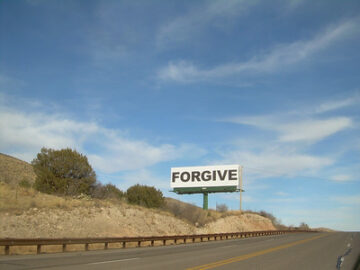
On a stage in London, and another in New York City, is a play called Punch.
It tells the story of young man from a scuffed up section of Nottingham who, at the end of a pub crawl, throws a single punch at an unsuspecting 28-year-old named James. A paramedic in training, James was at the pub with his dad following a cricket match. The punch from Jacob felled James. Days later he was dead.
The play is only tangentially about what led to Jacob throwing that punch. And it but briefly covers the 14 months he served in prison for manslaughter. It is mainly about what followed his release, especially the relationship that formed between Jacob—nineteen years old when he killed James—and James’ grieving parents Joan and David.
What do we do with suffering? the singer and novelist Nick Cave asks. Transform it to keep it from spreading? Or transmit it, allowing it to continue to do its damage? To not transform our suffering, he writes, and instead transmit our pain to others, in the form of abuse, torture, hatred, misanthropy, cynicism, blaming and victimhood, compounds the world’s suffering.
In the months after James’ death, his parents realize their grief is transforming them into something James would not like. Frightened, maybe a bit disgusted with where they are heading, searching for a way forward, they accept an invitation to explore restorative justice. Simple in concept, restorative justice could look like Mount Everest to parents suffering through the death of their son. It is a structured, mediated dialogue between people hurt by a crime and the perpetrator of that crime.
Through the machinations of restorative justice, Joan and David connect with Jacob to learn more about what happened that night, and why. Along the way they struggle with the idea of forgiving Jacob for what he’s done.
Forgiveness, for so many of us, is bound with sin. Most sin, Nick Cave writes, is simply one person’s suffering passed on to another.
How different the world looks through that lens.
On forgiveness, Hannah Arendt writes that when someone is wronged, vengeance is predictable. It is a reaction to the damage done. It is destructive.
Forgiveness, she says, is an action. It is born of freedom and thus wholly unpredictable. It is creative.
Vengeance is easy. Forgiveness is not. Vengeance is weak, a step deeper into conformity. Forgiveness is powerful, bold, a claim to live.
Turn the other cheek. Isn’t it a call to end the vengeance, to end the cycle of passing suffering on to another? And therefore a call to forgive?
Forgiveness is affirming, potentially world-altering for those involved. In spectacular instances, such as Erika Kirk forgiving her husband’s murderer, and in small instances in our own private lives. For if meant, if offered with authenticity, forgiveness has no strings attached. The wrong can never again be held over the perpetrator.
Forgiveness does come with an offer for the forgiven: to be sorry. That offer can’t be an expectation, can’t be conditional. It might be abused or ignored by the wrongdoer. That doesn’t change the offer, doesn’t diminish it. Maybe one day it will be accepted and maybe not. But if accepted, those two sides have a relationship, and the forgiven can move forward with integrity as long as he or she respects that relationship.
In Punch, Jacob and Joan and David remain in contact long after they meet. Forgiveness in the play is a form of Cave’s transformation of suffering. But it works in many forms, some appreciated only with time, only after they are allowed to flower.
Punch is a true story. Through restorative justice, through forgiveness, suffering was transformed, and lives, too. Jacob, the real Jacob, got married, wrote a book, works with youth in his hometown. Along with Joan and David he advocates to give victims of crime in England a legal right to restorative justice. The forgiveness was transformational for all directly involved, and many more, too.
Working their way through restorative justice, they removed additional suffering—sin—from the world. The process, and the act of forgiveness, is more than a negation. Like other means of transforming suffering—painting, sculpting, songwriting—forgiveness is, as Arendt writes, unpredictable and creative. From out of the suffering of James and Joan and David rose the play, Punch. Who could have imagined, to carry on this small but important message.
A play on a stage in London and another in New York. And a few lines from Nick Cave. Together they breath new life into a centuries old pillar of faith that we too easily gloss over, go through the motion of, like grace at the table, only occasionally feeling gratitude for the food we have. Casting new light on a power we all have within us, to re-shape the world with a decision.
What a world, where black pixels on a screen, a play in a theatre, can reveal another complexity, another beautiful wrinkle of living—just when you thought you had it all figured out.
Enjoying the content on 3QD? Help keep us going by donating now.