
Adam Kirsch at The New Yorker:
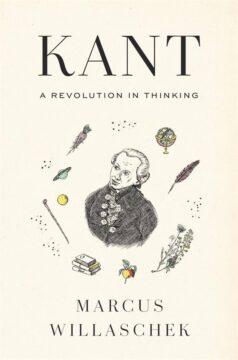 The central insight that these disparate thinkers took from Kant is that the world isn’t simply a thing, or a collection of things, given to us to perceive. Rather, our minds help create the reality we experience. In particular, Kant argued that time, space, and causality, which we ordinarily take for granted as the most basic aspects of the world, are better understood as forms imposed on the world by the human mind.
The parallel with Copernicus turns out to be apt. Before Copernicus and Kepler and Galileo, people assumed that the sun and the planets revolved around the Earth, and justifiably so—that’s how it appears to us when we look up at the sky. It took a lot of close observation and ingenious reasoning for astronomers to understand that this was a trick of perspective, and that in fact it is the Earth that revolves around the sun. Similarly, it is natural for human beings to assume that the way the world appears to us—extended in three dimensions, constantly moving from the past into the future, changing as its different elements interact—is the way it really is. But, Kant maintained, this is also a trick of perspective. Space and time do not exist objectively, only subjectively, as forms of our experience. He wrote that it is “from the human point of view only that we can speak of space, extended objects, etc.”
more here.
Enjoying the content on 3QD? Help keep us going by donating now.