
by Rachel Robison-Greene
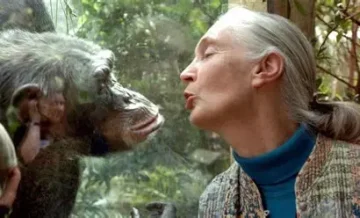
I can’t know for certain that you are a conscious being with an active mental life. I have access (I think) to my own internal states. I feel my own anxieties, indulge in my own joy, anticipate my own future, and remember my own past. I can’t do the same for you; indeed, for all I know, you might be a philosophical zombie: you might act in every observable way as a conscious human being would act, but, in fact, you might lack internal mental states entirely. Beliefs, desires, hopes, etc., might not happen inside of you. This is The Problem of Other Minds. It is an epistemic problem about what we can really know about human minds other than our own.
In ordinary contexts, though, we don’t think knowledge requires certainty. The idea that you might be a philosophical zombie isn’t a skeptical hypothesis I’m expected to take seriously, especially if I’m enjoying your company or consoling you about a loss. As Bertrand Russell wrote, let a philosopher “get cross with his wife and you will see that he does not regard her as a mere spatio-temporal edifice of which he knows the logical properties but not a glimmer of the intrinsic character. We are therefore justified in inferring that his skepticism is professional rather than sincere.”
In our everyday interactions with one another, we take behavior that is typically caused by certain mental states in our own case to count as sufficient evidence that the same or similar mental states are present in the minds of other people. If you pluck the fruit from the tree, it’s likely because you believe it is ripe. I am justified in drawing that conclusion because that’s likely the belief that would motivate me to pluck the fruit.
This reasoning is good enough for us most of the time in our interactions with other human beings. When it suits us, however, we treat non-human minds with much more skepticism, especially when it is in our interest to do so. Though philosophical behaviorism is no longer in vogue in human psychology, scientists still treat it as gospel when it comes to research on non-human animals. When discussing interactions with animals, a scientific approach involves making observations about stimulus inputs and response outputs without speculating about the inner states of animals whose internal lives we can’t access. We make similar judgments when thinking about the minds of animals that we kill for food. This is The Problem of Animal Minds, and it is much more than an epistemic problem.
In her mesmerizing book Through the Window: My Thirty Years with the Chimpanzees of Gombe, Jane Goodall sets aside a chapter to reflect on animal minds. She says,
There are… striking similarities between humans and chimpanzees in the anatomy and wiring of the brain and nervous system, and-although many scientists have been reluctant to admit this—in social behavior, intellectual ability, and the emotions.
Goodall recounts describing her early experiences to a conference populated by scientists who conducted research on animals in labs. She told them about a group of young chimpanzees who delighted in playing games with one another. One young chimp, who had stolen a banana and was hiding from the others, learning to stifle his grunts so he would be harder to find. The scientists at the conference responded with incredulity. Surely Goodall was anthropomorphizing. Behavior in animals doesn’t provide us with data that can lead to any reliable predictions at all about their mental states. Goodall finds this disconcerting, but not altogether surprising. She says,
It is, after all, convenient to believe that the creature you are using, while it may react in disturbingly human-like ways, is, in fact, merely a mindless and, above all, unfeeling, “dumb” animal.
What is it to be a “dumb animal”? The expression recalls something that Descartes said about non-human animals in Discourse on the Method. He considers the conditions under which we can justifiably conclude that a being has a mind and is capable of thought. He argues that beings with minds can communicate in language and vary their responses to stimuli through their own mental activity. Animals, by contrast, are automata—mere input/output machines. Though they may exercise their functions perfectly, they do so “solely by the disposition of their organs.” It follows that pigs then, like clocks and other machines, do what they do well simply because their component parts work together to get the job done. The answer to The Problem of Animal Minds is that there are no such things.
Goodall describes with great excitement her observations of chimpanzees using tools. She recalls the day in October 1960, when she first encountered a chimpanzee she named David Graybeard and his friend Goliath using long blades of grass to hunt for termites. She says,
Thinking back to that far-off time I relived the thrill I had felt when I saw David reach out, pick a wide blade of grass and trim it carefully so that it could more easily be poked into the narrow passage in the termite mound. Not only was he using the grass as a tool—he was, by modifying it to suit a special purpose, actually showing the crude beginnings of tool-making. What excited telegrams I had sent off to Louis Leakey, that far-sighted genius who had instigated the research at Gombe. Humans were not, after all, the only tool-making animals. Nor were chimpanzees the placid vegetarians that people had supposed.
Advanced mammals such as chimpanzees like Graybeard and Goliath do seem capable of varying their responses to stimuli as needed. All of the chimpanzees Goodall describes exhibit these capabilities. It seems clear that Descartes never encountered any chimpanzees, which is unsurprising. What would he make of them?
Perhaps a more interesting question for our purposes has to do with the nature of the capacity we are looking for in the first place. Feminist philosophers have written at length about the bifurcation that has existed since antiquity but that was further cemented in responses to Cartesianism: the bifurcation of reason and the passions, or reason and emotion. As thinkers like Genevieve Lloyd and Josephine Donovan have argued, reason has been valorized and associated both with human essence and with masculinity. Emotion has been denigrated, feminized, and treated as if it gets in the way of clear thinking. Consider this passage regarding the ways in which the emotional fragility of women makes them poorly constituted to reason from the work of Cartesian philosopher Nicolas Malebranche,
…normally they are incapable of penetrating to truths that are slightly difficult to discover. Everything abstract is incomprehensible to them. They cannot use their imagination for working out tangled and complex questions. They consider only the surface of things, and their imagination has insufficient strength and insight to pierce it to the heart, comparing all the parts, without being distracted. A trifle is enough to distract them, the slightest cry frightens them, the least motion fascinates them. Finally, the style and not the reality of things suffices to occupy their minds to capacity; because insignificant things produce great motions in the delicate fibers of their brains, and these things necessarily excite great and vivid feelings in their souls, completely occupying it.
With some exceptions, the history of western philosophy seems to emphasize the lesson that emotions are distracting. Far from providing us with answers to philosophical questions, emotions get in the way. This assumption has prevented us from even considering the Problem of Animal Minds from a different angle. Rather than searching for signs of reason (even if such signs clearly exist), why wouldn’t it be sufficient to look for signs of certain sophisticated emotions?
Through the Window is a difficult book to put down. Readers are likely to find themselves captivated when Goodall relates stories of groups of chimpanzees going to war with other groups of chimpanzees while retaining robust social order and commitments to members of their own group. They are likely to be astonished by the story of a mother chimpanzee and her daughter who cannibalized the babies of their own group and were subsequently ostracized by their peers as those peers showed signs of moral emotions such as disapprobation and blame. One of the most compelling stories for me was the story of a young chimp named Flint who was incredibly close to Flo, his mother. One day Flint woke to find his mother missing and, after a search, he found her dead. Grief overtook him. Goodall says,
Flint became increasingly lethargic, refused most food and, with his immune system thus weakened, fell sick. The last time I saw him alive, he was hollow-eyed, gaunt and utterly depressed, huddled in the vegetation close to where Flo had died. Of course, we tried to help him. I had to leave Gombe soon after Flo’s death, but one or other of the students or field assistants stayed with Flint each day, keeping him company, tempting him with all kinds of foods. But nothing made up for the loss of Flo. The last short journey he made, pausing to rest every few feet, was to the very place where Flo’s body had lain. There he stayed for several hours, sometimes staring and staring into the water. He struggled on a little further, then curled up—and never moved again.
There may be alternative explanations for Flint’s behavior aside from the all-consuming grief that results from the loss of care and love, but they look like strained attempts to ignore the obvious. Automata and other machines can’t die of complications related to grief, but it sure looks like chimps can.
We often explain away the cognitive dissonance we feel related to our treatment of animals by insisting that their behavior shows no evidence of reason. Anyone who has interacted with animals has seen sign of emotion. Jane Goodall’s work provides us with powerful examples of why that should be enough.
Enjoying the content on 3QD? Help keep us going by donating now.