
Noah Smith at Noahpinion:
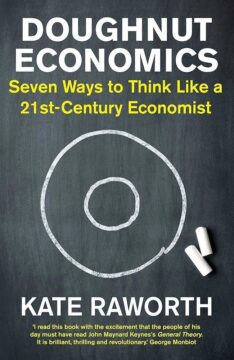 Here’s a very short, oversimplified history of modern economics. In the 1960s and 1970s, a particular way of thinking about economics crystallized in academic departments, and basically took over the top journals. It was very math-heavy, and it modeled the economy as the sum of a bunch of rational human agents buying and selling things in a market. Although the people who invented these methods (Paul Samuelson, Ken Arrow, etc.) were not very libertarian, in the 70s and 80s a bunch of conservative-leaning economists used the models to claim that free markets were great. The models turned out to be pretty useful for saying “free markets are great”, simply because math is hard — it’s a lot easier to mathematically model a simple, well-functioning market than it is to model a complex world where markets are only part of the story, and where markets themselves have lots of pieces that break down and don’t work.1 So the intellectual hegemony of this type of mathematical model sort of dovetailed with the rise of libertarian ideology, neoliberal policy, and so on.
A lot of people sensed that something was amiss, and set out to find problems with the story that the libertarian economists were telling. These generally fell into two camps.
More here.
Enjoying the content on 3QD? Help keep us going by donating now.