
Philip Ball in The Guardian:
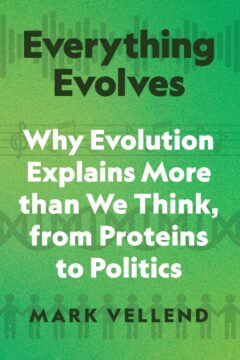 Ecologist Mark Vellend’s thesis is that to understand the world, “physics and evolution are the only two things you need”. Evolution, here, refers in the most general sense to outcomes that depend on what has gone before. Thus the world can be divided into things that are inescapable and things that are contingent, depending on circumstances. In the terminology he borrows from evolutionary biologist Graham Bell, the study of physical necessity is the “first science”; that of historical contingency the second. So, the periodic table of 90 or so natural elements, which are inescapable given the laws of physics, would fall under the first science. Dung beetles and vice presidents, which aren’t, fall under the second.
This “second science”, Vellend argues, unites disciplines from evolutionary biology to anthropology, history, economics and political science. If we fail to teach children about evolutionary processes, we “deprive them of understanding the fundamental set of processes that underlie not only life, but also the cultures and economies (and education systems) in which they live and work”. In developing this thesis, Everything Evolves draws on examples from technology and product design, microbiology, ecology, linguistics, and more.
More here.
Enjoying the content on 3QD? Help keep us going by donating now.