
by Martin Butler
 For some time there’s been a common complaint that western societies have suffered a loss of community. We’ve become far too individualistic, the argument goes, too concerned with the ‘I’ rather than the ‘we’. Many have made the case for this change. Published in 2000, Robert Putnam’s classic ‘Bowling Alone: the collapse and revival of American community’, meticulously lays out the empirical data for the decline in community and what is known as ‘social capital.’ He also makes suggestions for its revival. Although this book is a quarter of a century old, it would be difficult to argue that it is no longer relevant. More recently the best-selling book by the former Chief Rabbi Jonathan Sacks, ‘Morality: Restoring the Common Good in Divided Times’, presents the problem as one of moral failure.
Google ‘loss of community’ and myriad reports and articles pop up. It’s both misleading and unhelpful, however, to frame the problem in terms of such a loss, or as a conflict between ‘I’ and ‘we’. It’s important to recognise from the outset the uncontroversial point that, like dolphins or chimpanzees, human beings are by nature social animals. The claim that we have become too individualistic can’t mean that we have somehow changed our basic nature. Since our evolution on the plains of Africa, very few Homo Sapiens have lived truly non-social lives. As individuals we are relatively puny beings, our evolutionary success largely depends on our ability to act together as a group. In one sense then, it is an inescapable fact that we all live in communities on which we depend, and it’s important to remember the simple fact that we cannot survive without cooperating with others.
The anxiety about the loss of community expressed by Putnam and others must then be concerned with something other than this deeply social nature. What exactly is this?
A general characteristic of modern industrial societies which throws light on this is the fact that our interdependence on others (as adults) has become largely divorced from our most important social bonds: families, close friends, neighbours. We all live within societies and wouldn’t last long if we didn’t, this is the locus of our interdependence on others.
Modern societies, ideally at least, have laws that protect us and governments that collect taxes and provide services. A regulated economy operates around us and provides employment, goods and services. These societal benefits allow us to survive. However, all of this takes place at a social distance, although for societies to operate successfully a considerable level of cooperation is required. Other road users are mainly unknown to me, nevertheless for the most part we manage to conform to a complex set of rules which make road travel possible. I don’t have a social bond with the shop assistant from who I buy food; nevertheless we must cooperate for the transaction to work (automatic checkouts and online shopping are further increasing this particular social distance). Employment involves higher levels of social interaction – even when working via a computer screen at home – but for most of us this still only involve s formal or transactional relationships which do not activate our deeper social instincts of friendship, trust, loyalty or emotional attachment.
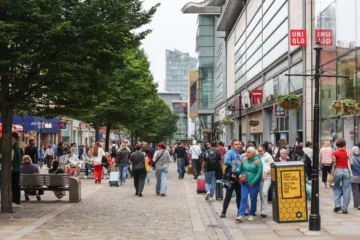
It has become possible to take advantage of living in society with minimal social interaction, and the age of the internet has pushed us even further in this direction. Theoretically we can survive with next to no social connect. Society has largely become impersonal or ‘bureaucratic’ as Max Weber would describe it, but this does not change the fact that modern humans are just as dependant on community as ever. Modern western society just doesn’t fit the full-blooded sense of ‘community’ exemplified by many pre-industrial and tribal societies in which the deeper bonds of kinship, friendship and loyalty did not merely provide emotional support but were crucial for physical survival. Community in this sense was a source of protection and sustenance, education and care, without which life would have been very difficult indeed. In more recent times working class communities provided similar support networks which made difficult conditions bearable. In their classic 1957 study ‘Family and Kinship in East London’, Michael Young and Peter Willmott provide a detailed record of these now mainly lost support networks.
There are clearly both advantages and disadvantages to our impersonal, bureaucratic society, but we can’t deny that it is still a community, and one that is in many ways highly sophisticated. But when Putnam, Sacks and others talk about ‘community’ they are clearly not referring to the impersonal structures provided by modern industrial society, nor presumably do they have in mind a return to the kinds of community typical of pre-industrial societies. So what is the focus of their concern?
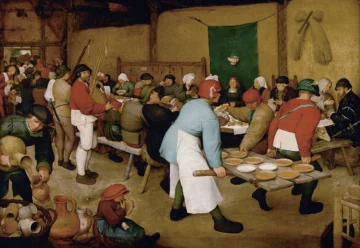
We tend to forget that because most of us don’t need the kind of full-blooded communities of yesteryear to live our normal lives, a more socially connected community becomes an optional extra. What Putnam calls ‘civic engagement’ is a recreational choice. (The title of his book – ‘Bowling Alone’ – makes this clear.) Some choose to ‘get ‘involved’ in their local communities and others do not. This kind of optional community is certainly not typical of communities throughout history; community as a way of life bound up with survival and embedded within a culture. But this is not moral decline, more like a historical shift connected with industrialism, rationalism and technology.
One important feature of an impersonal, bureaucratic society, at least when it works tolerably well, is its invisibility. Because it quietly ticks away in the background we can easily forget that it is keeping us alive. It’s too easy to take for granted the systems that ensure the shelves in our supermarket remain well stocked, that water comes out of our taps, that an emergency service will respond when we need it, and so on. We can forget that this is a complex, highly developed community, and come to believe that such a society has too much ‘I’ and not enough ‘we’. We then end up with a false dichotomy between individualism and community. When we talk of individualism – giving a primary value to individual rights, personal autonomy, self-expression – we forget that this only makes sense against a background of community, which is in fact the condition for the possibility of what we call ‘individualism’. Individual rights mean nothing to a Robinson Crusoe. We might want to construct our impersonal bureaucratic communities so that they emphasise these individualistic values (although these values are far less well defined than we might think) but it is nevertheless community cooperation through cultural norms that makes them possible. We might describe such a community as embodying an ‘individualistic culture’, but it is a particular kind of community with a particular kind of culture – not the lack of community or the lack of a culture. So those who see individualism as some kind of threat to community are, I think, just as misguided as those who regard the community as necessarily placing limits on the fundamental freedoms of individuals. The right way to think about it is in terms of kinds of community; different kinds of ‘we’ rather than as a conflict between the ‘I’ and the ‘we’. There is no such thing as a community-less individual any more than there is individual-less community.
This reframing has important practical implications. Consider the modern impersonal bureaucratic communities we’ve discussed. Despite their efficiency at delivering many material benefits, they clearly have drawbacks. Their impersonal nature, for example, can mean that governments, regulations and taxes feel like an imposition on us from outside. We can feel alienated from the very thing that is key to our survival. But is this a matter of too much or too little individualism? I’m not sure, but it’s just not helpful to insist, as some do, that modern society is too concerned with the ‘I’.
There is nothing wrong with judging that some communities are better than others, but we do this not by measuring the extent to which they embody certain favoured values or some sacrosanct ideology, but by a whole range of factors, some inevitably subjective. (John Rawls’s ‘veil of ignorance’ thought experiment can be useful here.[1]) Would you be happy to live in such a society? Are there low levels of conflict, violence, corruption, and crime? Is it a fearful or anxious community? Is it a community that is educated? Are citizens treated equally, and does it operate according to the rule of law? Can it be described as thriving and cohesive? Do people have reasonable access to the basics required for a good life – accommodation, employment, health care etc.? Do people tend to feel connected to the community or is it too impersonal and bureaucratic? Does it produce impressive art and/or science? Are there high levels of trust? Is it a caring society? Does it operate in a way that is sustainable? And so on, and so on. Of course the ideal community probably doesn’t exist and never will, but on the basis of what does exist we can surely gain a picture of the direction we would like to go
Some so-called ‘individualist’ values can certainly have a beneficial effect on a community, while others can be positively harmful. Surely we would want to live in a community where individual autonomy was by and large encouraged, though this is not of course absolute. However, an individualism that leads to extreme levels of wealth inequality is surely not desirable. But it’s just an artificial abstraction to analyse communities in terms of individualism (or collectivism); much simpler just to come to some very general agreement on what a good community looks like and work towards it.
[1] https://plato.stanford.edu/entries/original-position/