
by Mark Harvey
Every civilization sees itself as the center of the world and writes its history as the central drama of human history. ―Samuel P. Huntington, The Clash of Civilizations and the Remaking of World Order
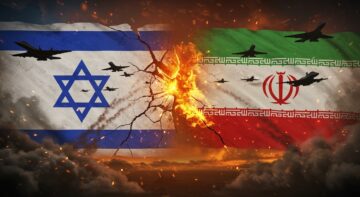 Watching Israel and Iran lob bombs at each other these last few weeks makes me tired. Just when the world seemed completely destabilized and clinically looney, two countries who both trace their religions back to Abraham or Ibrahim decide to make things worse. I know you’re supposed to reach for the most recent issue of Foreign Affairs or parse treaties on nuclear non-proliferation to make sense of this missile orgy, but this latest war might make you reach for your earplugs and blindfold instead.
It’s easy to come up with reasons why one of these fanatical leaders–Ali Kamenei or Benjamin Netanyahu— is right and the other is wrong, back it up with obscure historical data and tables of fissionable materials, but there might be a simpler explanation: a good portion of mankind lives in the reptilian and limbic parts of the human brain, is soaked in the desire for revenge, and is completely lacking in reason and forbearance.
In the few days since I began writing this, the United States has cast our lot into the mess with bombing sorties over Iran as well. This is all red meat for the pundits of every stripe. Along with the hypersonic missiles flying back and forth over the Zagros Mountains and the Syrian Desert, you can bet there will be a barrage of hyperbolic opinion pieces either extolling or condemning the war.
My college degree was in International Studies and I used to try to find some real logic in foreign affairs. There were a few writers and theorists like the late George Kennan and Samuel Huntington who actually did a pretty good job of breaking down international affairs into some sort of mechanics or predictable psychology. Huntington believed that the modern conflicts were determined by the clash of cultures and religions, not economics.
He wrote,
People define themselves in terms of ancestry, religion, language, history, values, customs, and institutions. They identify with cultural groups: tribes, ethnic groups, religious communities, nations, and, at the broadest level, civilizations.

Huntington was criticized for being oversimplistic and ginning up the culture wars with his ideas. Civilizations are not monolithic, his critics argue. He put too much emphasis on religious beliefs causing wars, his critics say. Watching Iran and Israel go at it eternally, I’m not so sure.
Kennan was considered the foremost expert on the Soviet Union in his time and invented the concept of “containment.” He held no illusions that the Soviet Union could be magically transformed into a Jeffersonian Democracy and saw the now diminished empire as a sort of liquid blob run by absolutists with eternal patience and a conviction that they would ultimately triumph.
They both subscribed to the theory of what’s known in the trade as realpolitik. It meant that neither had any illusions about warring countries somehow coming to their senses and taking a note from the Book of Isaiah in the Bible, and beating their swords into ploughshares.
I was quite an idealist when I first read the writings of Kennan, Huntington, and the others who had an unsentimental take on human nature. It rubbed me the wrong way that they didn’t think global powers would come to some sort of sanity and quit spending so much time and treasure building death machines and then unleashing them on millions of people. Over the years, watching war after war, seeing the rubble of apartment buildings and hospitals in Damascus, Kiev, and Bagdad, the video clips of newly orphaned children in Rwanda and Central America, and the surety of leaders launching the wars that lead to unimaginable suffering, I’ve come to respect the gimlet-eyed of the foreign policy community. They’re not cheery and they probably all recommend pre-nuptial agreements, but they also practice the real in realpolitik. As in, let’s be real about nations, factions, and fanatics: it’s a Hobbesian world.
And yet and yet. The full quote from The Book of Isaiah goes, “They shall beat their swords into ploughshares, and their spears into pruning hooks; nation shall not lift up sword against nation, neither shall they learn war anymore.” Isaiah would have been kicked out of the International Studies programs at Georgetown University or Kings College for his naivete, but his entreaty to convert the tools of war to the tools of agriculture has such a deep appeal and resonance.
Not far from where the Iranian missiles are being launched from the Isfahan Province toward Israel, farmers grow millions of tons of wheat, rice, barley, pomegranates, dates, pistachios, almonds, walnuts, and sundry other vegetables.
In the Negev desert near the Nevatim Airbase where Israel launches its bomber jets, farmers somehow grow olives, dates, grapes, pomegranates, tomatoes, peppers, and cucumbers despite the bone-dry climate.
In both countries, while one group of men and women make plans of how to blow the other country to smithereens, other men and women install drip irrigation and plant pomegranate trees. While teams in Israel and Iran calculate kinetic yields, blast radiuses, and casualties before they fire off missiles that land on schools and hospitals, other teams measure the acidity and nitrogen content of soils before they plant things that people can eat.
Iranians and Israelis each have their own favorite dishes but they also eat a lot of the same things in nearly the same way. Take bread for instance, the staff of life. Each country has various types of bread but the hugely popular pita in Israel isn’t that different from the hugely popular lavash in Iran. Both are made from essentially the same ingredients: flour, water, yeast, salt, and sometimes a little oil.
Lavash is a little flatter than pita and doesn’t have a pocket. So fire up the missiles to decide which bread is served for dinner. Death to pita, death to lavash! In some ways, fighting over the supremacy of bread makes more sense than fighting over the supremacy of which God to worship. At least bread makes itself visible and there are few heretics that don’t believe in wheat. Even the gluten-free acknowledge it’s existence.
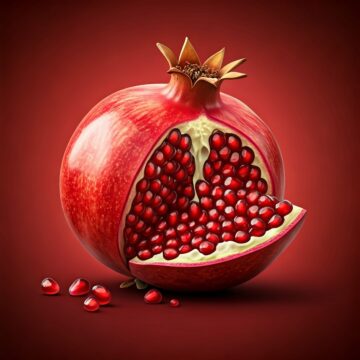
Another food both cultures cultivate and enjoy are pomegranates. The Persian word for pomegranate is anaar and the fruit represents beauty and fertility in the Iranian culture. Pomegranates seem to run thick through Persian culture in poetry, literature, cooking, and even versions of girls’ names.
The poet Rumi dedicates a whole poem to the fruit. In The Laughter of Pomegranates, he writes,
A laughing pomegranate
brings the whole garden to life.
keeping the company of the holy
makes you one of them
Whether you are stone or marble
you will become a jewel
when you reach a human being of heart.
A special dish in Iran is called Fesenjan, made from chicken, walnuts, and pomegranates (and some other ingredients). It must be delicious because there’s a saying in Iran that goes, “He behaves as if he has had partridge and fesenjan,” meaning that the person acts as if they’re rich.
Iran’s most reviled enemy also loves the pomegranate and it has a special place in Sephardic rituals. Some Jews eat them during Rosh Hashanah and recite, “May we be as full of mitzvot (commandments) as the pomegranate is full of seeds.”
In Deuteronomy, Jews are advised to remember the good land the good Lord gave them, specifically things like brooks and springs and barley and, yes, pomegranates. Israelis too add them to their salads, rice dishes and puddings.
I’ve never grown a pomegranate tree but I read that they like well-drained soil, lots of sunlight, and can tolerate drought. From what I gather, some of the best pomegranates grown in Iran come from the same province where the missiles are launched toward Tel Aviv and Haifa. The village of Imamzadeh Sayyed Ali-Akbar in that province is known for the quality of that fruit—along with I assume some religious intolerance.
The cognitive dissonance comes on pretty strong when one considers that for a good part of June in the Isfahan province, some men and women were firing hundreds of millions of dollars of missiles from various silos while not far away other men and women were carefully tending trees just coming into flower. While the military was choosing targets, the farmers were worried about aphids and moths, weekly irrigation, fertilizers, and light pruning. The two neighboring vocations—death and destruction on the one hand, and careful cultivation on the other, are truly hard to fathom.
Things are much the same in southern Israel where there are big air bases in the Negev Desert to launch the F35s and F16s that crossed the Holy Land on their way to bomb Iranian nuclear facilities a little while ago. Pomegranate farmers near the air bases who might read the Tanakh instead of the Koran, worry about the same aphids and moths attacking their trees, carefully irrigate with precious water, and study the health of the fruit blossoms. Some of the farmers have beautiful websites offering early-harvest varieties and late-harvest varieties giving consumers the opportunity to receive the holy fruit from August to December.
Chances are that if you got the Iranian farmers into a room with the Israeli farmers they’d be more interested in chatting about subsurface drip irrigation, pruning, and canopy management than the endless, pointless—and let’s not mince words—utterly stupid fighting between the two countries.
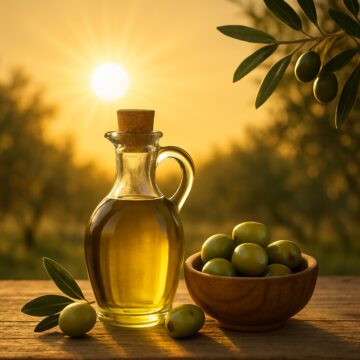
At last, there is the lovely olive tree. The olive is of course the symbol of peace and regeneration from the Bible. In Genesis, when a dove flies out to Noah’s ark carrying the leaves of an olive tree, Noah knows that the flood has subsided and God’s wrath is abiding. In Surah An-Nur of the Koran, the light of Allah is compared to the light of a lamp fueled by olive oil.
Israelis eat considerably more olives and olive oil per capita than Iranians but Iranians produce about ten times as much olive oil as Israelis when measured in gross tonnage. Hard to imagine that in some underground bunker in the Golan Heights a group of analysts is studying total inventory of olive presses in Iran—and planning a surgical bombing raid to take those presses out. The important stuff—what we grow and what we eat—doesn’t tend to make men into revenge-seeking, blood thirsty beasts. But which God we pray to does.
The older I get the less interest I have in foreign wars and foreign affairs and the more interest I have in soil and water and growing things. It’s more honest, it makes more sense, and the fruits of your labor are things you can eat, not hypersonic missiles that destroy cities and families from an anonymous distance.
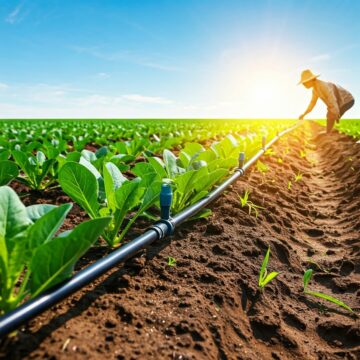 War is pornography writ large on the suffering of millions of innocents trying to get their kids to school or ease the loneliness of an elder. The fruits of war are orphans and the maimed. Agriculture has none of pomp and pageantry, but the fruits of agriculture are fruit—melons, and peaches, and grapes. Not in my lifetime, but maybe one day the glory of cultivating a tree heavy with the weight of avocados or oranges in the middle of the desert will dwarf the glory of launching a missile that will destroy a family just like your own.
Swords beaten into ploughshares and pruning hooks. Hope dies last.