
Percy Zvomuya at Artforum:
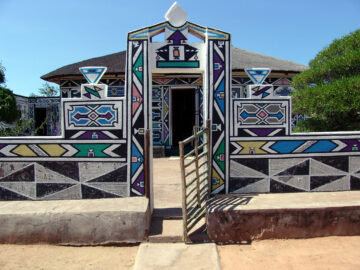 IF THE CHOICE were up to Zimbabwe, it would pursue a path independent of South Africa, the powerful and domineering neighbor across the Limpopo River to its south. Yet, because of fate, history, and the accidents of geography, the most significant forces that shaped modern Zimbabwe and its predecessor, Southern Rhodesia, came from across the frontier. In the 1820s, a fugitive general named Mzilikazi, fleeing the Zulu warrior-king Shaka, crossed the border from present-day KwaZulu-Natal (on the southeast Indian Ocean coast), where he would found the Ndebele state. In 1890 came the colonial encroachment by British–South African empire man Cecil John Rhodes, after whom the country was named. Zimbabwe and South Africa share in Rhodes a common ancestor; in Ndebele a language with a close connection to Zulu (the most spoken language in South Africa); and the common visual vocabulary sometimes called Ndebele art.
more here.
Enjoying the content on 3QD? Help keep us going by donating now.