
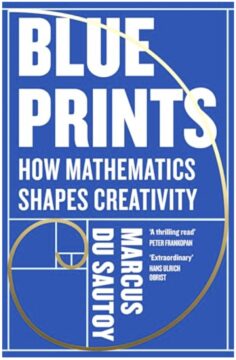
Marcus du Sautoy at Big Think:
 In the first movement of his piece, Messiaen wanted to create the strange sense of time ending. He achieved this in the most stunning manner. Time depends on things repeating, so he needed to produce a structure where you never truly hear the moment of repetition. While the clarinet imitates a blackbird and the violin a nightingale, the piano part plays a 17-note syncopated rhythm that just repeats itself over and over. But the chord sequence that the pianist plays, set to this rhythm sequence, consists of 29 chords, which are again repeated over and over. Such repeating patterns might lead to boredom and predictability, but not in this case. Because Messiaen’s choice of numbers—17 and 29—means that something rather magical… or mathematical, occurs. The numbers he chose are prime numbers, and their mutual indivisibility means that the rhythm and harmony that Messiaen has set up never get back in sync once the piece is in motion.
More here.
Enjoying the content on 3QD? Help keep us going by donating now.