
Benjamin Kunkel in Harper’s Magazine:
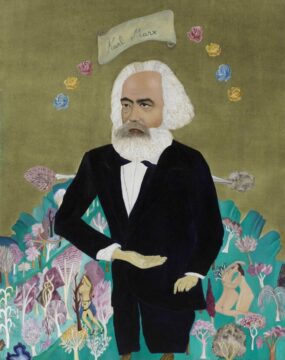 Let us approach Capital as naïvely as possible, while admitting that in the case of Capital this decision can hardly be anything but a ruse. The ruseful naïveté I have in mind will consist in our pretending not to have any extratextual information about the book—in particular, information about the enormous literature of partisan commentary that has grown up around Marx’s analysis of capitalism or about the international Communist movement that took Capital for its warrant.
The paragraph above copies almost word for word the first sentences of “Against Ulysses,” a 1988 essay by the critic Leo Bersani about another book whose reputation almost ruinously precedes it, namely Joyce’s novel about a June day in Dublin. Such helpless plagiarism on my part (turns out I couldn’t imagine a naïve or innocent reading of Capital without recalling Bersani’s similar gambit) should by itself imply how hard it is to achieve true naïveté in the face of an exceptionally famous book. Already it was more than 140 years ago that an old man named Karl Marx and an infant baptized James Augustine Joyce shared the air for some thirteen months, and by now all the endless discussion of the notorious books that these writers produced means that any attempt to read them in a spirit of innocence smacks of too much experience. I was just a kid when I first heard of Das Kapital, evidently such a sinister title that, like Mein Kampf, it could only be uttered in German. Most people have been hearing about Marx and Marxism forever; even Donald Trump, whom no one would suspect of having read Capital, routinely castigates his opponents as Marxists.
More here.
Enjoying the content on 3QD? Help keep us going by donating now.