
Joel Achenbach in The Washington Post:
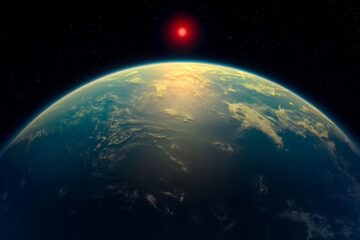 A distant planet’s atmosphere shows signs of molecules that on Earth are associated only with biological activity, a possible signal of life on what is suspected to be a watery world, according to a report published Wednesday that analyzed observations by NASA’s James Webb Space Telescope.
…This possible detection of a biosignature could be “potentially one of the biggest landmarks in the history of science,” Madhusudhan said. “This is the first time humanity has ever seen biosignature molecules — potential biosignature molecules, which are biosignatures on Earth — in the atmosphere of a habitable-zone planet,” he added. The habitable, or “Goldilocks,” zone is the distance from a star that could allow water to remain liquid at the planet’s surface.
More here.
Enjoying the content on 3QD? Help keep us going by donating now.