
Charlotte Rogers in the Los Angeles Review of Books:
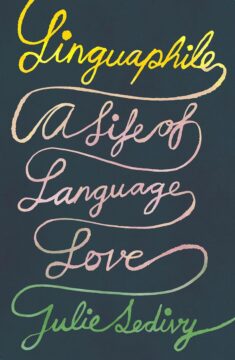 “If there is one feature that defines the human condition, it is language.” This pronouncement appears on the dust jacket of the new memoir by the linguist Julie Sedivy, Linguaphile: A Life of Language Love, but the idea dates back at least to Aristotle, who asserted that what distinguishes humans from other creatures is “logos,” our ability to think rationally and persuade others through language.
If language defines the human condition, then Sedivy is superhuman: she spoke five languages before kindergarten and learned to read without ever being taught how. She expresses the joyful rush of comprehension with a profusion of aquatic similes: learning a new word as a child is like catching “fish” amid “flashes of substance and meaning in the liquidity of language flowing all around [her].” Sedivy traces the human lifespan through the prism of language, from the way newborns suck on a pacifier more vigorously when they hear their mother tongue to her own sensual pleasure at sucking on beautiful words “like fruit drops” and the surprising ways vocabulary continues to grow in old age. Linguaphile is a passionate and occasionally zany paean to Aristotle’s logos, roaming freely over literature and the science of language acquisition. These meditations occasionally converge in hilarious ways: at one point, Sedivy imagines linguists in a lab fitting Virginia Woolf with an eye-tracking helmet to observe how the writer’s vision would show her nimble mind parsing a word’s multiple meanings.
More here.
Enjoying the content on 3QD? Help keep us going by donating now.