
Pranshu Verma in The Washington Post:
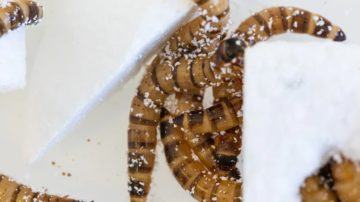 A plump larva the length of a paper clip can survive on the material that makes Styrofoam. The organism, commonly called a “superworm,” could transform the way waste managers dispose of one of the most common components in landfills, researchers said, potentially slowing a mounting garbage crisis that is exacerbating climate change. In a paper
 Now, the researchers will study the enzymes that allow the superworm to digest Styrofoam, as they look to find a way to transform the finding into a commercial product. Industrial adoption offers a tantalizing scenario for waste managers: A natural way to dispose and recycle the Styrofoam trash that accounts for as much as 30 percent of landfill space worldwide. “You cannot really escape plastic anymore — plastic waste is everywhere,” said Christian Rinke, the study’s co-author. “This is definitely a new, arguably, better, environmentally friendly way to break [it] down.”
More here.