
A very fascinating discussion:
Category: Recommended Reading
How Multiculturalism Fails Immigrants

Authentic historical identities are beside the point in most people’s life and work. The typical migrant, instead, survives by operating several different selves at once.
Yet the very policies designed to recognise and value citizens’ identity are still in many ways influenced by 19th century ideas about ethnicity. It is commonplace, for instance, to be told that a child with a dark(ish) skin needs to be acquainted with his or her “own culture,” even when it isn’t clear what that might mean. The more we know about the science of genetics and the history of humankind, the more obvious it is that race itself is a more or less meaningless category (see “Black Men CAN Swim” in Prospect’s August issue).
Ironically, over the last decade or so, as the label “race” began to be discredited, the word “culture” has been pressed into service as a surrogate for all the familiar old attitudes. Figures like the previous mayor of London, Ken Livingston, decided that multiculturalism would be the political strategy to solve all the problems of migrant and British identity. But multiculturalism offered different meanings to different people. Even the right-wing and racist parties, staunch opponents of what they might have described as “race-mixing,” recognised the advantages of a multicultural arrangement in which each “culture” could maintain its exclusivity behind various social and political barriers.
Multiculturalism, therefore, had made life easier for a number of institutions and authorities—if only because it allows connections between social, political and economic conditions to be sidestepped. Meanwhile the interests and aspirations of the ethnic minorities have invariably been ignored. Even worse, the fact that multiculturalism is now integral to the right-left divide in British politics has spawned its own pattern of damage. In my own experience of discussing funding and sponsorship, or reporting on the progress of cultural projects and programmes, it is clear that subsidies and patronage, especially in the context of local authority funding, may now depend on which side you’re on.
From Antagonistic Politics to an Agonistic Public Space: An Interview with Chantal Mouffe

In December 2008, Athens saw an eruption of violent protests that followed the murder of a teenager by a policeman. Initially reacting to police violence, the protestors did not articulate a specific agenda. The rallies, which mobilised a substantial part of the population – particularly the youth – dissipated a few weeks later. Similar outbreaks have taken place in other European cities in recent years (e.g. the Paris banlieues) and warrant a number of questions with regards to the capacity of our states and our cities to nurture a strong democratic life, acknowledging the role of conflict and preventing its violent expression.
Question: Do such events in their proportion and accumulated anger they carry illustrate the fact that liberal democracies actually fail to create room for dissent? In other words, could we argue that the emphasis on consensus has undermined the capacity of political actors to articulate dissent in ways that are necessary to democratic life?
Chantal Mouffe: In fact, I was thinking precisely of that at the moment when this was happening. This was a very good example of one of the arguments that I am making: that, if you don’t adopt an agonistic form of politics, if you don’t take the responsibility for different conflicts and struggles to take a political form of expression, then, when these conflicts erupt, they erupt in violent form. I was relating what took place in Athens on 2008 with the banlieues in France; it is a very similar phenomenon, in that there were no clear political demands. In order to understand the similarities between the two cases, it’s important to stress that, contrary to many interpretations, what happened in the banlieues was not an ethnic or religious conflict; this was a different phenomenon, a cleavage that concerned the youth. The conflict in this case erupted in a very violent manner but it did not articulate specific demands. And that of course was difficult for people to come to terms with, because they wondered: “What do they want? What do they ask for?”. This is similar to what happened in the Greek case: of course in the case of Greece there was no misunderstanding about ethnicity or religion, but I think the two phenomena have a lot in common. This is clearly the expression of a crisis of representation in politics due to the political move toward the centre; particularly by the socialists and the social-democratic parties, who seem to identify with a certain kind of middle class and leave many segments of the population, like traditional workers and the youth, without a discourse within which to address their demands. There is no political form of expression for those demands; so when the conflict erupts, it erupts in an antagonistic way and not in an agonistic way.
The big letdown
From The Boston Globe:

There’s no question that the president has failed to live up to the expectations of many of his supporters–expectations he created with his empyrean campaign rhetoric. But it turns out that human beings are easy to disappoint. Research suggests that even when people know that someone has nothing but bad options to choose from, they still blame the decider for a bad outcome. And while disappointment and regret and even anger are often spoken about in similar terms, psychologists see them as distinct emotions, triggered by different sorts of events and motivating us to act in different ways. Even disappointment itself comes in flavors: Being disappointed with a person feels different from being disappointed with an outcome, and demands a different response.
In short, alleviating disappointment means understanding what someone actually means when they say they’re disappointed.
More here.
Watcher of the Skies
Manjit Kumar in The Telegraph:
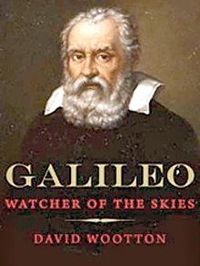
When, in 1609, he learnt of the invention of the telescope by a Dutch spectacle maker, Galileo quickly constructed his own. Within a matter of months he had transformed it from a toy into an instrument of scientific discovery and he found that the Milky Way was not a streak across the sky but a multitude of stars; that the Moon had mountains and valleys; and he observed the phases of Venus and the spots on the Sun. 'For Galileo, seeing was believing,’ says the historian David Wootton. Yet he argues persuasively in this well researched, intellectual biography that Galileo was a Copernican long before his discovery of the moons of Jupiter proved that not all heavenly bodies revolved around the Earth. In March 1610, Galileo published his discoveries in the aptly titled book, The Starry Messenger. All 550 copies were sold within a week and soon the 46 year-old was Europe’s most celebrated natural philosopher.
More here.
sunday morning
buffalo, the hallelujah, and a dog

I have never thought of Buffalo as a city of rebirth. It’s too cold there. And the city has been dying for more than a generation. All of upstate New York is like that, the creeping death and a winter that pounds the graveyards into tundra for much of the year. I have a healthy respect for Buffalo, for this very reason. But only a madman would go there to be reborn. LaDainian Tramayne Tomlinson is just such a madman. He was supposed to fade away, to be hidden deep in the roster of some team needing depth at running back after the San Diego Chargers traded him away at the end of last season. His motor had run down, his legs couldn’t do it anymore. Nine seasons is a long time for a workhorse. The body revolts. The ligaments, sinews, and tendons start to scream inside their fleshy shell all year long. And so, Tomlinson was meant to go out to pasture like all the rest, collecting a few more paychecks from a league whose memory is necessarily short.
more from me at The Owls here.
ivor cutler
(thanks to John Mooney)
Saturday, October 9, 2010
The Elections: How Bad for Democrats?

My own answer to the question of how things got this bad has less to do with whether Obama should have been more liberal or more centrist than with his and his party’s apparent inability, or perhaps refusal, to offer broad and convincing arguments about their central beliefs that counter those of the Republicans. This problem goes back to the Reagan years. It is a failure that many Democrats and liberals hoped Obama could change—something he seemed capable of changing during the campaign but has addressed rather poorly once in office.
In American politics, Republicans routinely speak in broad themes and tend to blur the details, while Democrats typically ignore broad themes and focus on details. Republicans, for example, speak constantly of “liberty” and “freedom” and couch practically all their initiatives—tax cuts, deregulation, and so forth—within these large categories. Democrats, on the other hand, talk more about specific programs and policies and steer clear of big themes. There is a reason for this: Republican themes, like “liberty,” are popular, while Republican policies often are not; and Democratic themes (“community,” “compassion,” “justice”) are less popular, while many specific Democratic programs—Social Security, Medicare, even (in many polls) putting a price on carbon emissions—have majority support. This is why, when all else fails, Democrats try to scare people about the threat to Social Security if the GOP takes over, as indeed they are doing right now.
What Democrats have typically not done well since Reagan’s time is connect their policies to their larger beliefs. In fact they have usually tried to hide those beliefs, or change the conversation when the subject arose. The result has been that for many years Republicans have been able to present their philosophy as somehow truly “American,” while attacking the Democratic belief system as contrary to American values. “Putting us on the road to European-style socialism,” for example, is a rhetorical line of attack that long predates Obama’s ascendance—it was employed against the Clintons’ health care plan as well.
Kashmir’s Forever War
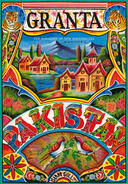
Srinagar used to be a city of elegant latticed houses, mosques and temples on the banks of the river. Srinagar was people strolling on the wooden bridges and wandering into old bazaars or stepping with a prayer into a Sufi shrine with papier-mâché interiors. Now it is a city of bunkers, a medieval city dying in a modern war. One of the most prominent landmarks of war is the sprawling Martyrs’ Graveyard in north-western Srinagar; several hundred Kashmiris killed in the early days of the conflict are buried here. Among them is a well-known politician and head cleric of Srinagar grand mosque, Moulvi Mohammed Farooq, who was assassinated by pro-Pakistan militants on 21 May 1990. More than sixty mourners were killed when Indian paramilitaries fired upon his funeral procession. The cleric’s eighteen-year-old son, Omar Farooq, left school to inherit his father’s mantle. He is now one of the best-known Kashmiri separatists, heading the Hurriyat (Freedom) Conference coalition.
A few days before the twentieth anniversary of his father’s assassination, I walked past the Martyrs’ Graveyard to an old wooden mosque nearby, where Farooq was holding a meeting with his supporters. In an elegant brown lambskin cap and delicately embroidered beige gown, he deftly mixed his roles as a modern politician and the head cleric in Kashmir’s Sufi tradition, leading his followers in a sing-song voice humming Kashmiri and Persian devotional songs and then moving effortlessly to the question of Kashmiri politics. He spoke of the memory of the thousands who had died in the battles for Kashmir, including his father. He spoke of preventing further deaths. And then the old Kashmiri slogans for independence followed. ‘Kashmir is for Kashmiris!’ Farooq shouted. ‘We will decide our destiny!’ the people replied. He was about to lead a march through the city. Outside, excited young supporters were revving up their motorbikes and raising flags on cars.
Over the years, Farooq has engaged with both India and Pakistan and sought to rally the Kashmiris towards a peaceful agreement, often at a high personal price. In 2004, after failed peace talks with India, pro-Pakistan militants assassinated his uncle.
Meera Syal: My family values
From The Guardian:

Inside our Punjabi household the atmosphere was one of familiarity and solidity, but outside the house things sometimes felt threatening. I have vivid memories of my parents and all their friends talking about a certain speech that Enoch Powell made. I always thought that the reason there were packed suitcases on top of every wardrobe was that we might have to leave the country in the middle of the night because of Enoch Powell. It was only years later that I realised that everybody's families had suitcases on top of the wardrobe.
Punjabis are the cockneys of India. They are party people – gregarious, outgoing, very entrepreneurial, sharp-witted, loud, meat-eaters. Back in the Punjab, they are basically earthy, rural workers. And that was very much the atmosphere when we had friends around. It was incredibly noisy, loads of music, lots of loud voices and drinking, and I thought that was normal until I went to other people's houses and I was shocked to discover that sometimes people's families say nothing to each other during dinner.
More here.
If Walls Could Talk
From The New York Times:
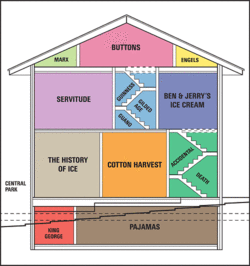
Bryson is best known for “A Short History of Nearly Everything,” which took a cosmic perspective on the creation of the place we call home, our planet — no, make that our solar system — and created a run on yellow highlighters. Why he insists on calling these histories “short” is beyond me, when each runs to more than 450 pages. Perhaps they’re short when compared with the stacks of tomes that have to be ingested, digested and egested in order to produce them? With “At Home,” Bryson’s focus is domestic; he intends, as he puts it, to “write a history of the world without leaving home.” You can take this class in your pajamas — and, judging by the book’s laid-back, comfy tone, I have a sneaking suspicion that Bryson wrote much of it in his.
More here.
How the Roberts Court disguises its conservatism
Barry Friedman and Dahlia Lithwick in Slate:

How to explain the justices shoving the law rightward, while everyone thinks it is dead center or too far left? The answer is that Roberts is a brilliant magician. He and his four fellow conservative justices have worked some classic illusionist tricks to distract us from seeing the truth. Roberts is likely the first chief justice to understand that the message matters as much as the outcome. He has played his role with consummate skill, allowing the law to shape-shift before our very eyes, even as he and his fellow conservatives claim that nothing is happening.
How does the Roberts Court work its magic in that marble mega-mall of the law? Here, revealed, are the top tricks of the illusionist Roberts Court.
More here.
Coloured scanning electron micrographs

[Photo above shows eyelash hairs growing from the surface of human skin, magnified 50 times.]
Graham Smith in The Daily Mail:
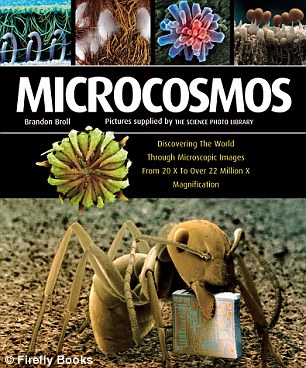
Because the insect features in a stunning new book featuring the art of the coloured scanning electron micrograph – in the case of this chap magnified 22 times.
Microcosmos takes readers into a secret world of extreme close-ups. Some subjects have been magnified by as much as 22million times.
Detailed descriptions of the subjets are contained within. The wood ant, for example, is a social creature, and acts as a slave for the blood-red ant Formica sanguinea.
Inseminated females of the blood-red ant invade wood ant nests, steal the pupae, and the ants that hatch are made to work for the strange queen.
Compiled by London-based science author Brandon Broll, Microcosmos takes a piercing look at the everyday in six sections including Zoology, The Human Body and Botanics.
More here.
Peregrine Falcon & Gos Hawk – Animal Camera
The Speech Which Was Never Delivered
William Jennings Bryan’s last speech (never delivered) for the Scopes’ Monkey Trial in 1925 was reprinted the next year as a pamphlet: a tool for believers to combat what they perceived to be a cultural threat — the theory of evolution. He deemed it “the most powerful argument against evolution ever made.”
Reprinted in Skeptic:
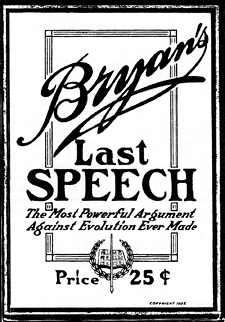
This is not an interference with freedom of conscience. A teacher can think as he pleases and worship God as he likes, or refuse to worship God at all. He can believe in the Bible or discard it; he can accept Christ or reject him. This law places no objections or restraints upon him. And so with freedom of speech, he can, so long as he acts as an individual, say anything he likes on any subject.
This law does not violate any rights guaranteed by any constitution to any individual. It deals with the defendant, not as an individual, but as an employee, an official or public servant, paid by the state, and therefore under instructions from the state.
The right of the state to control the public schools is affirmed in the recent decision in the Oregon case, which declares that the state can direct what shall be taught and also forbid the teaching of anything “manifestly inimical to the public welfare.” The above decision goes even farther and declares that the parent not only has the right to guard the religious welfare of the child, but is in duty bound to guard it. That decision fits this case exactly. The state had a right to pass this law, and the law represents the determination of the parents to guard the religious welfare of their children.
It need hardly be added that this law did not have its origin in bigotry. It is not trying to force any form of religion on anybody. The majority is not trying to establish a religion or to teach it — it is trying to protect itself from the efforts of an insolent minority to force irreligion upon the children under the guise of teaching science.
More here.
Even if I am crushed into powder, I will embrace you with the ashes

If you are curious about Liu Xiaobo, the Chinese dissident who was awarded the Nobel Peace Prize, I don’t think there is a better place to start than the extraordinary document he released in December 2009, as he was awaiting trial on charges of “inciting subversion of state power”: “I Have No Enemies — My Final Statement.” Here are two excerpts, one addressed to his jailers, and one to his wife — one of the most incredible expressions of love I’ve ever read.
But I still want to tell the regime that deprives me of my freedom, I stand by the belief I expressed twenty years ago in my “June Second hunger strike declaration” — I have no enemies, and no hatred. None of the police who monitored, arrested and interrogated me, the prosecutors who prosecuted me, or the judges who sentence me, are my enemies. While I’m unable to accept your surveillance, arrest, prosecution or sentencing, I respect your professions and personalities. This includes Zhang Rongge and Pan Xueqing who act for the prosecution at present: I was aware of your respect and sincerity in your interrogation of me on 3 December. For hatred is corrosive of a person’s wisdom and conscience; the mentality of enmity can poison a nation’s spirit, instigate brutal life and death struggles, destroy a society’s tolerance and humanity, and block a nation’s progress to freedom and democracy. I hope therefore to be able to transcend my personal vicissitudes in understanding the development of the state and changes in society, to counter the hostility of the regime with the best of intentions, and defuse hate with love.
more from Andrew Leonard at Salon here.
why him, why now?

The selection Thursday morning of Peruvian novelist Mario Vargas Llosa as winner of the 2010 Nobel Prize for literature raises a familiar question: Why him? Why now? On the one hand, Vargas Llosa is without question a writer of stature, a central figure — along with his one-time friend and fellow Nobel laureate Gabriel Garcia Marquez — in the Latin American “boom” generation of the 1960s and 1970s, the author of such major novels as “The Time of the Hero,” “The Green House” and “Conversation in the Cathedral.” That alone distinguishes him from the last two recipients of the prize, Jean-Marie Gustave le Clézio and Herta Mueller, neither of whom was what anyone would call a household name. At the same time, although Vargas Llosa has continued to work steadily — his most recent novel, “The Bad Girl” (2007), is an updating of sorts of “Madame Bovary” — he hasn’t published a truly significant literary work since 1981’s “The War of the End of the World.” In part, suggests Ilan Stavans, editor of “The Norton Anthology of Latino Literature” and a professor at Amherst College, this has to do with his immersion in politics, which culminated with his unsuccessful 1990 run for the Peruvian presidency.
more from David Ulin at the LAT here.
graphic novel, old school

Long before graphic novels earned a dedicated section in bookstores — indeed, before the term “graphic novel” was even coined — the American wood engraver and illustrator Lynd Ward (1905-85) created six enduring examples of the form. Ward was one of only a handful of artists in the world who bucked literary convention by eliminating all words but the title from standard narrative works. His novels often contained more than 100 pages, with one image per right-hand page. The pictures, influenced by German Expressionism, were dark and melodramatic, as though taken directly from an early film noir storyboard. Ward’s thematically related sequences and cinematic pacing bridged the divide between mass comics and the more rarefied illustrated book. Now this groundbreaking work, originally published between 1929 and 1937, has been collected in “Six Novels in Woodcuts,” the first graphic fiction from the Library of America. In his enlightening introduction to this hefty two-volume collection, the editor, Art Spiegelman, notes it was only a few decades ago that extended comics, published in book format with actual spines instead of staples, started being referred to as graphic novels.
more from Steven Heller at the NYT here.
Friday, October 8, 2010
Bacteria can walk on ‘legs’
Alan Boyle in MSNBC:

You'd think that if bacteria could walk, someone would have noticed it long ago. And it may well have been noticed. But as far as Wong knows, his research team's report is the first systematic set of observations of the behavior. He said that once word got out about the pili phenomenon — for example, at an American Physical Society session in March — he started hearing comments that other researchers were seeing the walking as well. And then came the evolution jokes. “In a way, it's kind of like 'bacteria erectus,'” Wong said. What's next? Opposable thumbs?
More here.