
Noah Smith in Noahpinion:
 I always try to assess facts as objectively as I can, and I always present my view of the world openly and honestly. But this is not a neutral or nonpartisan blog. I strongly endorse Kamala Harris for President, and I think the Democrats — despite some flaws — are a better choice than the Republicans at this moment in history.
Instead of pretending like I don’t have a strong opinion about this, what I try to do is to explain why I have such a strong opinion, and how I came to my conclusions. I realize that some of my readers aren’t going to agree with my reasoning, and that’s fine — I’m not going to come throw eggs at your house, or scream at you in a restaurant. Even people who disagree with me deserve to know how I think about the issues facing our country.
I’ve written quite a lot about the 2024 presidential election, and I think I’ve managed to pretty much cover every issue that I think is important, and lay out every key argument that I have. So instead of writing it all again, in this post I’m just going to link to what I’ve written before, along with some brief summaries. I’ve condensed my arguments into four reasons not to vote for Donald Trump, and four reasons to vote for Kamala Harris.
More here.
Enjoying the content on 3QD? Help keep us going by donating now.
 I mostly stand by the reasoning in my 2016 post,
  Several surveys suggest that many Americans still believe crime is
 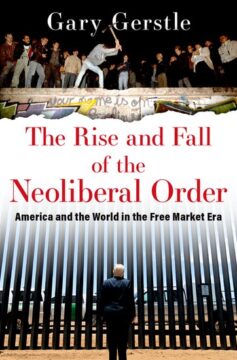 In his book “
 You can’t judge a book by its cover, but sometimes you can judge a writer’s standing by it. My 1990s-era paperback edition of “The Portable Dorothy Parker” shows the poet, critic, playwright and resident wit of the Algonquin Round Table looking stricken. Her eyes are sunken and shadowy; her hair is barely tamed; her eyes are glazed. At the time, that’s how we liked her — American literature’s cautionary tale. A notice encourages the reader to go see “Mrs. Parker and the Vicious Circle,” a bitter ensemble film from 1994 starring Jennifer Jason Leigh playing Parker as she begins to lose faith in writing, men and herself. Look at that book cover, and it’s clear the loss of faith is complete.
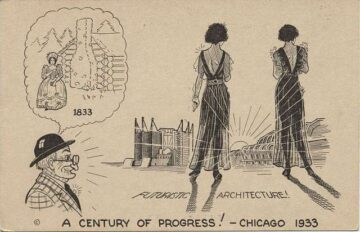 I see at least two reasons to doubt that we are ready to abandon past transcendent realities. First, our modern ideas about morality don’t make sense without them. When secular neo-Enlightenment humanists, neo-Kantians, and effective altruists champion equality and universal human rights, they are trying to pluck an ethic from its metaphysical roots. They are essentially preaching from the theistic pulpit after tearing down the crucifix. (And we saw how that worked out for effective altruist Sam Bankman-Fried.) This hamstrung morality might limp along if the broader culture is still breathing the air of Christian values, even unconsciously, but the deeper we get inside the immanent frame, the more opportunity we give an anti-humanist Nietzsche to come along and say that our ethics are incompatible with our materialist anthropology. And what if this Nietzsche turns out to be an AI system that concludes that the best way to fix climate change is to wipe out humanity? Our moral demands may well be writing checks that our moral sources can’t cash.
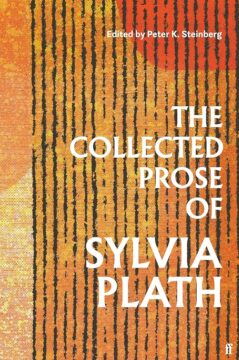 The Collected Prose of Sylvia Plath is an essential yet strangely discomforting volume. It includes writing so apparently far removed from the work for which Plath is remembered – her late poems and her autofictional novel The Bell Jar – that it almost seems to undermine her canonical status. In reality, of course, it does no such thing. Read alongside the works she’s famous for, it offers an insight into how young Sylvia became Sylvia Plath.
 A
A “Mr. Handel’s head is more full of Maggots than ever. … I could tell you more … but it grows late & I must defer the rest until I write next; by which time, I doubt not, more new ones will breed in his Brain.”
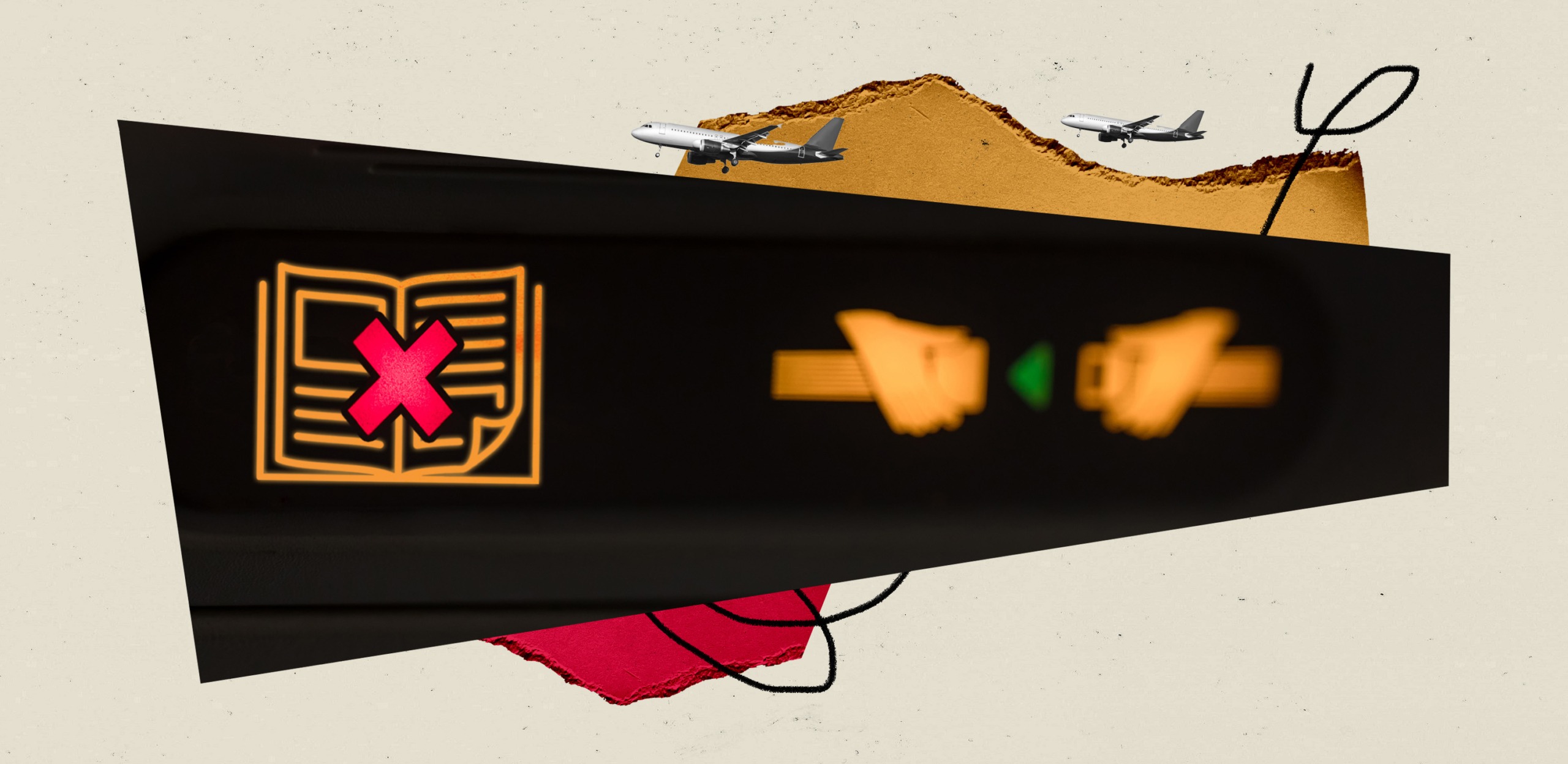 There were, of course, other ways to feel connected with humanity on a plane. You could notice a slight indentation left in the seat from the person before you, or the length to which they had extended (or shortened) their seatbelt, which would now become yours. You didn’t have to turn to the back of the in-flight magazine to see some stranger’s—or, more likely, strangers’—handiwork on the crossword, or wonder what flavor of sticky substance someone had spilled across its pages. Nor was it required to retrace the doodles drawn on the ads for UNTUCKit shirts, It’s Just Lunch, Hard Rock Café, Wellendorff jewelry, companies selling gold coins, and Big Green Eggs. But it’s clear that with the last print issue of Hemispheres, the in-flight magazine of United Airlines, and the last such magazine connected to a major US carrier (with the exception of Hana Hou!, for Hawaiian Airlines), it is the end of an era.
 John Hopfield, one of this year’s