‘The End of Tsarist Russia,’ by Dominic Lieven

30JOFFE-master675Josef Joffe at The New York Times:

World War I was the greatest empire slayer of all time. Down went the Ottoman Empire, ruling from Bosnia to Basra. Hapsburg shrank into tiny Austria. Germany and Russia remained largely intact, but Wilhelm II ended up in exile, while the Romanovs were murdered by the Bolsheviks. Exit sultans and kaisers; enter authoritarians and totalitarians.

The irony can’t be topped. All four dynastic regimes went to war for the usual reasons: security, power and possession — as did democratic France, Britain and the United States. But beset by indomitable nationality and class conflicts, they also fought for sheer regime survival, following Henry IV’s counsel, in Shakespeare’s words, to “busy giddy minds with foreign quarrels.”

It was a momentous miscalculation that would transform 20th-century history. Had the old despots been gifted with foresight, they would have opted for peace über alles.

This is the takeoff point for Dominic Lieven’s book “The End of Tsarist Russia.” The tomes on the Great War fill a small library by now. Since history is written by the victors, the first batch fingered the German Reich as starring culprit; later works spread out along an explanatory spectrum that ranged from inevitability to contingency.

more here.

‘The Invention of Science: A New History of the Scientific Revolution’, by David Wootton

9780061759529Andrea Wulf at the Financial Times:

It is almost impossible to overstate the significance of the scientific revolution. As David Wootton’s masterly The Invention of Science shows, it was nothing less than the triumph of the future over the past. Before it, Aristotle had been the leading authority on nature and philosophers had sought above all to recover the lost culture of the ancients. Afterwards, the idea that new knowledge was possible had become axiomatic.

According to Wootton, who is anniversary professor of history at the University of York, modern science was invented between 1572, when the astronomer Tycho Brahe saw a new star in the sky (proof that the heavens could change), and 1704, when Isaac Newton published his book Opticks, which drew conclusions on the nature of light, based on experiments. Everything changed within those decades — even, Wootton contends, the very language used to understand the world. Indeed, one of the premises of The Invention of Science is that “a revolution in ideas requires a revolution in language”.

Take the word “discovery.” Wootton argues that when Christopher Columbus discovered America in 1492, he didn’t have a word to describe what he had done. The nearest Latin verbs were invenio (find out), which Columbus used, reperio (obtain), which was employed by Johannes Stradanus in the title of his book of engravings depicting the new discoveries, and exploro (explore), which Galileo used to report his sightings of Jupiter’s moons.

more here.

Why read controversial author Jonathan Franzen’s new ‘Purity’?

La-la-ca-jonathan-franzen-047-jpg-20150824David L. Ulin at the LA Times:

How, the novel asks, do we make sense of an era in which information has become a burden? “Like the old politburos,” Franzen observes, “the new politburo styled itself as the enemy of the elite and friend to the masses, dedicated to giving consumers what they wanted, but to Andreas … it seemed as if the Internet was governed more by fear: the fear of unpopularity and uncoolness, the fear of missing out.”

That this is anathema to his characters should go without saying; a deep loneliness pervades the book. Sometimes, the loneliness is shared, as in Tom's relationship with Anabel, who restricts herself until they are a miserable society of two. Sometimes, it is cultural, as when Purity, or Pip, as she is known, goes to work for Andreas, only to find herself surrounded by true believers, as if his mission were a source of faith.

Always, there are bad mothers (the bad mother is a staple of Franzen's fiction): Andreas', Purity's, Tom's. “He watched as a strange thing happened in her face,” Franzen writes about the first of these women, “a subtle but crazy-looking modulation of expressions, some interior struggle made visible — her fantasy of being a loving mother, her resentment at the bother of it.” The description brings to mind Enid Lambert, the damaged matriarch of “The Corrections,” and her struggles with the children she by turns torments and loves.

more here.

Amitav Ghosh’s ‘Flood of Fire’

Laila Lalami in The New York Times:

AmitavGhosh, the author of seven previous novels and five books of nonfiction, is a writer with a passion for language. He doesn’t simply create a world, he delights in giving it the truest words. In his prose, a half-Indian, half-Chinese opium addict sounds completely different from an upper-class Parsee widow, who in turn sounds completely different from a British woman who has been raised in India. (In one amusing episode, the British woman comes up with an impressive array of terms for sex organs or sex acts. She calls a slack penis “a sleeping bawhawder,” masturbation is referred to as “soaping the sepoy” and cunnilingus becomes “making a chutney.”)

Ghosh’s novel is also concerned with how the nascent free trade of the region has brought about a major conflict, which is resolved through military force. Watching one of the battles of the Opium War, Neel wonders: “How was it possible that a small number of men, in the span of a few hours or minutes, could decide the fate of millions of people yet unborn? How was it possible that the outcome of those brief moments could determine who would rule whom, who would be rich or poor, master or servant, for generations to come?”

More here.

Friday, August 28, 2015

‘Moment’ Is Having a Moment

30mag-30firstwords-t_CA0-master675

Sam Anderson in The New York Times Magazine:

In normal everyday life, time is a liquid that flows around us all unceasingly — a kind of existential syrup. During election season, this syrup is captured, boiled down, dehydrated and separated into its constituent grains — grains that we like to call, without fail, ‘‘moments.’’ Thus Donald Trump is (according to The New York Times) ‘‘the man of the moment,’’ and although he was briefly ‘‘out-­Foxed’’ (according to The Belfast Telegraph) ‘‘by a Megyn moment’’ (Jim Rutenberg's coinage in this magazine), he went on to recover with a ‘‘big, symbolic moment’’ (according to Mark Halperin on the ‘‘Today’’ show) at the Iowa State Fair. Hillary Clinton, meanwhile, might be having an ‘‘Al Capone moment’’ with regard to the legality of her private email server (The Washington Post), but she still found time to have a ‘‘celebrity moment’’ (The Times again) by taking a selfie with Kim Kardashian and Kanye West. No nexus of events is too large or heterogeneous — no geopolitical weather too swirlingly turbulent — to avoid being reduced to the shorthand of the moment.

As the election grinds on, the names attached to such moments will change. Marco Rubio might succeed Trump as the official man of the moment; Al Gore might have his Lazarus moment. The only thing we can be certain of is that the moments will arrive, incessantly, and that when they do, they will be collected, labeled neatly and displayed for public consumption. We are living in the moment moment.

Modern media-­saturated humans didn’t invent the concept of the moment, of course. Our obsession with it probably goes back, as most modern obsessions do, to the ancient Greeks. The Greeks had at least two different notions of time: chronos (the vast, inhuman, infinite stretch of time) and kairos (the moment). A boring old hour — 15 degrees on the sundial, 60 soulless ticks of the clock — is a little patch of chronos. Kairos, on the other hand, is where the magic happens: those decisive instants in which the world suddenly changes. Kairos is significant time, charged time, heavenly time. It transcends calendars, soaks everything in meaning.

More here.

The Cartoon Bodies of “Mad Max: Fury Road”

Road-Runner

Isabel Ortiz in the LA Review of Books:

MAD MAX: FURY ROAD does not look like an animated movie. Throughout the film, Charlize Theron’s Imperator Furiosa is gorgeously sweaty, her skin is granularly textured, and her face is paint-smeared. Tom Hardy as Mad Max sports levels of shaggy micro-scruff that no cartoon character could ever achieve. Large, fleshy burns dot his arms, and his face appears red, coarse, and scorched. Ash collects on everyone’s arm hairs, and oil stains their cheeks. In fact, one of the primary joys of watching the movie is that such painstaking attention has been paid to the little details that make moving human flesh look like moving human flesh: chests heave, lips parch, brows sweat, clothes itch, hands burn.

And yet, despite the oozing corporeality of the film’s protagonists, many critics have commented on its resemblance to a cartoon. These resonances are often spoken of as more structural — perhaps even spiritual — than they are stylistic. In his New York Times review of Fury Road, A.O. Scott cites the film’s debt to Chuck Jones’s Road Runner cartoons as “models of ingenuity and rigor,” while Richard Brody in The New Yorker refers to the movie as a “Rube Goldberg contraption set to the speed of a ‘Road Runner’ cartoon.” A.A. Dowd of the A.V. Club praises the movie’s “Tex Avery touches,” which he attributes to the limitless imagination of its director, George Miller, who previously worked in animation.

Early animators gave life to their drawings, endowing static figures with unique voices and movements.

More here.

Colonial Divisions

Yasmin-khan

Omar Waraich in Caravan:

ON 3 SEPTEMBER 1939, Subhas Chandra Bose was addressing a rally of 200,000 people by the oceanfront in the city now known as Chennai. The ambitious Congress leader had acquired an impressive national following. He could draw similar-sized crowds throughout the country, luring them with his charismatic style and his uncompromising demands for Indian freedom. During the speech, a member of the audience thrust an evening paper into his hand. Bose paused to glimpse the headline on the front page. War had broken out in Europe. It was the event that he, an inveterate opponent of the British, had eagerly anticipated. The moment, he would go on to write in his memoir, offered Indians “a unique opportunity for winning freedom.”

In India, Bose was a distinguished leftist with pronounced views on equality. He regarded Mohandas Gandhi’s wing of the party as too weak and too right-wing for his taste. Earlier that year, he had formed his own faction within the party, the Forward Bloc, to break Gandhi’s grip on the Congress and steer it in a more progressive direction. When it came to the wider world, however, Bose was an ultranationalist. For years, he had been busy ingratiating himself with Europe’s foremost fascists. He met Benito Mussolini multiple times in Italy, a fact he advertised with pride, provoking cringes from Jawaharlal Nehru who suspected Bose fancied himself a local variant of the Duce.

Nehru had travelled to Spain during the country’s civil war to express solidarity with the republican cause. In London, he spoke at anti-fascist rallies alongside leading British socialists. Bose, who by this time had developed a weakness for military uniforms, was unbothered by the character of the Italian and German regimes. Getting the British out was all that mattered to him. A fascist victory in Europe, he hoped, would break up the British Empire to finally deliver the dream of Indian independence.

Over the next ten months, Bose addressed hundreds of rallies like the one in Madras. He openly agitated for a British defeat. Much to Bose’s dismay, other Indian leaders didn’t share his enthusiasm. After some wavering, Gandhi came out on the side of the British. He had earlier urged the British people to resist Hitler only through “spiritual force,” while counselling the German leader, in an undelivered letter addressed to “my friend,” to discover the virtues of peace.

More here.

‘The Girl in the Spider’s Web’ Brings Back Stieg Larsson’s Detective Duo

Michiko Kakutani in The New York Times:

BookFans of Stieg Larsson’s captivating odd couple of modern detective fiction — the genius punk hacker Lisbeth Salander and her sometime partner, the crusading investigative journalist Mikael Blomkvist — will not be disappointed by the latest installment of their adventures, written not by their creator, Stieg Larsson (who died of a heart attack at the age of 50 in 2004), but by a Swedish journalist and author named David Lagercrantz. Though there are plenty of lumps in the novel along the way, Salander and Blomkvist have survived the authorship transition intact and are just as compelling as ever. “The Girl in the Spider’s Web” finds the pair drawn into the case of the enigmatic computer scientist Frans Balder: a prominent expert in artificial intelligence who’s become ensnared in a global intrigue involving the Swedish Security Police (Sapo), the Russian mob, Silicon Valley industrial spies and United States national security interests.

Mr. Lagercrantz’s efforts to connect unsavory doings in Sweden to machinations within America’s National Security Agency are strained and fuzzy — a bald attempt to capitalize on Edward J. Snowden’s revelations about the agency and the debate over its surveillance methods. But then, readers weren’t smitten by “The Girl With the Dragon Tattoo” because of its plotting (which relied heavily on straight-to-video serial-killer-movie clichés), its plausibility or Larsson’s anti-authoritarian politics. They were smitten with that novel and its two sequels — “The Girl Who Played With Fire” and “The Girl Who Kicked the Hornet’s Nest” — because of the fierce charm of Salander and Blomkvist, and their unlikely chemistry. And because Larsson was so adroit at conjuring a moody, noirish Sweden that turned the stereotype of a clean, bright Scandinavia (where people drive Volvos and buy Ikea furniture) back into a land of long winters, haunted by the ghosts of Strindberg and Bergman.

More here.

Computers Can Predict Schizophrenia Based on How a Person Talks

Adrienne LaFrance in The Atlantic:

ScreenHunter_1334 Aug. 28 15.53Most of the time, people don’t actively track the way one thought flows into the next. But in psychiatry, much attention is paid to such intricacies of thinking. For instance, disorganized thought, evidenced by disjointed patterns in speech, is considered a hallmark characteristic of schizophrenia. Several studies of at-risk youths have found that doctors are able to guess with impressive accuracy—the best predictive models hover around 79 percent—whether a person will develop psychosis based on tracking that person’s speech patterns in interviews.

A computer, it seems, can do better.

That’s according to a study published Wednesday by researchers at Columbia University, the New York State Psychiatric Institute, and the IBM T. J. Watson Research Center in the Nature Publishing Group journal Schizophrenia. They used an automated speech-analysis program to correctly differentiate—with 100-percent accuracy—between at-risk young people who developed psychosis over a two-and-a-half year period and those who did not. The computer model also outperformed other advanced screening technologies, like biomarkers from neuroimaging and EEG recordings of brain activity.

More here.

Over half of psychology studies fail reproducibility test

Monya Baker in Nature:

PsychDon’t trust everything you read in the psychology literature. In fact, two thirds of it should probably be distrusted. In the biggest project of its kind, Brian Nosek, a social psychologist and head of the Center for Open Science in Charlottesville, Virginia, and 269 co-authors repeated work reported in 98 original papers from three psychology journals, to see if they independently came up with the same results. The studies they took on ranged from whether expressing insecurities perpetuates them to differences in how children and adults respond to fear stimuli, to effective ways to teach arithmetic.

According to the replicators' qualitative assessments, as previously reported by Nature, only 39 of the 100 replication attempts were successful. (There were 100 completed replication attempts on the 98 papers, as in two cases replication efforts were duplicated by separate teams.) But whether a replication attempt is considered successful is not straightforward. Today in Science, the team report the multiple different measures they used to answer this question.

More here.

The revival of powerful literature about the Levant

Hoffman_loc_imgAdina Hoffman at The Nation:

In English, the word “Levantine” has long been a pejorative, and at a certain colonial point referred to those upwardly mobile non-Muslim Middle Easterners considered contemptible by commentators of various stripes for being neither here nor there, whether socially or ethically. “Among this minority are to be found individuals who are tainted with a remarkable degree of moral obliquity,” sniffed onetime consul general of Egypt Evelyn Baring back in 1908. Yet for those more recent writers and thinkers who have set out to reclaim the term, such hybridity is the key to what has made the region vital. In his groundbreaking 1993 book After Jews and Arabs: Remaking Levantine Culture, for instance, Ammiel Alcalay writes of the “fertile symbiosis” and “dense and intricate interconnectedness” of the “old” Levantine world.

Which brings us back to the irony of that L in ISIL: Whether muttlike menace or commendable cosmopolitan, the classic, shape-shifting “Levantine” seems the very opposite of the rigid young zealot now being enlisted to behead captives, rape slaves, and smash ancient statuary in the name of Abu Bakr al-Baghdadi’s viciously monolithic caliphate.

more here.

Maxine Kumin 1925–2014: A Life in Poetry

Dt.common.streams.StreamServerEleanor Wilner at Hudson Review:

Hers was the world of presence, of the actual: she spoke always in the language of the body; the choice of words is a diction decidedly Anglo-Saxon—the Germanic-descended language of peasants and pig farmers in England, not the Latin of Church and university, or the Romance-language French of the court. The Latinate words in English, more elevated, more distanced from the sweat of bodily life, are seldom found in her poems, whose diction, over time, grew ever more plain. “My work,” she said in an interview when she was in her 80s, “has gotten bonier over the last ten years. I’ve always had a narrative thread, but my poems are tougher, more focused . . . they use fewer adjectives. The poet’s investment in the material is what makes a poem memorable.”

Max always lived actively in her body—a competition swimmer and water ballet adept in her youth, swimming remained a constant of her life, as did riding the horses she rescued and bred; both activities make the body a part of another, larger body—of water, of the horse—and both, like writing, require discipline, form, pacing and endurance. Body and mind were so conjoined in her that her life on the farm always provided imaginative fodder: the metaphors for her inner life, dreams and musings. She was impatient of abstractions, and forbade them to her students.

more here.

On New York Hardcore

493859304_0f57480a8c_oBen Parker at n+1:

ONE OF THE INEXHAUSTIBLE sources of conversation among fans of hardcore punk is the attempt to identify the onset of a band’s (or scene’s, or label’s) irremediable decline. For example: When did Black Flag lapse into long-haired, noodling weirdness? One connoisseur might offer a contrarian’s apology for the freak-outs of their late album My War, another will insist that it was all over once barrel-chested Henry Rollins joined the band. When did the robust Washington DC scene collapse into the self-flagellating exhibitionism of emo? My own position here is that Minor Threat’s Out of Step from 1983 was already a hopeless case, the veritable death throes of the DC sound, while others are more forgiving, straining to single out modest achievements in what had become mere competency.

Knowledge of hardcore among its partisans easily organizes itself into these canned teleologies. But in the case of New York’s hardcore scene, thoroughly documented in Tony Rettman’s oral history, the reliable trajectory of most scenes—an initial monolithic “sound” ultimately and inexorably giving way to decadence and exhaustion—doesn’t apply. One is dealing instead with something more mysterious, like the enigmatic collapse of the Mayan or Khmer empires. Regrettable trends and eccentricities, which ought to have been lethal, instead became defining and enduring aspects of the scene.

more here.

Thursday, August 27, 2015

Against Charity

Mathew Snow in Jacobin:

JolieEffective Altruists calculate where expendable income is best spent and encourage the relatively affluent to channel their capital accordingly. Among their most highly favored causes are the Against Malaria Foundation (which distributes insecticide-treated bed nets), the Schistosomiasis Control Initiative (which works to establish school-based deworming programs), and GiveDirectly (which gives unconditional cash transfers to people in extreme poverty).

Over 17,000 people have pledged to give at least 1 percent of their income annually to such endorsed causes, and over 1,000 have pledged to give at least 10 percent. It is particularly popular among millennials, leading some to laud it as “the new social movement of our generation.”

Although the argument is over forty years old, most of the movement’s growth has taken place in the past half decade, and this year saw the publication of numerous books on the subject — How to Be Great at Doing Good, Doing Good Better, Strangers Drowning, and Singer’s latest, The Most Good You Can Do along with extensive,positive coverage in popular media.

Not everyone is convinced.

More here.

Cancer cells programmed back to normal by US scientists

Sara Knapton in The Telegraph:

Cancer1_2130923b (1)For the first time aggressive breast, lung and bladder cancer cells have been turned back into harmless benign cells by restoring the function which prevents them from multiplying excessively and forming dangerous growths.

Scientists at the Mayo Clinic in Florida, US, said it was like applying the brakes to a speeding car.

So far it has only been tested on human cells in the lab, but the researchers are hopeful that the technique could one day be used to target tumours so that cancer could be ‘switched off’ without the need for harsh chemotherapy or surgery.

“We should be able to re-establish the brakes and restore normal cell function,” said Profesor Panos Anastasiadis, of the Department for Cancer Biology.

“Initial experiments in some aggressive types of cancer are indeed very promising.

“It represents an unexpected new biology that provides the code, the software for turning off cancer.”

More here.

Why does this Harvard law professor want to run for president?

From Fusion:

ScreenHunter_1332 Aug. 28 09.55Harvard law professor Lawrence Lessig wants to run for president, but for one reason only: campaign finance reform. Once that’s achieved, he says, he’ll happily step down and hand off the presidency to his VP.

“In this presidential race, 400 families have given half the money that has been raised in the election cycle so far,” Lessig told Fusion’s Alicia Menendez. “This tiny, tiny number have an extraordinary influence in our political system because every politician knows if they don’t keep them happy, they have no shot at getting elected.”

Lessig compares the 220 fundraisers Obama attended during his 2012 campaign for reelection, to the 8 fundraisers Ronald Reagan attended when he ran for reelection in 1985.

“How do you run the free world? How are you President of the United States and who are those fundraisers with? The most wealthy, powerful people in our society.”

The academic says that if he’s able to raise $1 million by Labor Day this year, he will make his bid for the presidency official as a single-issue candidate, and join the 2016 democratic presidential primary.

Lessig specifically wants to pass the Citizen Equality Act of 2017 which is made up of three major key points: an equal right to vote, which includes making Election Day a national holiday, equal representation, and citizen-funded elections.

More here.

are they charlie?

P28_Astier_1171936hHenri Astier at The Times Literary Supplement:

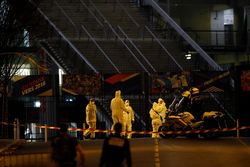
The French are not given to outbursts of patriotic fervour. This makes the reaction to the carnage at Charlie Hebdo magazine and a kosher supermarket in Paris in January all the more extraordinary. In the biggest wave of demonstrations the country has ever seen, more than 4 million people marched to honour the victims. For the first time since Armistice Day 1918, the Marseillaise was sung at the National Assembly. “Je suis Charlie” became the rallying cry of a nation seemingly united around the basic “republican” values of secularism, tolerance and free expression.

It soon emerged, however, that not everyone in France was Charlie. In areas with large Muslim populations, few mourned journalists who had insulted the Prophet. Many supporters of the far-right Front National (FN) also begged to differ. To them, the fact that the political establishment, Left and Right, rallied in support of an offensive magazine run by leftovers from the 1960s epitomized everything that was wrong with the country.

The pro-Charlie camp was unsettled by these cracks in the consensus. They appeared at a time when radical Islam is on the rise in immigrantbanlieues and the FN is threatening the pro-EU order. But in a way, the naysayers helped galvanize the “Je suis Charlie” mainstream. They could be dismissed as Islamists or fascists. Either way, they had no place in a modern, secular, liberal country. The true people of France had to strike an even stronger blow for the République.

more here.

as much nabokov as you need

Sansom_08_15Ian Sansom at Literary Review:

For all those keen quivering Nabokovians out there with infinitely deep pockets – are there any other kind? – or perhaps with access to a university library, these are undoubtedly the years of plenty. In 2014 alone, even the most casual short-trousered amateur Nabokovterist armed with a basic butterfly net would have been able to catch Maurice Couturier'sNabokov's Eros and the Poetics of Desire, Yuri Leving's Shades of Laura: Vladimir Nabokov's Last Novel, Samuel Schuman's Nabokov's Shakespeare, and the paperback reissues of Gerard de Vries and D Barton Johnson's Nabokov and the Art of Paintingand Vladimir E Alexandrov's Nabokov's Otherworld. Almost forty years after his death there is, it seems, much good Nabokov-hunting still to be had. In a lecture on 'The Art of Literature and Commonsense', collected in his Lectures on Literature – which remains the perfect entry point into the vast, prodigious kingdom of the Great Nabob – Nabokov remarks, 'In a sense, we are all crashing to our death from the top story of our birth … and wondering with an immortal Alice at the patterns of the passing wall. This capacity to wonder at trifles – no matter the imminent peril – these asides of the spirit … are the highest form of consciousness.'

So as we go crashing to our death, let us continue, like Alice, to wonder at trifles. This year has already seen a reprint of Galya Diment's excellent and eccentric Pniniad, an utterly thorough study of the relationship between Nabokov and the much-thwarted Marc Szeftel, his colleague at Cornell and the model for poor Timofey Pnin, hapless 'assistant professor emeritus' in Pnin. And now comes Robert Roper's perfectly usefulNabokov in America.

more here.