Are These 10 Lies Justified?

Gerald Dworkin in the New York Times:
ScreenHunter_1569 Dec. 17 20.40Most of us believe that lying is wrong. We teach our children that it is wrong, and hope or expect that value judgment is shared by our friends and family. In public, we decry politicians and public officials when they lie, which we have frequent occasion to do these days. But the truth about lying is more complicated.

We tell lies to one another every day. But when we commit other acts that are generally believed to be immoral, like cruelty and theft, we do not seek to justify them. We either deny that the acts we committed are appropriately described by these terms, or we feel guilt or remorse. But many of us are prepared to defend our lies: indeed, to advocate their general use. Of course the Nazi at the door inquiring about Jews within ought to be lied to.

But perhaps this example only shows that there is not an absolute prohibition on lying. Such cases are rare, the harm to the innocent clear, the wickedness of the aggressor obvious. I want to argue that the number and types of permissible lies are much wider than one might have thought.

I am not arguing for the view that lying is morally neutral. I accept the fact that there ought to be a strong presumption in favor of honesty. But it is a presumption that not only can be, but ought to be, overridden in many more cases than we assume.

More here.
A reconsideration of Graham Greene’s “Our Man in Havana”

Lawrence Osborne in Lapham's Quarterly:

ScreenHunter_1568 Dec. 17 20.06In his introduction to Kim Philby’s My Silent War, published in 1968, Graham Greene laid out the case for betrayal as an understandably human problem that needed, in the end, to be forgiven. Philby, the aristocratic son of the orientalist and Islamic convert H. St. John Philby, served as a high-ranking British intelligence officer and Soviet double agent until his defection to the Soviet Union in 1963. “The end, of course, in his eyes,” Greene wrote of the luckless traitor (who died in Moscow in 1988),

is held to justify the means, but this is a view taken, perhaps less openly, by most men involved in politics, if we are to judge them by their actions, whether the politician be a Disraeli or a Wilson. ‘He betrayed his country’—yes, perhaps he did, but who among us has not committed treason to something or someone more important than a country?

It’s a well-known passage that has been used many times to cast a baleful eye on Greene’s own love affair with communism. Philby, he goes on to observe, possessed the same “chilling certainty” as the Catholics who worked for the Spanish under Elizabeth I. It was the “logical fanaticism of a man who, having once found a faith, is not going to lose it because of the injustices or cruelties inflicted by erring human instruments.” Communism or Catholicism: faiths not easily discarded for simple reasons of decency. It was, one might conjecture, faith itself that made Philby attractive to Greene over and beyond the allure of a considerable personal charm.

The two first met and became friends while employed as operatives in MI6. Recruited into the agency in 1941 by his own sister and posted to Sierra Leone, Greene remained involved in espionage for years thereafter, though the details are somewhat murky.

More here.

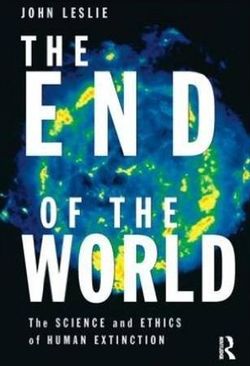
John Leslie comes to tell us that the end of the world is closer than we think

Mark Greenberg in the London Review of Books:

ScreenHunter_1567 Dec. 17 20.00John Leslie comes to tell us that the end of the world is closer than we think. His book is no ordinary millennial manifesto, however. Leslie is a sophisticated philosopher of science, and the source of his message is not divine revelation, apocalyptic fantasy or anxiety about the year-2000 computer problem, but ‘the Doomsday Argument’ – an a priori argument that seeks support in probability theory. In fact, the most interesting questions The End of the World raises are not, despite its subtitle, about our eventual demise. Rather, they concern our susceptibility, when thinking about risk, uncertainty and probability, to a kind of cognitive illusion. The Doomsday Argument is a case-study in ‘probabilistic illusion’, for it rests on a web of insidious intuitions, hidden assumptions and seductive but imprecise analogies.

The Argument claims that the observation that we are alive now increases the probability that Homo sapiens will become extinct in the relatively near future. It does not predict Doom at a specific time or with a specific probability. Its conclusion is more abstract and puzzling: whatever our best estimate would be (based on all available evidence, including the latest scientific, historical or other research) of the probability that our species is relatively close to extinction, it must be revised upwards. In reaching this conclusion, the Argument does not rely on evidence in the ordinary sense or, indeed, on anything peculiar to our present situation; it would yield the same conclusion at any point in human history.

It may seem preposterous that such a conclusion could be reached by armchair reasoning from the mere fact of our being alive now. Yet it would be wrong to rush to judgment. The counter-intuitive nature of probability is itself a reason for caution; moreover, the Doomsday Argument involves issues about time and existence, which are themselves notoriously resistant to intuition.

More here.

PLANTING FOUCAULT IN JUÁREZ

A Translator’s Reflections on the Story of Two Teenage Murderers Separated by Almost Two Centuries.

John Washington in The Believer:

Tumblr_inline_nziedd4ZBl1rglck1_500“He donned his holiday clothes, had his sister sing a canticle beginning ‘O happy day! holy joy!” and, his mind wholly deranged, his weapon, an ax, in hand, he executed his mother, his sister, and his young brother.”

So one Dr. Vastel describes Pierre Rivière’s parricide-fratricide of June 3, 1835 in the rural French village of Faucterie. The description comes from the book, edited by Michel Foucault, I, Pierre Rivière, Having Slaughtered My Mother, My Sister, and My Brother. The astonishing volume includes the seventy-page memoir (“of remarkable eloquence,” according to presiding judge M. Daigrement) written by the nineteen-year-old murderer, Pierre, in which he candidly describes the particulars of his difficult family life and the details before, during, and after he murders his mother, his sister, and his brother, in that order.

Pierre writes of his youth: “I crucified frogs and birds, I had also invented another torture to put them to death. It was to attach them to a tree with three sharp nails through the belly. I called that enceepherating them, I took the children with me to do it and sometimes I did it all by myself.”

More here.

Ignoring Guantanamo Won’t Make It Go Away

PHO-09Jan22-147301Scott Beauchamp at The Atlantic:

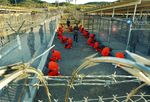
Closing Guantanamo should be an issue that finds easy bipartisan agreement. There’s something about the existence of the prison to offend everyone. For the left, there are the human-rights concerns. For the right, wasteful, expensive big-government overreach. And surely everyone would agree that a program that strengthens the enemy is bad for national defense. Yet, when the Senate passed a version of the National Defense Authorization Act that would end funding for any attempts to transport Guantanamo prisoners to U.S. soil, the vote reflected a bipartisan consensus to keep the prison open, passing 91 to three. The House rallied around the bill in a similarly cohesive fashion, passing it 370 to 58.

The simple explanation for members of Congress rallying to keep the prison open is public approval. Support for closing the prison has been steadily falling since its 2009 high of 51 percent, dropping to 39 percent in 2010 and 27 percent last year. To judge from the public statements of people defending Guantanamo, the explanation is plain: fear. In 2009, the Republican Senator John Thune argued, “The American people don’t want these detainees held at military bases, or federal prisons, or in their backyard, either.” More recently, when it was announced earlier in the year that potential transfer sites for Guantanamo prisoners included locations in Colorado, South Carolina, and Kansas, Cory Gardner, a Republican senator from Colorado, signed a letter, along with 40 sheriffs, claiming that it is “dangerously naïve not to recognize that a civilian prison with an untold number of enemy combatant inmates in our state, would provide a very tempting target for anyone wishing to either free these detainees or simply wishing to make a political statement.”

more here.

Were medieval magicians experimental scientists?

Magical_forest_by_siilikas9Philip Ball at Prospect Magazine:

The role of the magic tradition in the inception of science is complex but to present the two as antithetical is wrong. They were in many respects mutually supportive and even hard to distinguish. Magic as an intellectual endeavour can be seen as largely sober and systematic. Even the tricksier “popular” magic of the showman or mountebank was closely allied to practical technologies and mechanical skill. And if it had a tendency to patch together ad hoc explanations for puzzling phenomena, magic wasn’t doing much more than modern science continues to do; what has changed is the rigour with which such “explanations” are now scrutinised.

As historian William Eamon has argued, Renaissance “natural magic” was “the science that attempted to give rational, naturalistic explanations” for why things happened, and natural magicians, like modern scientists, believed that “nature teemed with hidden forces and powers that could be imitated, improved on, and exploited for human gain.” To its advocates, this art was the most potent means of dispensing with the supernatural intervention of demons and God in the day-to-day operation of nature.

Yet until the 15th century, anyone interested in magic risked accusations of heresy. Pliny the Elder condemned it as wicked (he noted that Nero was obsessed with it), but it was in early Christian thought that magic became dangerous. This was partly xenophobia: the word “magic” was an adjective applied to the pagan beliefs of the Persian “magi.” But it was also an assertion of authority over who owned such powers.

more here.

The Meaning of Mahler

Carey_1-121715Leo Carey at The New York Review of Books:

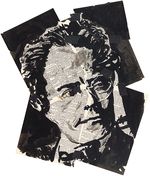
After Adorno’s essay, Mahler’s overreaching maximalism and his fondness for banal melodies stopped being an embarrassment and became instead his core achievement. He emerged as a far more sophisticated artist: the works, tuneful enough to please the average concertgoer, were now also difficult and ambiguous enough to absorb the cognoscenti.

Mahler advocates before Adorno had to adopt a proselytizing tone. A recently republished volume contains two works of this kind: a reverent appreciation from 1936 by the conductor Bruno Walter, an acolyte of Mahler’s, who premiered the symphonic song cycle Das Lied von der Erde and the Ninth Symphony after his death; and an essay from 1941 by the composer Ernst Křenek. Křenek was briefly married to Mahler’s daughter Anna, and worked on completing two movements from Mahler’s Tenth Symphony, left unfinished at his death. His essay is brilliantly perceptive and anticipates Adorno. Mahler’s symphonic edifices are old-fashioned, he writes, but “the cracks in the structure herald the future.”

Today Mahler is no longer a cause and critics must seek out unexplored aspects of a composer who has become a fixture of the musical landscape. Two recent academic studies, by Thomas Peattie and Seth Monahan, are complementary opposites: Peattie focuses on evocative moments of orchestral writing, Monahan on the long-range narratives created by Mahler’s use of sonata form.

more here.

Unearthing the World of Jesus

Ariel Sabar in Smithsonian Magazine:

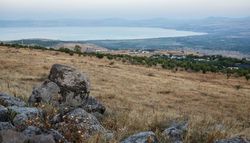
JesusThe 19th-century French theologian and explorer Ernest Renan called the Galilean landscape the “fifth Gospel,” a “torn, but still legible” tableau of grit and stone that gave “form” and “solidity” to the central texts about Jesus’s life—the Gospels of Matthew, Mark, Luke and John. Renan’s somewhat romantic views were not unlike those of the tourists whose gleaming buses I got stuck behind last summer on the road to places like Nazareth and Capernaum; pilgrims have long come to these biblical lands hoping to find what Renan called “the striking agreement of the texts with the places.” Modern archaeologists working here, however, are less interested in “proving” the Bible than in uncovering facts and context absent from the texts. What religion did ordinary people practice? How did Galileans respond to the arrival of Greek culture and Roman rule? How close did they feel to the priestly elites in Jerusalem? What did they do for work? What, for that matter, did they eat?

The Gospels themselves provide only glancing answers; their purpose is spiritual inspiration, not historical documentation. As for actual firsthand accounts of Galilean life in the first century, only one survives, written by a Jewish military commander named Josephus. This has made archaeology the most fruitful source of new information about Jesus’s world. Each layer of dirt, or stratum, is like a new page, and with much of Galilee still unexcavated, many chapters of this Fifth Gospel remain unread.

More here.

Wednesday, December 16, 2015

3QD Philosophy Prize Finalists 2015

Hello,

PhilFinal2015The editors of 3QD have made their decision. The twenty semifinalists have been winnowed down to six, and three wildcard entries added. Thanks again to all the participants. Details of the prize can be found here.

On the right is a “trophy” logo that our finalists may choose to display on their own blogs.

So, here it is, the final list that I am sending to John Collins, who will select the 1st, 2nd, and 3rd prize winners from these: (in alphabetical order by blog name here)

  1. Experimental Philosophy: Can we have free will and lack it too?
  2. Feminist Philosophers: On How We Talk About Passing
  3. Justice Everywhere: (One of) Effective Altruism’s blind spot(s)
  4. Orienteringsforsok: Slow corruption
  5. Philosophical Percolations: Getting out of the philosophers’ rut
  6. Step back, step forward: Hypocrisy in general, utilitarianism in particular
  7. The Forum: Are Delusions Bad for You?
  8. The Philosopher's Beard: Children are special, but not particularly important
  9. Vihvelin: Counterfactuals: The Short Course

We'll announce the three winners on December 28, 2015.

Good luck!

Abbas

P.S. The editors of 3QD will not be making any comments on our deliberations, or the process by which we made our decision, other than to simply say that we picked what we thought were the best six posts out of the semifinalists, and added three others which we also liked.

A true scientific revolution: the triumph of mathematicians over philosophers

The moment it was accepted that Aristotle had not been right about everything was a crucial turning point in the history of science.

Steven Poole in the New Statesman:

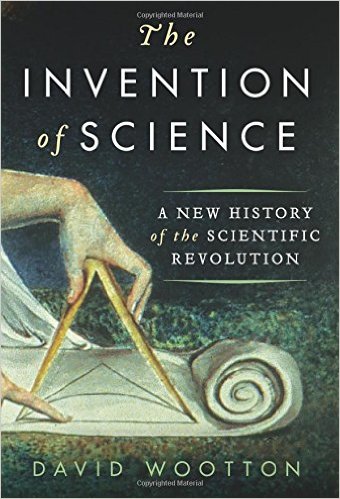
51JivFGNVCL._SX338_BO1,204,203,200_The early-modern Scientific Revolution is still in some populist quarters described as a triumph of experimental reason over religious superstition. It is one of the many virtues of David Wootton’s fascinating history that this canard barely merits a mention, let alone a tedious refutation. For, as he shows, many in the vanguard of the emerging order of the 16th and 17th centuries were religious; they took the new science to be a bulwark against atheism; and, as Wootton plausibly argues, Newtonianism would have been inconceivable without the tradition of belief in a creator God.

In Wootton’s telling, the revolution that created the tradition of science we recognise today was instead a victory of a different kind. The core story spans the long century from the astronomer Tycho Brahe’s first identification of a nova (as we would now say, an exploding star) in 1572, to Isaac Newton’s theory of gravity (1687) and Opticks (1704). Wootton describes it, in terrifically rich detail, as a revolt of mathematicians, wielding numbers and experiments, against philosophers, who assumed that Aristotle had been right about everything.

The mathematicians in this story include early scientists such as Galileo (whom we remember mainly for his telescope but who also conducted pedantic experiments on objects floating in water); they also include, more surprisingly, the artists who first codified the rules of perspective in painting.

More here.

Paris Agreement on climate change: the good, the bad, and the ugly

Adil Najam and Henrik Selin in The Conversation:

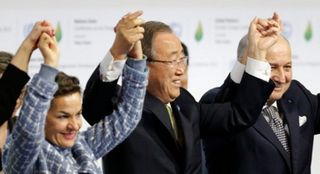
ScreenHunter_1566 Dec. 16 18.56At 7:27 pm local time Saturday, December 12th, 2015, a new Paris Agreement on global climate change was born after four years of taxing labor. Its much-anticipated birth was quickly followed by copious self-congratulations by many of the parents in the room who almost all were overcome by joy and bursting with pride.

Praise heaped upon newborns should be taken with a grain of salt. “Historic” is a term often thrown about too cavalierly, and a “new era” does not start every time government bureaucrats pull a few all-nighters. But, what has come out of Paris clearly marks a new direction for global climate cooperation.

We wish the newborn well, but upon some post-natal reflection, it is clear that the birth of the Paris Agreement should be cause for both hope and caution. Certain political developments are principally good and welcome. Other changes are largely bad. And some purposeful omissions may be plain ugly.

The Paris Agreement signals that climate change is back at the center of the global political agenda – at least for now.

A collective weight has been lifted off the backs of the many delegates who for the past six years have been struggling to recover from the Copenhagen fiasco in 2009, where countries failed to agree on a common strategy. The lingering gloom of Copenhagen has been replaced by Paris euphoria. For this, the French hosts deserve much credit.

More here.

Paul Krugman: In Defense of Obama

Paul Krugman in Rolling Stone:

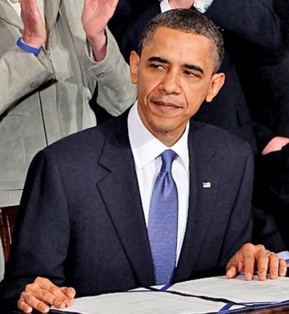
ScreenHunter_1565 Dec. 16 18.48When it comes to Barack Obama, I've always been out of sync. Back in 2008, when many liberals were wildly enthusiastic about his candidacy and his press was strongly favorable, I was skeptical. I worried that he was naive, that his talk about transcending the political divide was a dangerous illusion given the unyielding extremism of the modern American right. Furthermore, it seemed clear to me that, far from being the transformational figure his supporters imagined, he was rather conventional-minded: Even before taking office, he showed signs of paying far too much attention to what some of us would later take to calling Very Serious People, people who regarded cutting budget deficits and a willingness to slash Social Security as the very essence of political virtue.

And I wasn't wrong. Obama was indeed naive: He faced scorched-earth Republican opposition from Day One, and it took him years to start dealing with that opposition realistically. Furthermore, he came perilously close to doing terrible things to the U.S. safety net in pursuit of a budget Grand Bargain; we were saved from significant cuts to Social Security and a rise in the Medicare age only by Republican greed, the GOP's unwillingness to make even token concessions.

But now the shoe is on the other foot: Obama faces trash talk left, right and center – literally – and doesn't deserve it. Despite bitter opposition, despite having come close to self-inflicted disaster, Obama has emerged as one of the most consequential and, yes, successful presidents in American history.

More here.

Julien Baker’s cathartic ‘Sprained Ankle’

Matthew Munhall in the (Notre Dame and St. Mary's College) Observer:

ScreenHunter_1564 Dec. 16 18.41“Sad bastard music” is how Julien Baker has taken to referring to her songwriting, at least somewhat jokingly, in recent interviews. It’s an apt description of the 20-year-old singer-songwriter’s stunning debut, “Sprained Ankle,” an album about coping with sadness in its various permutations. Baker’s songs — about addiction, loneliness, heartbreak, mortality — are emotionally arresting; they grab you by the neck and force you to feel something.

Baker has been writing songs since junior high and became immersed in the Memphis music scene in high school with her band, Forrister. When she went off to school at Middle Tennessee State University, though, she found herself missing her bandmates and began writing songs alone in the practice room of her school’s music building. The result of those late-night songwriting sessions is “Sprained Ankle,” an album that falls in the lineage of Bon Iver’s “For Emma, Forever Ago,” Waxahatchee’s “American Weekend” and Torres’ self-titled LP — confessional, emotionally direct debuts that emerged from an artist in solitude.

Most of the album is just Baker’s voice, which oscillates between quiet restraint and a powerful wail depending on what the song calls for, and her electric guitar, drenched in reverb and delay. With these two instruments, she constructs a self-contained universe, expansive in sound even as its subject matter is inward-looking.

More here. [Thanks to Yohan John.]

The science myths that will not die

Megan Scudellari in Nature:

MainmythfinalWbleed_snookIn 1997, physicians in southwest Korea began to offer ultrasound screening for early detection of thyroid cancer. News of the programme spread, and soon physicians around the region began to offer the service. Eventually it went nationwide, piggybacking on a government initiative to screen for other cancers. Hundreds of thousands took the test for just US$30–50. Across the country, detection of thyroid cancer soared, from 5 cases per 100,000 people in 1999 to 70 per 100,000 in 2011. Two-thirds of those diagnosed had their thyroid glands removed and were placed on lifelong drug regimens, both of which carry risks. Such a costly and extensive public-health programme might be expected to save lives. But this one did not. Thyroid cancer is now the most common type of cancer diagnosed in South Korea, but the number of people who die from it has remained exactly the same — about 1 per 100,000. Even when some physicians in Korea realized this, and suggested that thyroid screening be stopped in 2014, the Korean Thyroid Association, a professional society of endocrinologists and thyroid surgeons, argued that screening and treatment were basic human rights.

In Korea, as elsewhere, the idea that the early detection of any cancer saves lives had become an unshakeable belief. This blind faith in cancer screening is an example of how ideas about human biology and behaviour can persist among people — including scientists — even though the scientific evidence shows the concepts to be false.

More here.

Reading Flannery O’Connor in the age of Islamophobia

Oconnor_688-x-371px1David Griffith at The Paris Review:

At a little more than fifty pages, “The Displaced Person” is one of Flannery O’Connor’s least anthologized stories—and if you share her beliefs about what she called “topical” stories, it’s also one of the most problematic. O’Connor was wary of stories that focused squarely and perhaps sentimentally on social issues. Her own “Everything that Rises Must Converge,” featuring a bigoted white woman riding a newly integrated bus, was, she feared, just such a story—though in a letter to a friend she confided that she “got away with it … because I say a plague on everybody’s house as far as the race business goes.”

In the very same letter, O’Connor writes that “the topical is poison,” lambasting Eudora Welty’s famous story “Where Is the Voice Coming From,” written from the point of view of the man who assassinated the civil rights leader Medgar Evers. “It’s the kind of story that the more you think about it the less satisfactory it gets,” O’Connor wrote. “What I hate most is its being in the New Yorker and all of the stupid Yankee liberals smacking their lips over typical life in the dear old dirty Southland.”

Like many in the South, O’Connor abhorred racism but was slow to embrace integration, feeling that to rush things would lead to more violence.

more here.

The medieval origins of mass surveillance

Innocent IIIAmanda Power at Lapham's Quarterly:

At its most essential level, the notion of an omniscient, omnipotent, interested, judging God was translated into our inherited forms of governance through the Roman Catholic interpretation of Christ’s words to Peter, in the Gospel According to Matthew. “Upon this rock I will build my church,” Christ says to his apostle, “and the gates of Hades shall not overpower it. I will give you the keys of the kingdom of heaven; and whatever you shall bind on earth shall be bound in heaven, and whatever you shall loose on earth shall be loosed in heaven.” The Church alleged that this authority had been transmitted through the succession of the bishops of Rome, and flowed from pope on down through the clerical hierarchy, so that every priest shared in the power to bind and loose on earth, in the knowledge that their decisions would be upheld by God.

Through the priests, God’s power to watch and judge had a human embodiment. They were not to shed blood, but there were circumstances in which they were to hand over obdurate individuals to secular authorities for execution. God’s dispersed authority was thus delegated even to laypeople whose individual jurisdiction extended no further than towns and villages. At the top of the secular hierarchy, monarchs were anointed by priests, thus symbolizing their religious legitimacy. As in John of Salisbury’s “ministers of God,” these monarchs’ worst abuses were sanctioned by the assertion of the elites that governments always operated with the backing of watchful divine will.

more here.

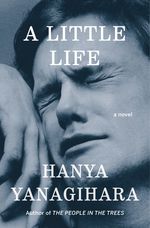
Hanya Yanagihara’s “A Little Life”

9780385539258 (1)Elif Batuman at The New Yorker:

When I first heard about Hanya Yanagihara’s “A Little Life”—a 720-page, four-friends-in-New-York novel that unexpectedly morphs into the saga of the self-loathing and self-harm of the disabled survivor of serial homosexual pedophilia—I didn’t plan on reading it. This decision was based on a belief I formed about myself as a child in the nineteen-eighties: some people, I saw, really liked to read novels about foster children who had flashbacks to terrible encounters with pedophiles or other abusers, but I usually preferred books that were about other things. I didn’t appreciate the ready-made importance or seriousness that seemed to be conferred by the subject matter. I thought it was great that books like that existed, and I knew they met a need, but they weren’t for me.

“A Little Life” became one of the most-talked-about books of 2015, a best-seller in the U.S. and the U.K., the subject of many enthusiastic reviews andreader testimonials, and a finalist for the Man Booker Prize and the National Book Award. (It has now begun to appear on end-of-the-year top-ten lists.) I read some of the positive reviews. Sooner or later, I would get to a sentence like “Jude was taught to cut himself by Brother Luke” and would be unable to imagine myself reading such a book. As for the negative reviews—which were less numerous but sometimes written by close friends with whom I often agreed about books—they seemed to be describing a genuinely problematic text.

more here.

Tuesday, December 15, 2015

3QD Philosophy Prize Semifinalists 2015

The voting round of our philosophy prize (details here) is over. Thanks to the nominators and the voters for participating.

So here they are, the top 20, in descending order from the most voted-for:

  1. SemiPhil2015Practical Ethics: Should we intervene in nature to help animals?
  2. Scientia Salon: Brontosaurus and the nature of philosophy
  3. Thinking Of Things: A False Sense of Insecurity
  4. The Philosopher's Beard: Children are special, but not particularly important
  5. Feminist Philosophers: On How We Talk About Passing
  6. Philosophical Percolations: Getting out of the philosophers’ rut
  7. Beauty Demands: Variations on a beauty theme: The uses of ‘normal’
  8. Imperfect Cognitions: Intellectual Humility: Interview with Duncan Pritchard
  9. Oxford University Press Blog: Does the meat industry harm animals?
  10. University of Birmingham: “Them and Us” no longer: mental health concerns us all
  11. What Is It Like To Be A Philosopher? Interview with Michael Ruse
  12. The Philosophers' Cocoon: Pink: The sweet spot of extended cognition
  13. Samuel C. Rickless: A History of Western Philosophy in 108 Limericks
  14. Sprachlogik: An Account of Necessity as an Attribute of Propositions
  15. Pacificklaus: Sardines, Death and Fear
  16. Quaeritur: Understanding Climate Change Denial through the Lens of Nietzsche
  17. The Forum: Are Delusions Bad for You?
  18. Jacob Archambault: On the future of research in the history of philosophy
  19. Orienteringsforsok: Slow corruption
  20. Vihvelin: Counterfactuals: The Short Course

The editors of 3 Quarks Daily will now pick the top six entries from these, and after possibly adding up to three “wildcard” entries, will send that list of finalists to John Collins for final judging. We will post the shortlist of finalists tomorrow.