“There’s a lot of atheists in the closet” — why most polls on religious belief are probably wrong

Brian Resnick in Vox:

ScreenHunter_2669 Apr. 15 09.11Here’s a simple question: How many Americans don’t believe in God?

Pew and Gallup — two of the most reputable polling firms in America — both come to a similar figure. About 10 percent of Americans say they do not believe in God, and this figure has been slowly creeping up over the decades.

But maybe this isn’t the whole story. University of Kentucky psychologists Will Gervais and Maxine Najle have long suspected that a lot of atheists aren’t showing up in these polls. The reason: Even in our increasingly secular society, there’s still a lot of stigma around not believing in God. So when a stranger conducting a poll calls and asks the question, it may be uncomfortable for many to answer truthfully.

Gervais and Najle recently conducted a new analysis on the prevalence of atheists in America. And they conclude the number of people who do not believe in God may be even double that counted by these polling firms.

“There’s a lot of atheists in the closet,” Gervais says. “And … if they knew there are lots of people just like them out there, that could potentially promote more tolerance.”

More here.

Folding meanings: Young Chinese writers use science fiction to criticise their society

Alec Ash in The Economist:

ChinaChinese sci-fi is having a moment. Liu Cixin’s bestselling alien-invasion trilogy “The Three-Body Problem” has sold more than 4m copies. Since 2015 it has won international fans too, after becoming the first Chinese book to win the prestigious Hugo award for best science-fiction novel, and a major movie is due out this year. But whereas Liu, 53, writes about aliens, physics and man’s place among the stars – traditional science-fiction concerns – a new generation of Chinese writers is experimenting with the genre as a way to discuss the realities of 21st-century China. Hao Jingfang won international acclaim when one of her stories, “Folding Beijing”, won the novella category in the latest Hugo awards. In China the story was hotly discussed online, not just for its literary merits, but also for its social criticism. The story follows Lao Dao, a migrant sewage worker living in the underbelly of the capital who is saving up to pay kindergarten fees for his adopted daughter. Yet this Beijing is divided into three segments: an elite 5m live in “First Space”, 25m more occupy “Second Space” and a teaming underclass of 50m are in “Third Space”, where Lao Dao toils. As well as being separate socially, these strata are physically divorced. Every day at 6am the skyscrapers of one space fold in on themselves and pivot like “gigantic Rubik’s cubes” so that the earth literally turns over to reveal the next lot who have their turn at living above ground. Lao Dao rides the folding, morphing city up into Second and then First Space, smuggling a lover’s message and stumbling across an explanation of how the city came to be as it is.

As a commentary on inequality and those who are left behind by China’s breakneck urbanisation, Hao’s message is hard to miss. (Her inspiration for the story was a Beijing taxi-driver who complained to her about his daughter’s high kindergarten fees.)

More here.

In Praise of Agatha Christie’s Accidental Sleuths

Radhika Jones in New York Times:

AgathaI don’t remember ever buying one. They just materialized in the house when I was 12, a row of well-thumbed paperbacks, in the bookcase under the basement stairs. I read them over and over, until the pages were soft as cotton. On a visit to Portland, Ore., in January, browsing the shelves of Powell’s Books, I felt the familiar pull. I walked out with “Ordeal by Innocence,” an Agatha Christie sleeper hit (no one I ask ever seems to know it), in which a young man, Jack Argyle, one of an adopted brood in postwar England, is found to be innocent of the murder of his mother, for which he’d been convicted. Terrific news, until it sinks in that someone else in the family must be guilty. Christie loved coincidence. (A stranger could have vouched for Jack, had the stranger not been knocked down by a lorry, then recovered consciousness and immediately left town for a two-year expedition to Antarctica.) She kept her crime scenes conveniently sealed. (Whoever hit Jack’s mother with a poker was already at the house; no random intruders allowed.) She’d lean hard on a tic or a recurring expression (a sister’s feline affect, a brother’s scowl). Her secretaries came in two varieties: young and pretty or old and frumpy.

And yet. In Christie’s expansive repertoire — more than 200 novels, stories and plays, from “The Mysterious Affair at Styles” (1920) to “Sleeping Murder” (1976) — she captures something elemental about mysteries: that motive and opportunity may suffice for a crime, but the satisfying part is the detective’s revelation of whodunit, how and why. I never tried to piece together the clues. I vastly preferred to hear it from Hercule Poirot or Jane Marple. Why spend time with such endearing, clever characters if you’re not going to let them do their job? And while their job was ostensibly solving crimes, really it was storytelling.

More here.

Radical Empathy: A Manifesto for the 21st Century

9781616895150Taney Roniger at The Brooklyn Rail:

Art as transformative encounter: in just about every field of art discourse, much is made of this exalted claim. And for good reason. For what is a genuine aesthetic experience if not an arousal from ordinary consciousness and a jolt into elsewhere—a mode of awareness more vivid, more perceptive, more intensely alive, resonating in a world suddenly laden with meaning? And yet, for all the talk of art and transcendence, how often do we really have this experience? How many times have we come away from a work of art having not just been moved but actuallyaltered, so that life afterward was, however subtly and indescribably, different from before?

If we’re honest, those occasions have likely been few—but perhaps through no fault of the works we engage. Their creators, after all, know nothing about us, and even if they did, has it ever been their job to speak to us personally? The inner life being a resolutely private affair, what moves one artist to make a painting may mean absolutely nothing to anyone else.

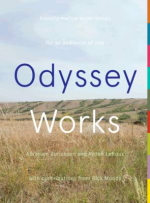
This perennial problem of the rift between artist and audience is what laid the seeds for Odyssey Works, both the title of this wonderfully original and deeply affecting book and the name of the interdisciplinary performance group whose work it presents. The group—made up of writers, painters, actors, dancers, and artists from a number of other disciplines—creates experimental performances with a most unusual premise. Its explicit goal is simple enough: to create works that will have the most powerful possible impact on the audience.

more here.

Evelyn Waugh Revisited

41huWo7KErL._SX321_BO1 204 203 200_William H. Pritchard at The Hudson Review:

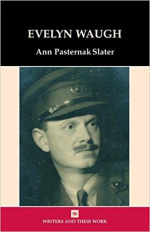
Edmund Wilson was the first critic who drew a sharp line between early and later Waugh by vastly preferring the early. His first essay, in 1944, titled “The Art of Evelyn Waugh,” took us briefly and admiringly through the early novels; then, after having readBrideshead two years later, Wilson regretted Waugh’s abandoning of the “comic convention” in the latter reaches of that novel and particularly at its end, with the conversion of both Lord Marchmain and the skeptical narrator, Charles Ryder. A “Catholic tract,” Wilson called it, and probably no one could have less sympathy for such a tract than the sturdy atheist Wilson. Perhaps the most crucial motive of Ann Pasternak Slater’s book is her attempt to put things right by making a case for the greatness of “Catholic” Waugh’s creation in Brideshead and the war trilogy. Her emphasis can be seen in the number of pages devoted to later rather than earlier Waugh, roughly 200 for the later, 100 for the earlier. It’s not that she doesn’t appreciate Comic Waugh, but she may have felt the earlier novels had been more sympathetically dealt with than the later ones. Thus Decline and Fall, which Kingsley Amis thought Waugh’s masterwork, is allotted nine pages; Brideshead gets thirty, suggesting that Decline and Fallhas already been well scouted, Brideshead not so well.

Overall I concurred with Pasternak Slater’s judgments about the novels from Decline and Fall to Put Out More Flags. The latter she finds underrated in comparison with its predecessors, and she is right to pick out the great comic sequence about the displaced children, the Connollys, whom Basil Seal brilliantly palms off on unsuspecting neighbors; then when they prove ghastly, makes money by taking them back and beginning over. Scoop she sees as Waugh’s “happiest and most intricately constructed novel,” and she is resourceful in making a case for Black Mischief as a book whose canvas has vastly expanded over its predecessors, and whose “tangle of modernism and barbarity” Waugh’s narrative explores.

more here.

The precise constructions of Mary Gaitskill’s nonfiction

Cover00Sasha Frere-Jones at Bookforum:

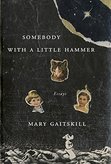
Give or take six years, the essays and book reviews here span the length of Gaitskill's career so far. You could lose a slice of this book without doing much damage; you don't need her introduction to Bleak House unless you are reading Bleak House, or the brief piece on Talking Heads and Remain in Light that doesn't engage either seriously. But Somebody with a Little Hammer makes the case for Gaitskill's centrality as a writer and burns off dodgy concepts that have stuck to her work. If you have not yet worked through a thought with Gaitskill, Somebody is a primer. It makes entirely clear how seriously she takes the idea of fairness, in life and in fiction, and how averse she is to even the lightest thumb on the scale.

The opening piece is from 1994, a riff on the Book of Revelation called "A Lot of Exploding Heads." Her conclusion, as a not very religious person who knows the chapter well, sounds like something she might have left tacked above her desk for the next twenty years: "I still don't know what to make of much of it, but I'm inclined to read it as a writer's primitive attempt to give form to his moral urgency, to create a structure that could contain and give ballast to the most desperate human confusion."

Her brief essay on J. M. Barrie's Peter Pan, "a book that doesn't condescend to young children," is a plug for learning emotional flexibility early and disavowing easy pleasures. When Peter Pan chooses to fly away not with Wendy but with Jane, her daughter, Gaitskill chalks it up to "the remorseless system that we call reality." If you think she is shilling for brutality, less than a page later she compares Barrie's version to Disney's and concludes that, "while the movie has much of the play and irreverent humor of the children's book, it has none of the gentleness—a quality that for all its sentimentality, popular culture seems no longer to understand." Gaitskill extends her reach until she is touching both ends of a moral axis and then maintains the position.

more here.

Thursday, April 13, 2017

How a generation of consumptives defined 19th-century Romanticism

Michael Barrett in Aeon:

ScreenHunter_2668 Apr. 13 21.08More than any other disease, tuberculosis (TB), or consumption, shaped the social history of 19th-century Europe. Its impact on the artistic world was just as powerful, with artists offering their own commentaries on the disease through painting, poetry and opera. Consumption was almost a defining feature of Romanticism, the style of expression for which the era was known.

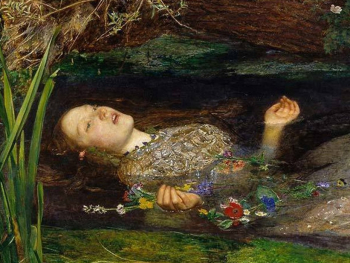
According to The White Plague (1952) by René and Jean Dubos, Caucasian patients took on a profoundly anaemic countenance as they lost blood and iron – thus the title of their great history of the disease. The consumptive model Elizabeth Siddal, best known as the drowned Ophelia in John Everett Millais’s pre-Raphaelite painting, became an icon for her generation. Fashion-conscious, healthy women starved themselves and chemically whitened their skin to mimic this ‘consumptive’ look. Lord Byron, the most notorious of the Romantic poets, quipped that the affliction would have ladies saying: ‘See that poor Byron – how interesting he looks in dying.’ Indeed, the preponderance of Romantic writers, painters and composers with TB created a myth that consumption drove artistic genius. Many assumed that the spes phthisica, a kind of elation that intermingles with depression during the disease, elevated the mind.

The truth, of course, is that TB’s impact on the arts was merely a reflection of the savagery with which it ravaged the general population – artists and everyone else. In 1801, up to one-third of all Londoners died from TB.

More here.

Promiscuity slows down evolution of new species

Vicky Just in Phys.org:

PromiscuitysPromiscuity mixes up the gene pool and dilutes genetic differences between populations, slowing down the evolution of new species, says new research by an international team led by the University of Bath's Milner Centre for Evolution.

Darwin's theory of evolution showed that new species evolve when natural selection favours individuals with particular characteristics, allowing them to survive, breed and pass on their genes more successfully than their peers. Over time, a group of individuals can evolve to adapt to their local environment and form a new species.

Previously it was thought that sexual selection, when one sex prefers to mate with individuals with specific characteristics, was a strong driver of the formation of new species. One of these processes is the Fisherian runaway selection whereby arbitrary traits such as conspicuous feathers or fancy songs attract female's attention and hence improve the mating success of the bearer. Due to local variations in female preferences, nearby populations can rapidly differentiate and over time evolve into new species.

However new research in birds, published in the leading academic journal Evolution, overturns the conventional wisdom and suggests that promiscuity actually slows down the evolution of new species.

More here.

Three Arguments on Islam That Counterterrorism Scholars Need to Junk

Aersh Danish in The Wire:

ISIS-Iraq-ReutersSince 9/11, there has been a tremendous growth in terrorism-related research and related activities, with vast output through publications in mainstream and academic media, and seminars and conferences. The aim has been to develop a discourse that tries to understand the problem and then solve it. However, as a scholar of terrorism and counterterrorism for almost four years, I have observed that certain fallacies continue to mire the discourse. Mine is not the sole voice of complaint. Scholars of terrorism and/or counterterrorism studies have critically introspected upon the nature of the study and have expressed their dissatisfaction at various points. Specifically, my problems arise from the manner in which some scholars (mostly Muslim) argue about the interplay between Islam and Islamist terrorism.

The Global Terrorism Index 2016 states that 74% of all terrorism-related deaths were caused by ISIS, Boko Haram, the Taliban and al Qaeda – all of which espouse the concept of religious extremism. Due to the religious dimension of contemporary terrorism, a vast amount of scholarship has been dedicated to understanding how Islamist terrorist organisations use religion to build narratives that attract susceptible individuals. Thus, scholars of religion, prominent religious figures and clerics have begun to play an integral role in the discipline. A recent conference at an Indian think tank brought together a large number of Muslim researchers and clerics, as well as scholars of Islam and counter-terrorism to discuss how to address the challenge posed by religious extremism. While the intentions behind such events are indeed commendable, most scholars at such places tend to be apologists (for Islamist terrorism?).

More here.

Remembering Yevtushenko

Yevgeny-YevtushenkoRobin Milner-Gulland at the Times Literary Supplement:

Yevgeny (known to all as “Zhenya”) Yevtushenko had remarkable presence; people who met him, or just heard him speak, were unlikely to forget the experience. It wasn’t simply a matter of his height and good looks, or even of his rhetorical skills; he carried a certain authority, was sharp-witted and could think on his feet. He talked uninhibitedly about serious subjects, but often had a tongue-in-cheek jocularity, with an ear for gossip and an eye for the more absurd, sometimes dreadful, aspects of Soviet life – and of life in general. He was (as he well knew) a terrific performer – from childhood on, as he recounts in the moving poem “Weddings”, describing the sad wartime weddings where he had to dance as part of the entertainment (“Dance! they cry out in despair, and I dance”).

In the early 1960s Zhenya was invited by the British Council to the UK; among the readings he gave was one at the Cambridge Union. We had a good lunch beforehand with Kingsley Amis – Zhenya was always keen to meet writers, preferably in convivial circumstances. At the Union he recited his work by heart, while Peter Levi and I read our corresponding translations. I noticed that in one poem – I think the famous “Babiy Yar” – Zhenya forgot a chunk of his own text. There I witnessed the true professional at work: not missing a beat, he transposed his own lines and got back on track.

more here.

The Syria Catastrophe

Beck_webRichard Beck at n+1:

The war’s complexity makes it difficult to see a viable path forward, but there is a sense in which it would be foolish to think of the conflict as one big Rubik’s cube in need of solving, because the complexity itself is part of the problem — the best thing to do with the Rubik’s cube would be to throw it against a wall. Again and again, countries across and outside the Middle East have decided that escalating the war by military means is justified by whatever little sliver of national interest they feel is at stake. The US, Russia, Iran, Saudi Arabia, Turkey, Qatar, China, France, and Britain have all pumped military resources into the conflict, increasing not only the war’s capacity for destructive violence but also its duration. To the extent that it needed to take place at all, it should have been a civil war fought by two sides with limited military resources. Instead, it has turned into a series of extravagantly funded proxy wars across two or three separate axes, none of which has any organic connection to the questions of regime tolerance for political assembly and speech that prompted the conflict in the first place. While it would not be useful to ask nations to stop pursuing their national interests, the ease with which these countries have turned to military means in the pursuit of those interests is shameful. The response required at this late, desperate stage is neither anti-Assad nor anti-ISIS nor even anti-imperialist — it is antiwar.

more here.

The Feminine Heroic

Mccullers-monroe-dinesenMegan Mayhew Bergman at The Paris Review:

It’s February 1959. Marilyn Monroe and Isak Dinesen have joined Carson McCullers for lunch at her home on the Hudson River in Nyack, New York. A photograph from that day shows Marilyn and Carson leaning into each other. Isak, invited to America by the Ford Foundation for what would be her first and last visit, toasts Arthur Miller, who’s nearly out of the frame.

Carson wears all black and a depressed demeanor. Marilyn, in fur and a plunging neckline, tells a story about finishing pasta with a blow-dryer. Isak’s cheekbones announce themselves underneath the hem of her turban; she recalls the first time she killed a lion and ingests little more that day than oysters, grapes, and amphetamines. In eight years they will all be dead.

For me, the picture is like looking at the fractal nature of womanhood: something carnal, intellectual, and willful existing inside of one body. Internal conflicts shaped Monroe, McCullers, and Dinesen as creators. Marilyn aspired to make her own films and control her image while negotiating a growing dependence on pills and fear of abandonment. McCullers, broken down by seizures, divorce, and addiction, continued to write in the shadow of the masterpiece she wrote at twenty-two. Dinesen, brave enough to face down a lion and manage a coffee farm outside of Nairobi, began to starve and diminish herself.

more here.

Has America Become the Reality of the Abusive and Cruel Stanford Prison Experiment?

Chauncey DeVega in AlterNet:

Psychology_mindIn 1971 Philip Zimbardo conducted one of the most widely known social psychology experiments of all time. A professor at Stanford University, Zimbardo recruited 18 college-aged male students to play the role of guards and inmates in a makeshift prison he would construct in the basement of the psychology department. After just one day of the experiment, these students quickly internalized the roles of the powerful and the powerless. “Guards” became increasingly abusive and cruel toward “prisoners.” The prisoners responded first by resisting and then by succumbing to despair and a sense of learned helplessness. Although the experiment was originally planned for two weeks, Zimbardo stopped his experiment after six days. The lesson had been learned: When the correct group dynamics are present — and a set of rules legitimate the behavior — otherwise “normal” and “good” individuals will abuse and bully other human beings. In the almost five decades since Zimbardo conducted what is now known as the Stanford Prison Experiment, there has been an increase in the coarseness and meanness of America’s popular culture. What has been described as a “culture of cruelty” is the new normal and surveillance is omnipresent. Political polarization and dysfunction have broken the standing norms and rules of good governance in Washington, trust in political and social institutions such as the news media has declined, authoritarianism has increased among conservatives, the social safety net has been torn apart and the nation’s police continue to abuse and kill black and brown Americans with near impunity. This is “social dominance behavior” filtered through racism and the neoliberal economic order. The sum total of these (and other) factors has resulted in the election of the neofascist Donald Trump as president of the United States. In many ways, Trump’s election was a decision by millions of American voters to punish their fellow citizens. These people were encouraged and enabled in this desire to do harm by their leaders in the right-wing media and by Trump himself.

How can social psychology help us understand this moment? What lessons does the Stanford Prison Experiment hold for American society in 2017? Are Donald Trump’s supporters swept up in a wave of authoritarianism and bullying? Can they be stopped? Why are conservatives so hostile to people they perceive as “the other”? What can we do to resist Donald Trump and fight back against the feelings of hopelessness and trauma that many Americans have experienced since his election in November? In an effort to answer these questions, I recently spoke with Zimbardo, now a professor emeritus at Stanford and also president of the Heroic Imagination Project. He has written dozens of articles and books, most recently “The Time Paradox: The New Psychology of Time That Will Change Your Life” and “The Lucifer Effect: Understanding How Good People Turn Evil.”

More here.

Why Doctors Should Start Taking Your Past Spiritual History

Nikhil Barot in Nautilus:

DocA little over a decade ago, Farr Curlin, a physician and professor of medical humanities at Duke Divinity School, became curious about the spiritual lives of his colleagues. He already knew that patients’ religious beliefs and communities matter: Both influence medical decisions and change the meaning of illness. But the influence of physicians’ religiosity on their work was relatively unknown. So he and his colleagues conducted a national survey of physicians’ religious characteristics. He found that, compared to a sample of the general U.S. population, physicians were twice as likely to cope with their own major life problems without relying on a “higher power.” Doctors were also less likely to carry their religious beliefs into other dealings in life. Curlin’s survey was the first of many to show that doctors are less inclined to bring up spiritual and religious matters with patients and their families, even though addressing these dimensions of illness can help coping with death, and even though patients frequently welcome the discussion.

“When spiritual needs are not met,” concluded Michelle Pearce, a University of Maryland clinical psychologist and her colleagues in a 2012 paper, “patients are at risk of depression and a reduced sense of spiritual meaning and peace.” Yet according to a 2013 study, despite recognizing the importance of spiritual care to patients, physicians and nurses infrequently provide it. A report published in the Journal of Clinical Oncology found that most cancer physicians, nurses, and patients believe such care would have a positive impact. The evidence suggests that physicians might do well to take a Past Spiritual History, similar to the Past Medical and Past Surgical Histories that are a routine part of patient-doctor encounters. A Past Spiritual History represents a biopsychosocial-spiritual approach to understanding illness, which may not only “enrich the dialogue between patients and health providers,” as one 2006 study concluded, but also inform what treatments are acceptable within a given patient’s system of values. “For many people, this spiritual history unfolds within the context of an explicit religious tradition,” wrote Christina Puchalski, a professor of medicine at George Washington University, and colleagues, in the Journal of Palliative Care. “For others it unfolds as a set of philosophical principles or significant experiences.”

More here.

Wednesday, April 12, 2017

Ram Manikkalingam brings peace to the world, a little at a time

Lyse Doucet at the BBC:

ScreenHunter_2668 Apr. 12 23.25The white bearded Reverend Good, who's been visiting this region since 2005, later told me it was a "wonderful day".

And then, the documents were passed to Ram Manikkalingam, a mediator who decided the occasion merited a suit and tie, who heads the Amsterdam-based Dialogue Advisory Group.

"There were many moments when we doubted this would happen," he admitted when we sat down in the same room after he had deposited Eta's file in the French prosecutor's office in City hall.

"There were steps forward, and steps backward," recalls Mr Manikkalingam who, as chair of the International Verification Commission, has also been monitoring Eta's unilateral ceasefire declared in 2011.

It has taken since then to convince Eta fighters to give up their weaponry without getting anything in return. Tracking down what's left also took time in a highly secretive organisation with a myriad of small cells.

More here.

When Pixels Collide

From Sudoscript:

ScreenHunter_2667 Apr. 12 23.12Last weekend, a fascinating act in the history of humanity played out on Reddit.

For April Fool's Day, Reddit launched a little experiment. It gave its users, who are all anonymous, a blank canvas called Place.

The rules were simple. Each user could choose one pixel from 16 colors to place anywhere on the canvas. They could place as many pixels of as many colors as they wanted, but they had to wait a few minutes between placing each one.

Over the following 72 hours, what emerged was nothing short of miraculous. A collaborative artwork that shocked even its inventors.

More here. [Thanks to Ali Minai.]

If you think it’s easy, you’re doing it wrong

Feisal Naqvi in The News:

Feisal-naqviI am a litigator. I argue for a living. If you want to put it poetically, I’m an architect of the imagination: I make and destroy arguments for a living.

High-stakes litigation is difficult everywhere in the world because somebody’s life or somebody’s livelihood is often on the line. But what makes it immeasurably more terrifying in Pakistan is that our advocacy is still done orally, not in writing. That means that when you stand up to argue, you often have no idea what point is going to catch the judge’s fancy or what is going to disturb him: you just have to do your best and try to anticipate everything which might be flung at you.

The further consequence of this oral tradition is that a good lawyer needs to know his entire brief, inside and out, before he stands at the rostrum. As I once explained it to somebody, litigation lawyers are like stage actors: we need to know the entire play. We don’t have the option of only learning the lines needed for the next take.

As you get more experienced, it becomes easier for you to anticipate what point is likely to catch the judge’s eye. And it gets easier for you to extract the gist of the case from a two-foot high stack of documents. But at the end of the day, you still need to go through that stack. And you still need to know everything inside it. Or else.

I may or may not be correct in feeling that my job is exceptionally hard. But my point here is simpler: no matter what the job, doing it well is going to be difficult. If you think it’s easy, you’re doing it wrong.

More here.